
Loading, please wait...
LOT 0870
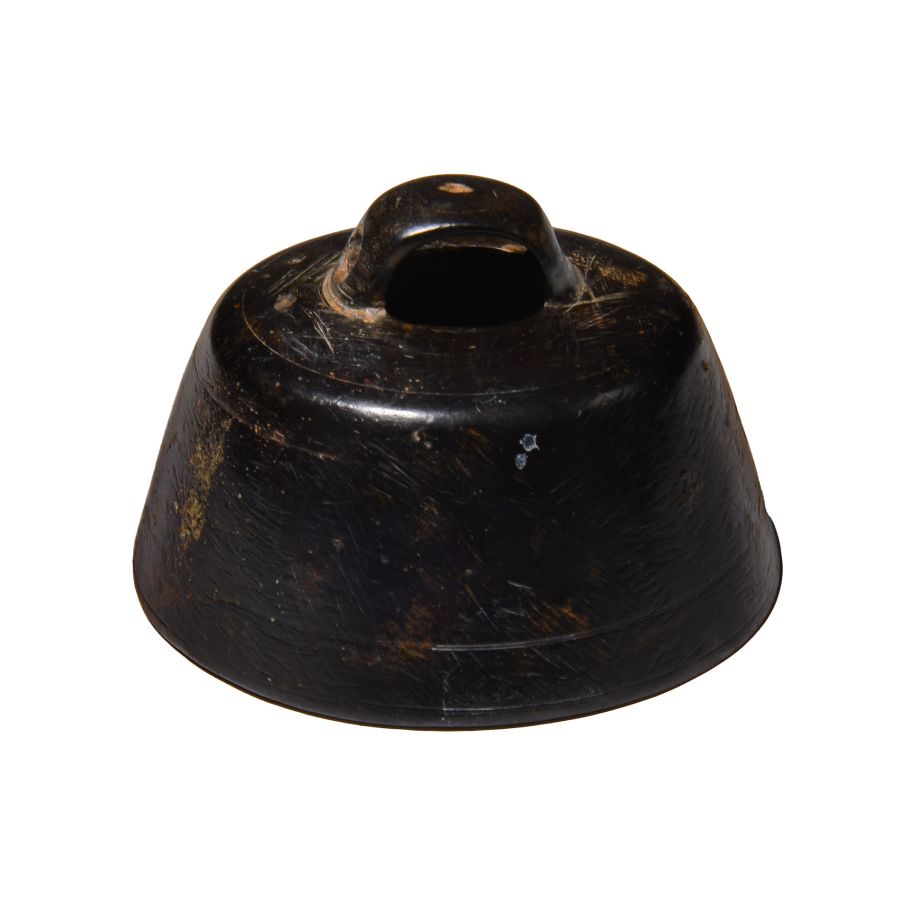
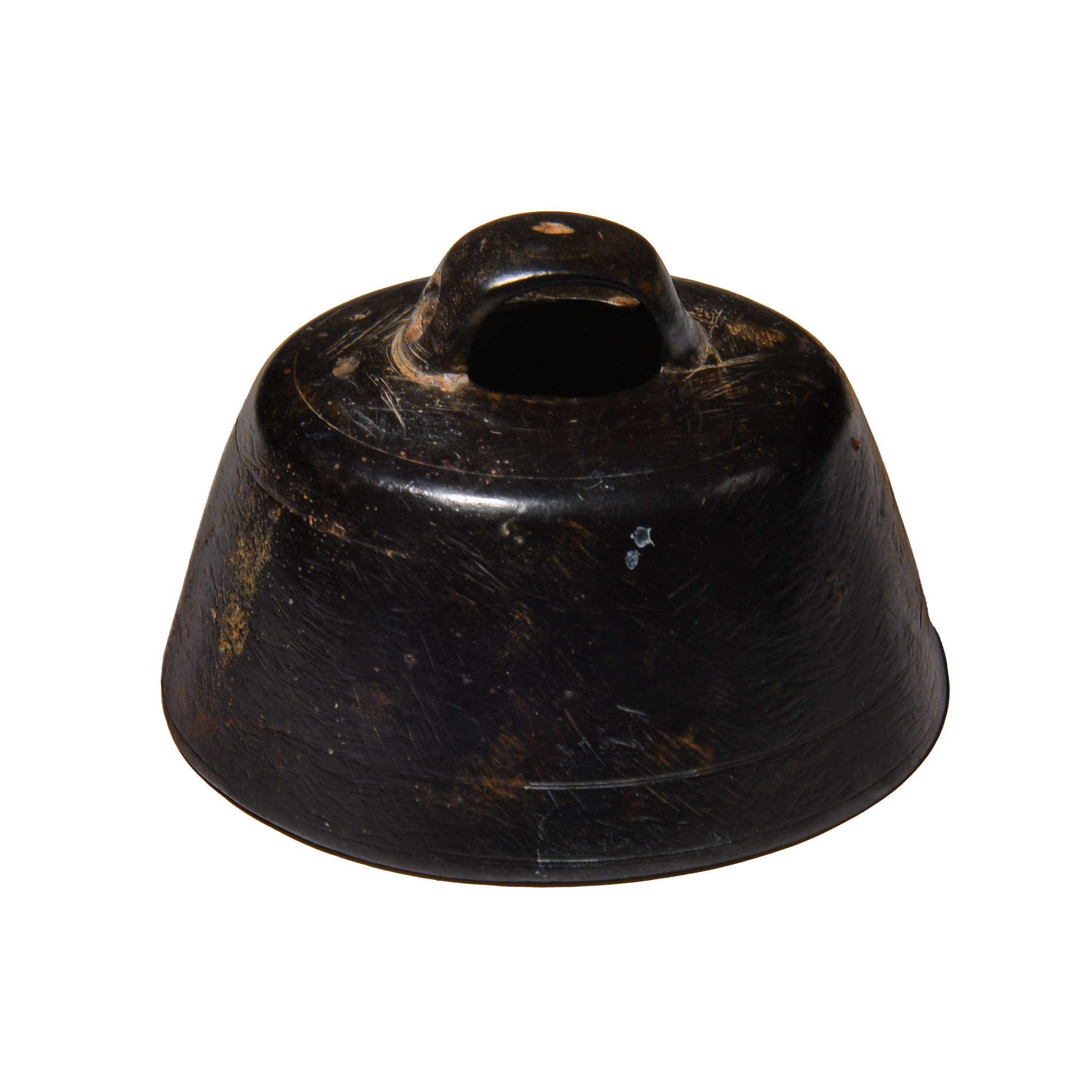
Roman Bronze Bell
1ST-2ND CENTURY A.D.
2 5/8 in. (137 grams, 68 mm).
Trapezoidal in section with loop to the apex, pierced to accept a clapper; many of these objects are published in the Detector Finds book series. [No Reserve]
ProvenanceFrom the collection of the famous author, writer and speaker, Gordon Bailey, Essex, UK; formed since 1968.
LiteratureCf. The Metropolitan Museum, New York, accession numbers 98.11.34; 89.4.2429 and 89.4.1614, for similar.
FootnotesThe bell was probably used inside a temple where its melodic sound was thought to add to the aura of reverence and mystery. In Mithraic temples, bells were rung as part of the ceremonial, while in the cult of Attis the bell and tympanum were also used to serve food and drink as the critical part of the rituals of consumption. One Roman order of priests applied the term
TimeLine Auctions follows a vetting process to ensure the authenticity and legality of all items, reinforcing our commitment to integrity and responsible trading. Each antiquity, antique, and coin lot undergoes thorough examination by a vetting committee of at least ten external specialists, professional trade association members, scientists, and archaeologists: Our Vetting Process
AUCTIONS:
TimeLine is a leading auction house specialising in antiquities, ancient art, collectables, natural history, coins, medals, and books. Our auctions offer museums, collectors, historians, and enthusiasts the opportunity to acquire unique and historically significant pieces.
-
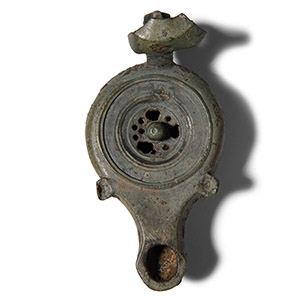
Large Roman Bronze Oil Lamp
1st-2nd century A.D.Sold for (Inc. bp): £247
Comprising a broad bowl, stub nozzle with lateral spurs, discus with ivy-leaf piercings and central knop handle, loop handle to rear with reflector; handle chipped. 185 grams, 10.8 cm
Acquired Bonhams, London, 26 October 2007, sale 15216. From an important Cambridgeshire estate; thence by descent. -
.jpg)
Roman Marble Draped Torso of Asclepius
2nd-3rd century A.D.Sold for (Inc. bp): £9,750
Modelled in the round statue of the god standing with chest uncovered, calf-length himation draped to the left shoulder and arm, secured at the waist, held by the left hand; mounted on a custom-made stand. 28 kg total, 61 cm including stand
Private collection, England. Accompanied by an academic report by Dr Raffaele D'Amato. This lot has been checked against the Interpol Database of stolen works of art and is accompanied by search certificate number no.12232-215644. -
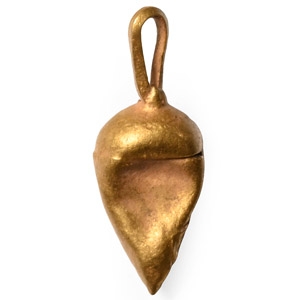
Roman Gold Acorn-Shaped Pendant
1st-4th century A.D.Sold for (Inc. bp): £169
Sheet gold dangle with loop above. 0.34 grams, 13 mm
Ex property of a late Japanese collector, 1970-2000s.
