
Loading, please wait...
LOT 0707
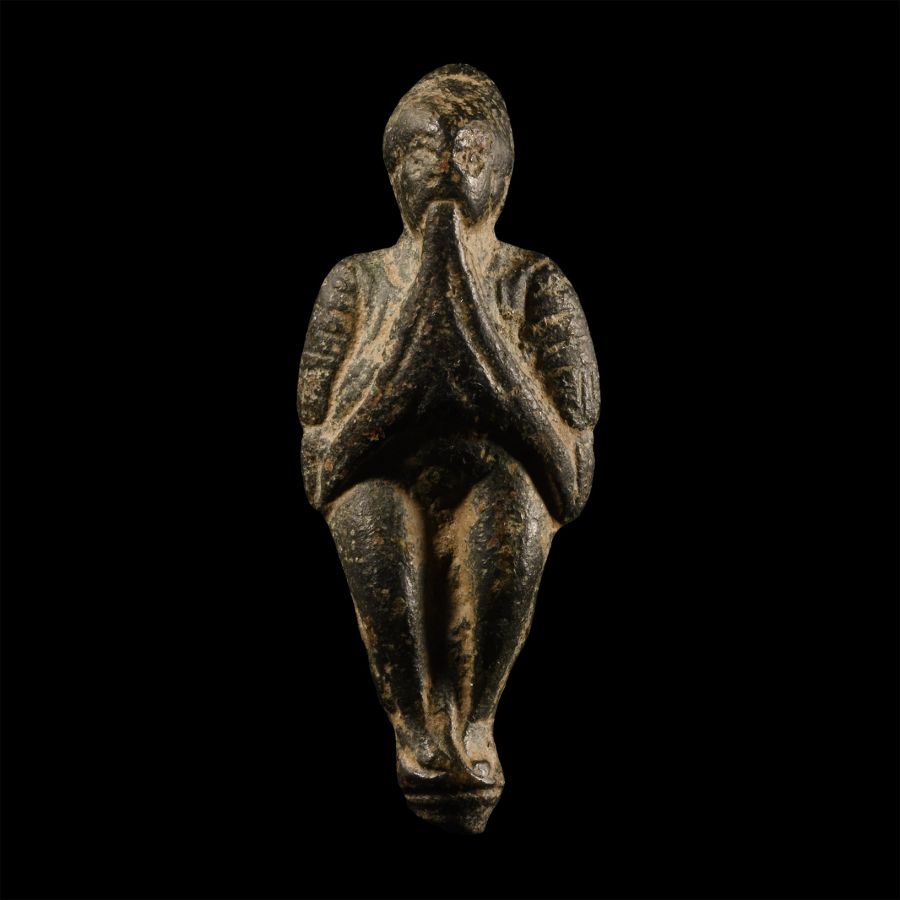
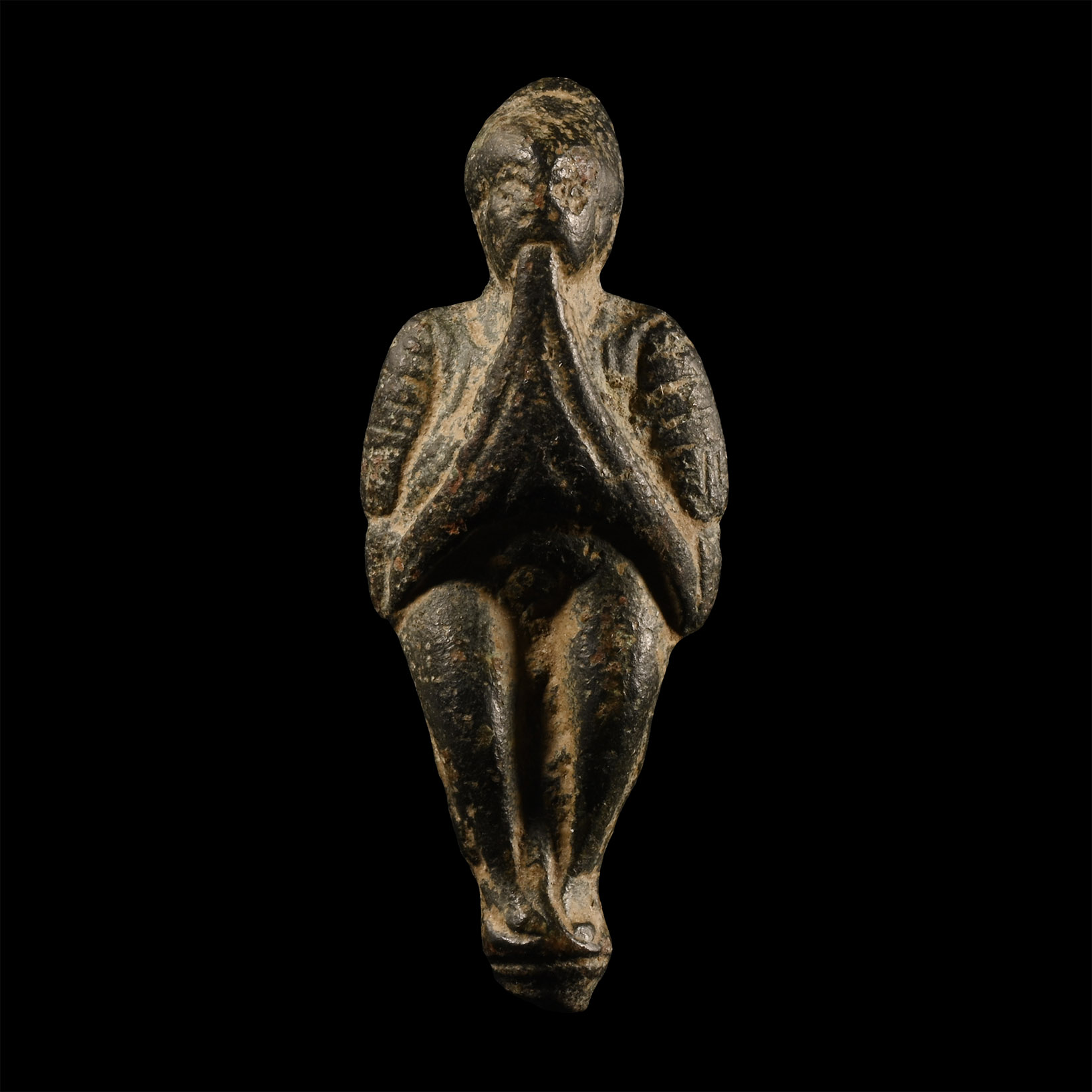
Roman Bronze Baubo Statuette
2ND-3RD CENTURY A.D.
1 7/8 in. (26 grams, 48 mm).
Standing with hands at her sides, wearing a conical cap, raising her dress to her mouth to reveal her genitals; palmette to the reverse. [No Reserve]
ProvenanceFrom a collection acquired on the UK art market from various auction houses and collections mostly before 2000.
From an important Cambridgeshire estate; thence by descent.
TimeLine Auctions follows a vetting process to ensure the authenticity and legality of all items, reinforcing our commitment to integrity and responsible trading. Each antiquity, antique, and coin lot undergoes thorough examination by a vetting committee of at least ten external specialists, professional trade association members, scientists, and archaeologists: Our Vetting Process
AUCTIONS:
TimeLine is a leading auction house specialising in antiquities, ancient art, collectables, natural history, coins, medals, and books. Our auctions offer museums, collectors, historians, and enthusiasts the opportunity to acquire unique and historically significant pieces.
-
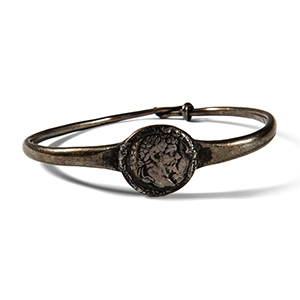
Roman Silver Denarius Bracelet
2nd century A.D.Sold for (Inc. bp): £312
Penannular form with one end wound about the shank, centrepiece a denarius coin with portrait bust. 22 grams, 68 mm
Ex Lincolnshire, UK, collection, 1990s. -
.jpg)
Roman Silver Statuette of Aesculapius
1st-2nd century A.D.Sold for (Inc. bp): £650
Standing wearing a loosely draped himation, with caduceus resting on the right hip; mounted on a custom-made stand. 75 grams total, 55 mm including stand
Ex Ancient Art, North London, UK. From a collection acquired on the UK art market from various auction houses and collections mostly before 2000. From an important Cambridgeshire estate; thence by descent. -
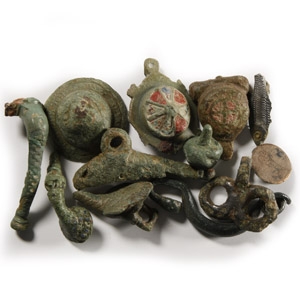
Roman and Celtic Artefact Group
1st century B.C.-4th century A.D.Sold for (Inc. bp): £111
Mixed group including a cosmetic grinder bed, a fish-shaped silver plate broch, a looped rein guide, a La Tène I brooch fragment, trumpet brooch fragment and other items. 127 grams total, 16-54 mm
Acquired since the 1970s. From the private collection of a Surrey, UK, gentleman.
