
Loading, please wait...
LOT 0194
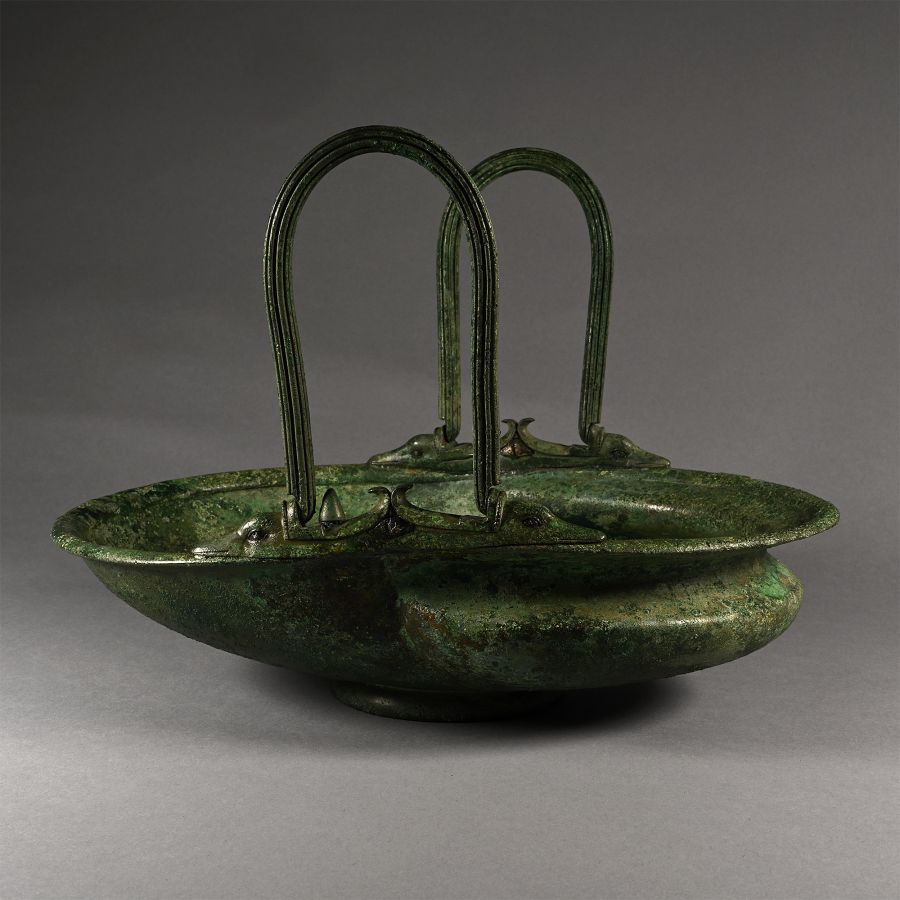
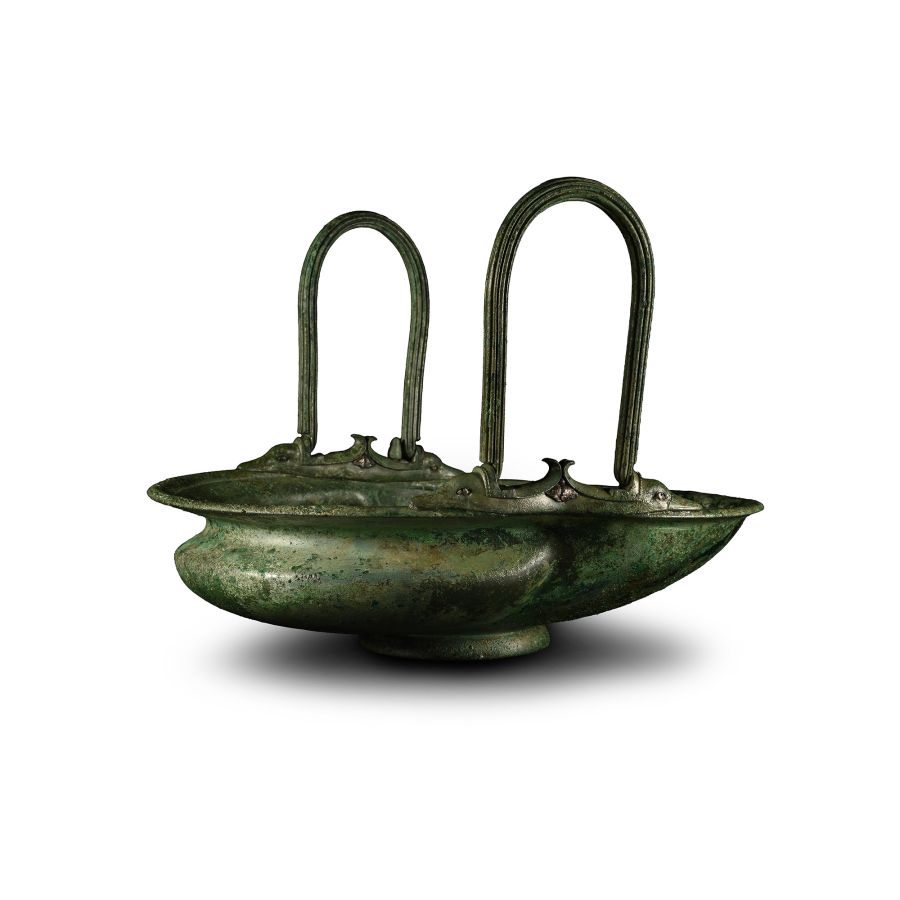
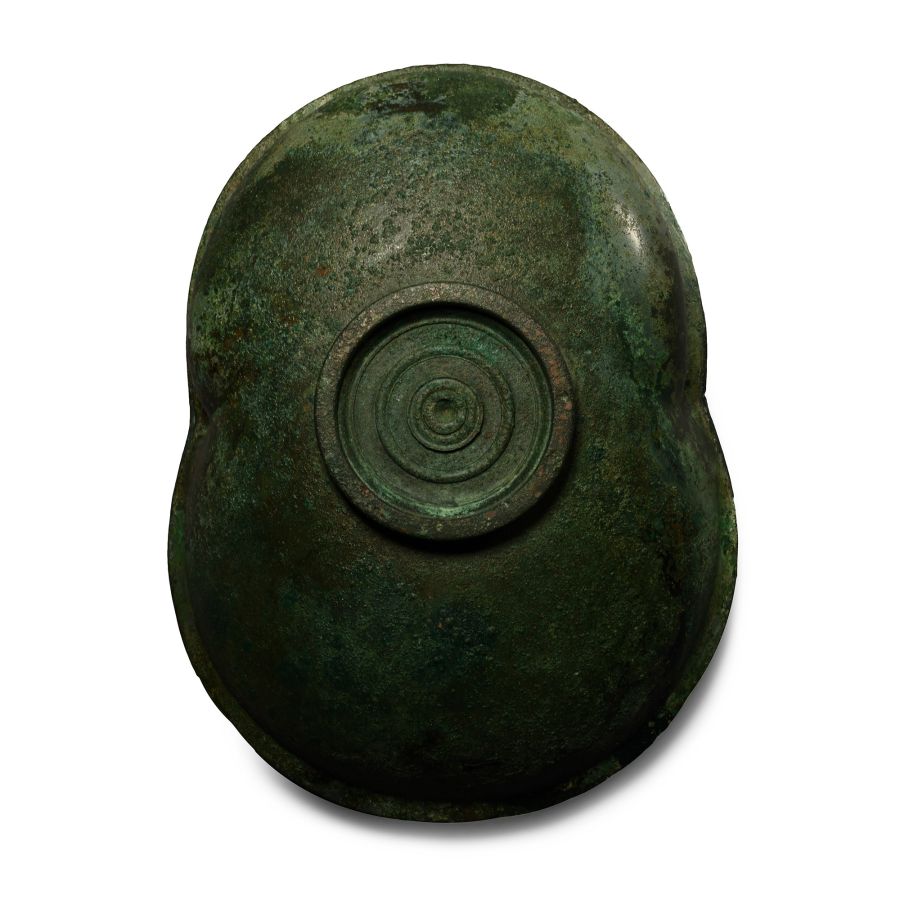
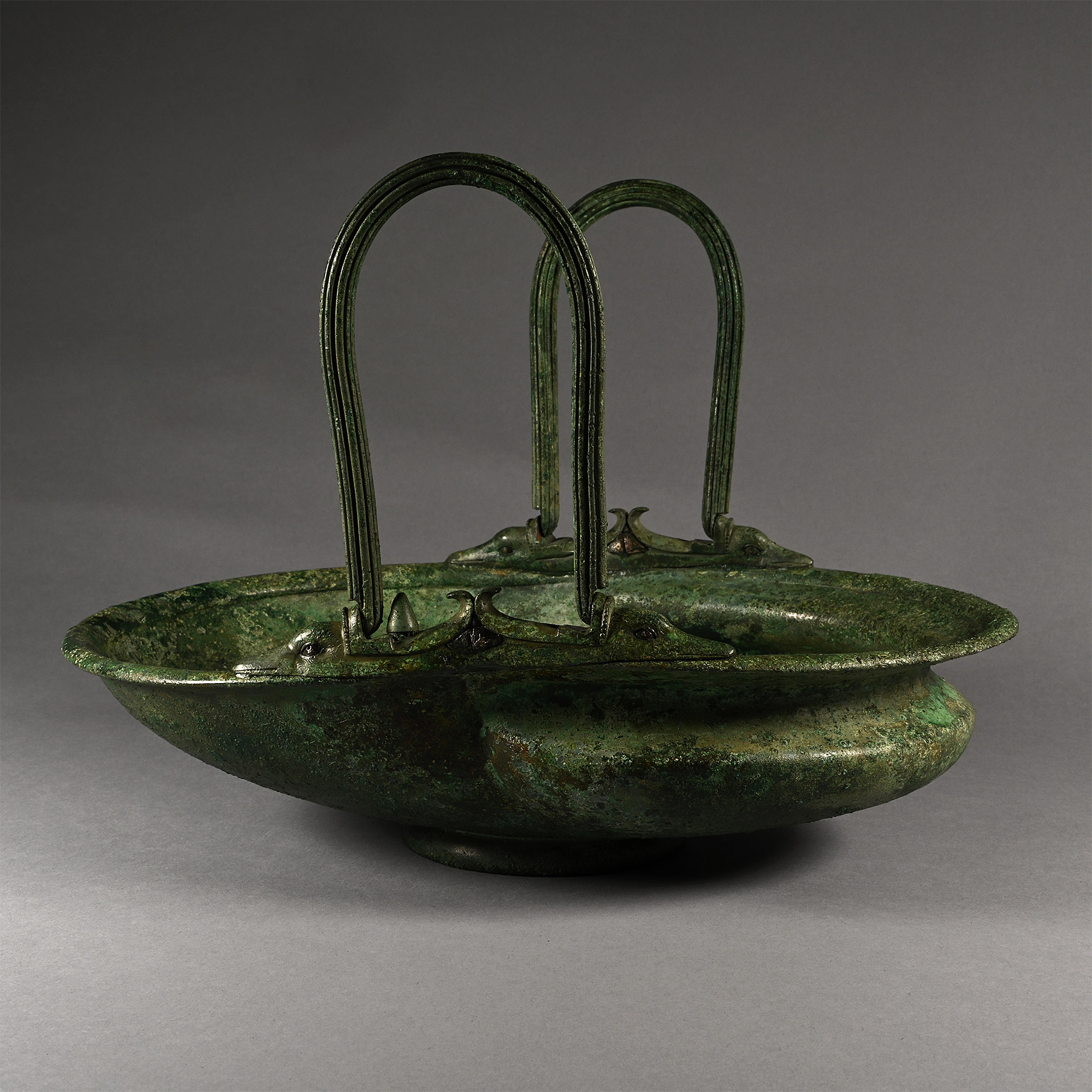
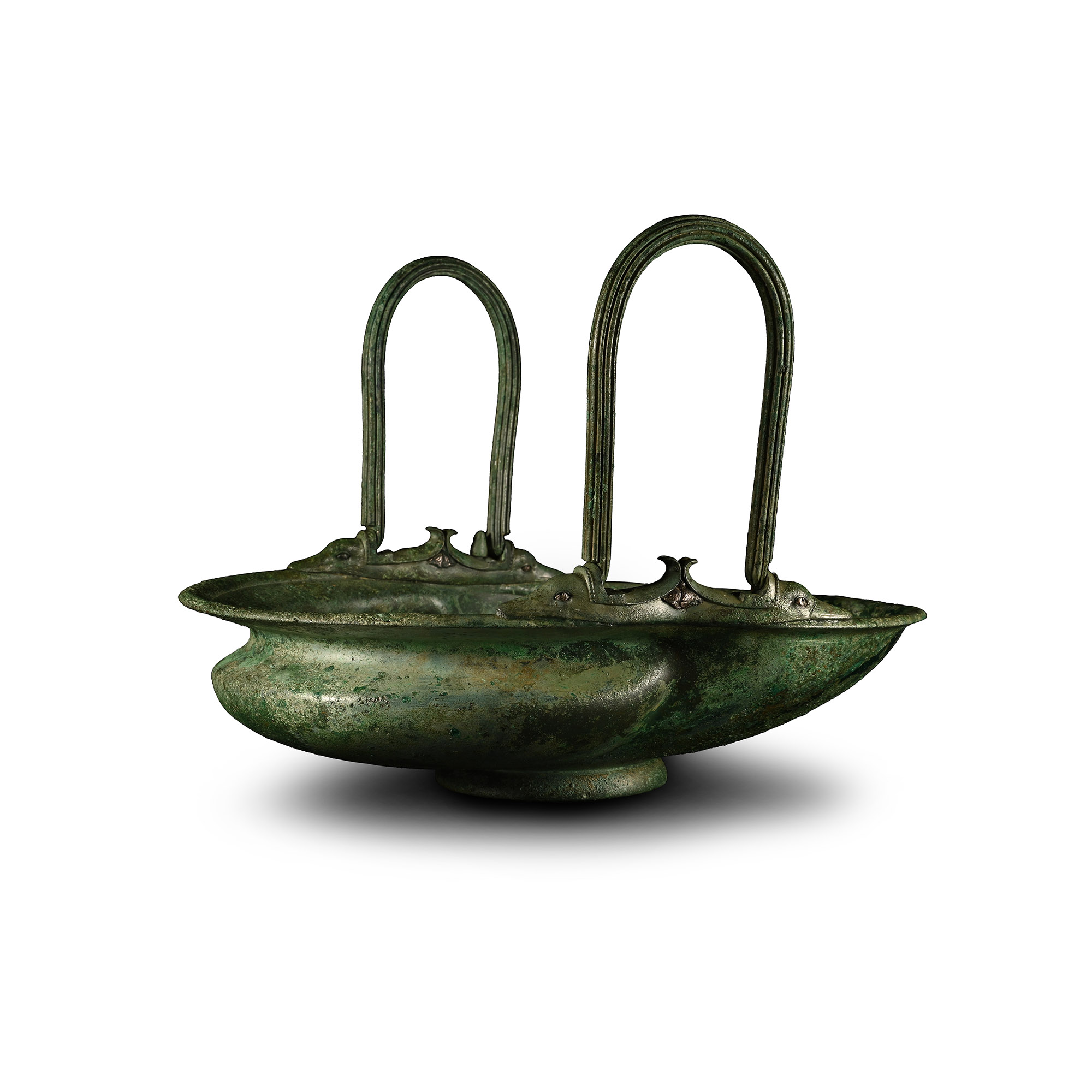
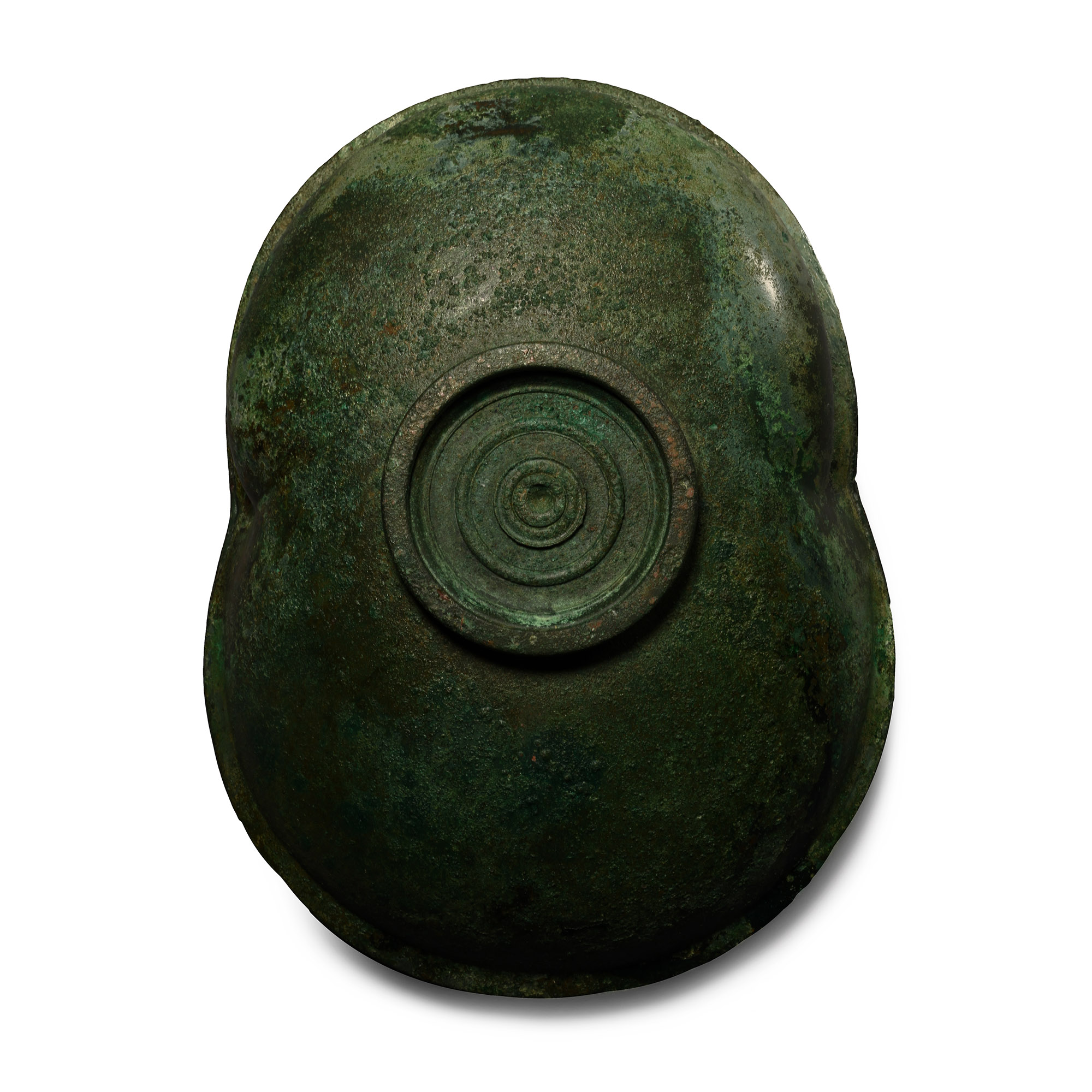
Roman Bronze Basket-Vase
1ST-2ND CENTURY A.D.
11 in. (1.68 kg, 28 cm).
Ellipsoid in plan with low basal ring and thick convex rim, carination to the forward end; hinges to each lateral rim, the knuckles formed as addorsed duck-heads each with scrolled panel to the rear retaining the pivot of the ribbed D-shaped handles.
ProvenanceAcquired in Switzerland, 1996.
Private collection, Europe.
Accompanied by an academic report by Dr Raffaele D'Amato.
Accompanied by a copy of an Art Loss Register certificate dated 30th April 2004.
This lot has been checked against the Interpol Database of stolen works of art and is accompanied by search certificate number no.12363-226688.
This lot has been cleared against the Art Loss Register database, and is accompanied by an illustrated lot declaration signed by the Head of the Antiquities Department, Dr Raffaele D'Amato.
Cf. a similar model from the House of Menander in Pompei is preserved in the Pompei Archaeological Museum; see Tassinari, S., La Vaisselle de bronze, Romaine et provincial, au muse des Antiquités Nationales, Paris, 1975, no.104, for examples of Roman trays.
FootnotesThis vessel (lanx) was part of Roman and provincial bronze instrumentum domesticum, i.e. culinary or domestic utility ware. The form of the bowl resembles a type of helmet with carination to the front, the handles placed as hinged cheek-protectors.
CONDITIONTimeLine Auctions follows a vetting process to ensure the authenticity and legality of all items, reinforcing our commitment to integrity and responsible trading. Each antiquity, antique, and coin lot undergoes thorough examination by a vetting committee of at least ten external specialists, professional trade association members, scientists, and archaeologists: Our Vetting Process
AUCTIONS:
TimeLine is a leading auction house specialising in antiquities, ancient art, collectables, natural history, coins, medals, and books. Our auctions offer museums, collectors, historians, and enthusiasts the opportunity to acquire unique and historically significant pieces.
LOT 0194
Roman Bronze Basket-Vase
Estimate £12,000 - 17,000€13,920 - 19,720 (for guidance only)$16,200 - 22,950 (for guidance only)
-
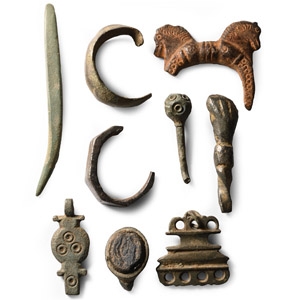
Roman Bronze Artefact Group
1st-4th century A.D.Sold for (Inc. bp): £59
Including finger ring fragments, awl, dolphin buckle, dress-pin head and other items. 37.5 grams total, 16-54 mm
Property of a Cambridgeshire, UK, collector. From his private collection since the 1970s; thence by descent circa 2000. Ex private collection of a Bedfordshire gentleman. This lot is accompanied by an illustrated lot declaration signed by the Head of the Antiquities Department, Dr Raffaele D'Amato. -
.jpg)
Roman Gold Amulet in the Shape of a Phallus
1st-2nd century A.D. or laterSold for (Inc. bp): £2,340
Amuletic pendant of a phallus with testes, square suspension loop to the rear. 8.35 grams, 23 mm
Acquired in the mid 1980s-1990s. Private collection, Switzerland, thence by descent. Private collection, since the late 1990s. This lot has been checked against the Interpol Database of stolen works of art and is accompanied by a search certificate no.12593-232171. This lot has been cleared against the Art Loss Register database, and is accompanied by an illustrated lot declaration signed by the Head of the Antiquities Department, Dr Raffaele D'Amato.
Phallic amulets, symbols of fertility, prosperity and happiness in the Roman world, are represented by numerous examples in most museums and in many private collections. The typologies are various within the four main series: a) phallus seen from the front; b) phallus seen from the side; c) double phallus and d) triple phallus. -
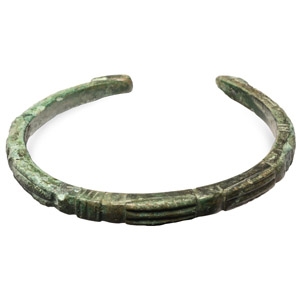
Late Roman Decorated Bronze Military Bracelet
4th-5th century A.D.Sold for (Inc. bp): £124
Thick penannular body with tapering finials, the upper faces divided into decorative panels with linear motifs. 24.1 grams, 65 mm
Ex German art market, 2000s. Acquired from an EU collector living in London. From the collection of a Surrey, UK, gentleman. This lot is accompanied by an illustrated lot declaration signed by the Head of the Antiquities Department, Dr Raffaele D'Amato.
