Loading, please wait...

Use mousewheel to zoom in and out, click to enlarge

Details

LOT 0934

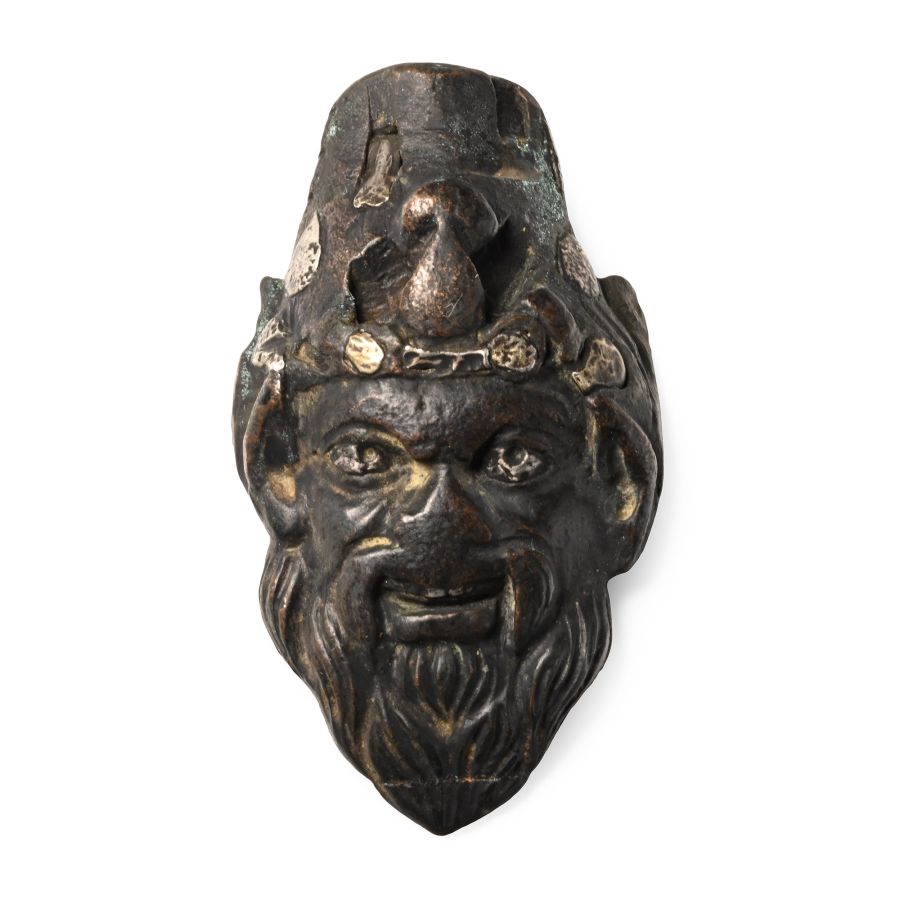
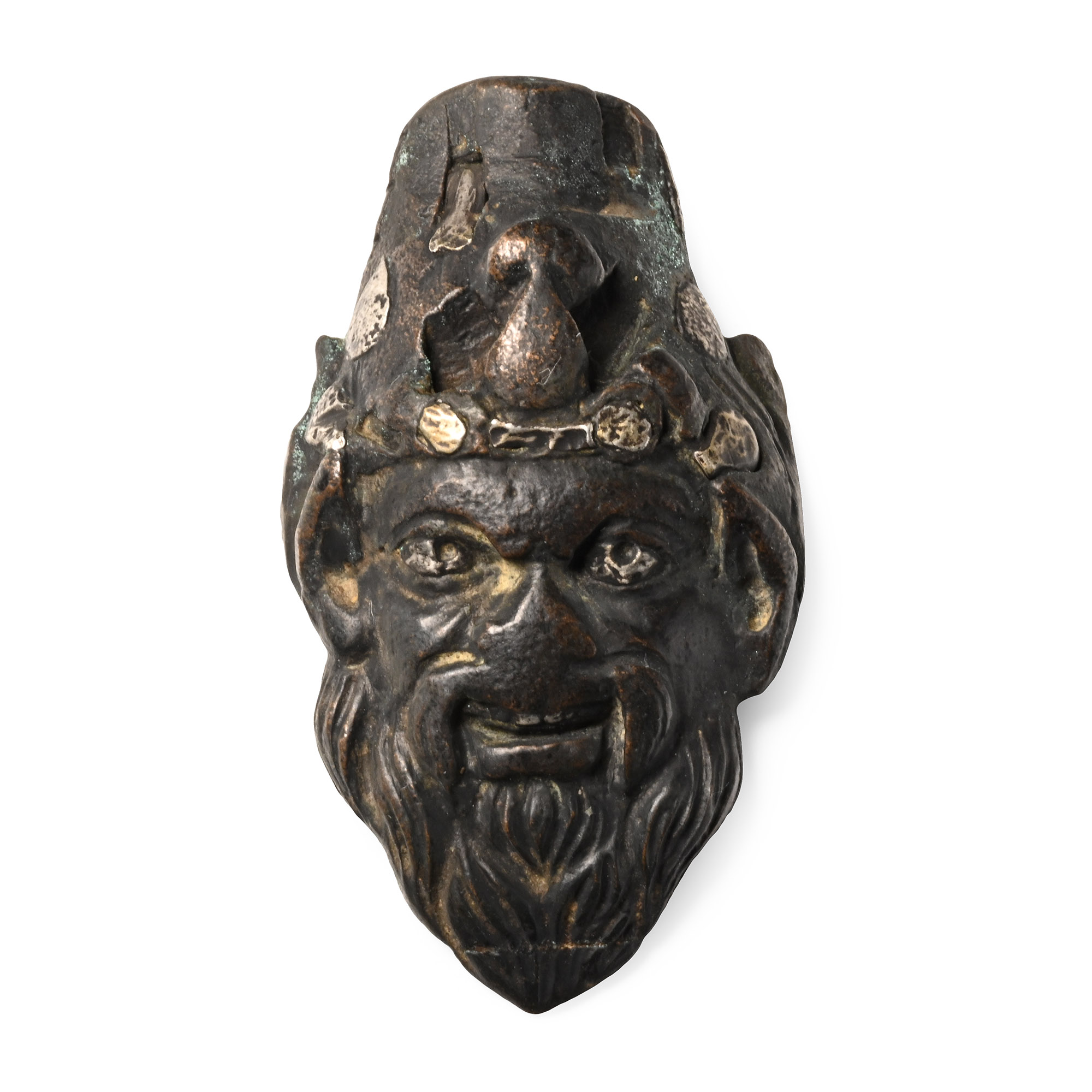
Roman Bronze Bacchus Mount with Silver Inlay

1ST-2ND CENTURY A.D.

1 3/4 in. (28.6 grams, 44 mm).

The god of wine shown with grotesque features and stern expression, neatly arranged long beard, short horns and vine-leaf crown resting on the brow.

Provenance

Ex German art market, 2000s.
Acquired from an EU collector living in London.
From the collection of a Surrey, UK, gentleman.

CONDITION

VETTING:

TimeLine Auctions follows a vetting process to ensure the authenticity and legality of all items, reinforcing our commitment to integrity and responsible trading. Each antiquity, antique, and coin lot undergoes thorough examination by a vetting committee of at least ten external specialists, professional trade association members, scientists, and archaeologists: Our Vetting Process


AUCTIONS:

TimeLine is a leading auction house specialising in antiquities, ancient art, collectables, natural history, coins, medals, and books. Our auctions offer museums, collectors, historians, and enthusiasts the opportunity to acquire unique and historically significant pieces.

LOT 0934

Roman Bronze Bacchus Mount with Silver Inlay

Sold for (Inc. bp): £234

Print page

RELATED LOTS

  • Roman Bronze Ring with Silver Plaque with Hippocamp
    Roman Bronze Ring with Silver Plaque with Hippocamp
    2nd-3rd century A.D.

    Sold for (Inc. bp): £338

    Comprising a narrow shank and tapering shoulders, a flat plaque with an inset silver panel, low-relief hippocamp motif. 6.94 grams, 26.75 mm overall, 21.19 mm internal diameter (approximate size British K 1/2, USA 51/2, Europe 10.58, Japan 10)


    From a private Tyneside collection, formed since the early 2000s.

    Lot Details

  • Monumental Roman Bronze Left Hand
    Monumental Roman Bronze Left Hand
    Circa 2nd-3rd century A.D.

    Sold for (Inc. bp): £40,300

    A truly exceptional and imposing fragment, rendered with remarkable naturalism, the forefinger extended and gently bent, the thumb positioned for grip, and the remaining fingers elegantly curled inward, possibly from a life-sized statue of an emperor, magistrate or a general; presented on a custom-made display stand, the thumb and forefinger sympathetically restored. 4.75 kg total, 45 cm including stand


    Ex Frits Phillips, Eindhoven, Netherlands, before 1980. Private European collection, 1980s. Private collection, London. Accompanied by an academic report by Dr Raffaele D’Amato. This lot has been checked against the Interpol Database of stolen works of art and is accompanied by a search certificate number no.12907-242493.

    During the height of the Roman Empire, monumental bronze statues were not simply works of art; they were instruments of authority and prestige. By the 2nd and 3rd centuries A.D., Rome possessed the wealth and technical mastery to produce over life-sized figures in hollow bronze, a medium that required immense skill and resources. These statues were intended to impress and endure, often commemorating emperors, generals, and gods in a scale that placed them beyond the ordinary realm of mortals. Such bronzes were used to dominate public spaces and convey imperial power. In forums, baths, and temples, the towering images of rulers reminded citizens of Rome’s strength and the divine favour said to rest upon its leaders. The famous equestrian statue of Marcus Aurelius in Rome is perhaps the best surviving example of this tradition; its imposing scale and lifelike rendering conveyed both the emperor’s authority and his humanity. Another renowned piece, the fragments of the colossal bronze statue of Constantine the Great, once stood in the heart of the capital and would have dwarfed viewers, embodying the emperor’s near-divine status. Even earlier examples, like the Bronze of Germanicus or the over life-sized bronzes of emperors found at sites such as Herculaneum, illustrate how these works were strategically placed to broadcast messages of victory and control. Bronze was the perfect medium for such statements. Its ability to hold fine details gave these figures a vivid presence, while the sheer scale was designed to inspire awe. These statues were not simply commemorative; they were a visual language of power, cast in metal to endure beyond the individual and the age in which they were created.

    Lot Details

  • Roman Bronze Artefact Group
    Roman Bronze Artefact Group
    1st-4th century A.D.

    Estimate: £100 - 140 (+bp*)

    Opening Bid: £50

    Comprising: a lion-headed nude male figure in running position; two hand pendants making the fica gesture; a wolf-head(?) shaped mount. 38.7 grams total, 25-45 mm


    From the collection of a gentleman, acquired on the London art market in the 1990s.

    Lot Details

Stay up-to-date with the latest from TimeLine Auctions by joining our mailing list