
Loading, please wait...
LOT 0897
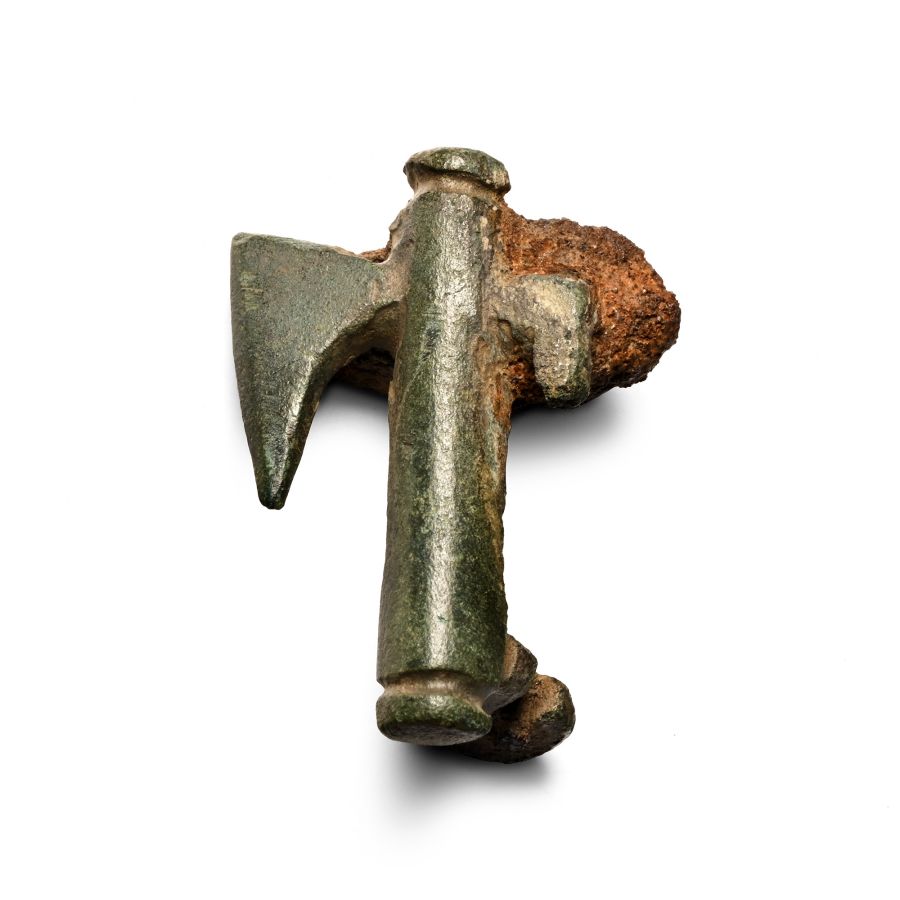
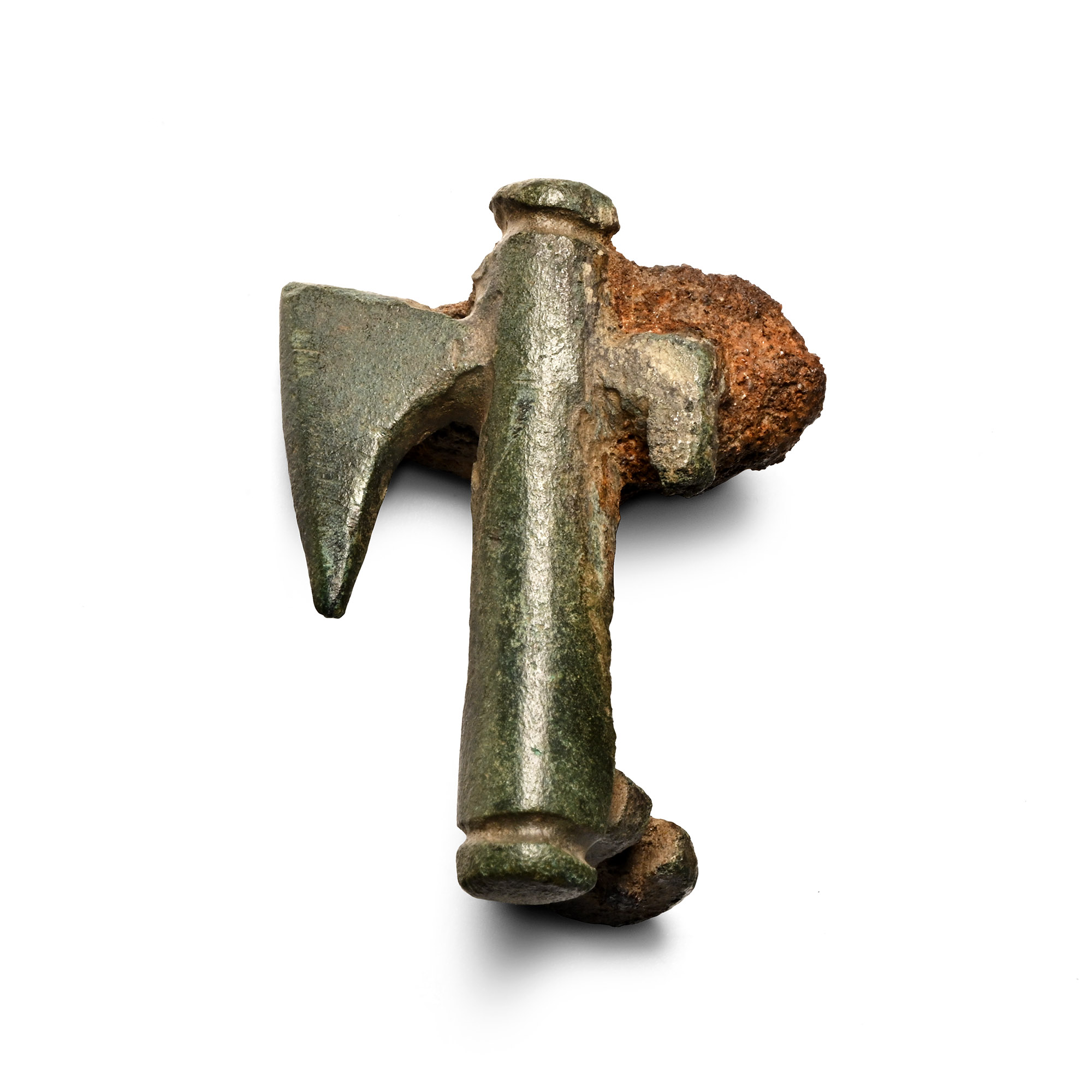
Roman Bronze Axe Fibula
1ST CENTURY A.D.
1 3/8 in. (14.7 grams, 34 mm).
With a vertical cutting edge to the blade, D-sectioned shaft with baluster-style terminals; remains of ferrous pin, hinge and catch-plate to reverse. [No Reserve]
ProvenanceEx DRG Coins and Antiquities, Bishops Stortford, Essex, UK.
From the private collection of a West London, UK, gentleman, formed since the early 2000s.
Accompanied by a handwritten dealer's ticket.
Cf. Hattatt, R., Brooches of Antiquity, Oxford, 1987, item 1143, for type.
CONDITIONTimeLine Auctions follows a vetting process to ensure the authenticity and legality of all items, reinforcing our commitment to integrity and responsible trading. Each antiquity, antique, and coin lot undergoes thorough examination by a vetting committee of at least ten external specialists, professional trade association members, scientists, and archaeologists: Our Vetting Process
AUCTIONS:
TimeLine is a leading auction house specialising in antiquities, ancient art, collectables, natural history, coins, medals, and books. Our auctions offer museums, collectors, historians, and enthusiasts the opportunity to acquire unique and historically significant pieces.
-
Roman Children’s Gold and Gemstone Ring Group
1st-2nd century A.D.Estimate: £2,000 - 3,000 (+bp*)
Opening Bid: £1,000
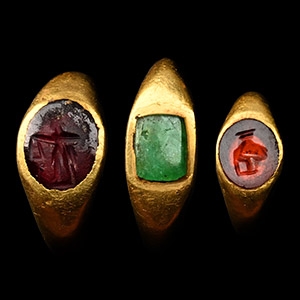
Comprising three rings, the largest ring set with a garnet intaglio with a standing male figure (Odysseus shooting with his bow); the slightly smaller ring set with an emerald; the smallest ring set with a garnet intaglio of an amphora; accompanied by a custom-made display stand. 3.82 grams total, 9-13 mm
Private English collection, formed between the late 1970s and early 1990s. Private collection, UK. This lot has been checked against the Interpol Database of stolen works of art and is accompanied by search certificate number no.12956-245984. -
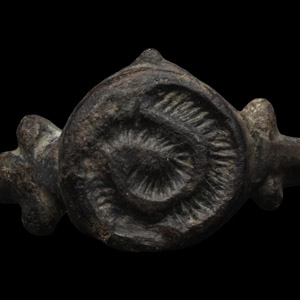
Roman Bronze Ring with Animal
3rd-5th century A.D.Sold for (Inc. bp): £72
Round-section large hoop with pellets at the shoulders, discoid bezel with stylised sinuous animal. 7.89 grams, 27.31 mm overall, 22.50 mm internal diameter (approximate size British V 1/2, USA 10 3/4, Europe 24.4, Japan 23)
Ex German art market, 2000s. Acquired from an EU collector living in London. From the collection of a Surrey, UK, gentleman. -
.jpg)
Roman Enamelled Bronze 'Tortoise' Brooch
2nd century A.D.Sold for (Inc. bp): £20
Comprising a right-angled transverse neck, plate with scooped sides and tortoise-head finial; remains of enamel and hatching to the obverse. 9.14 grams, 37 mm
From the collection of a Buckinghamshire, UK, collector established from the earlier 1960s.
