
Loading, please wait...
LOT 0915
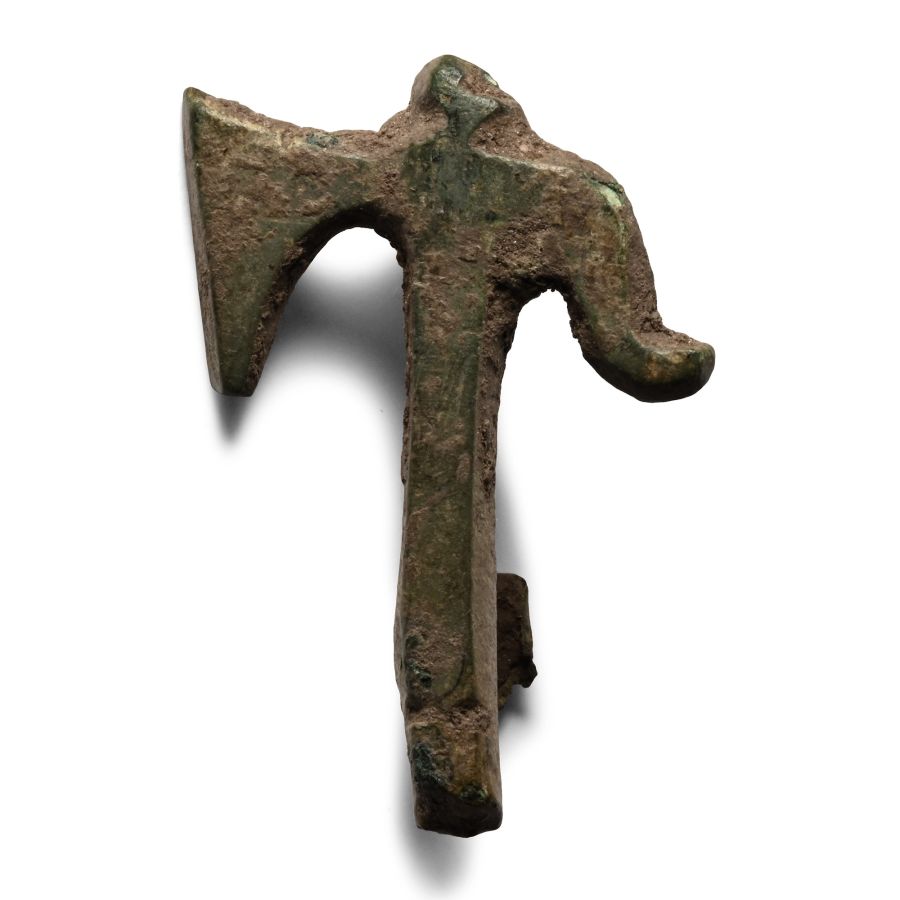
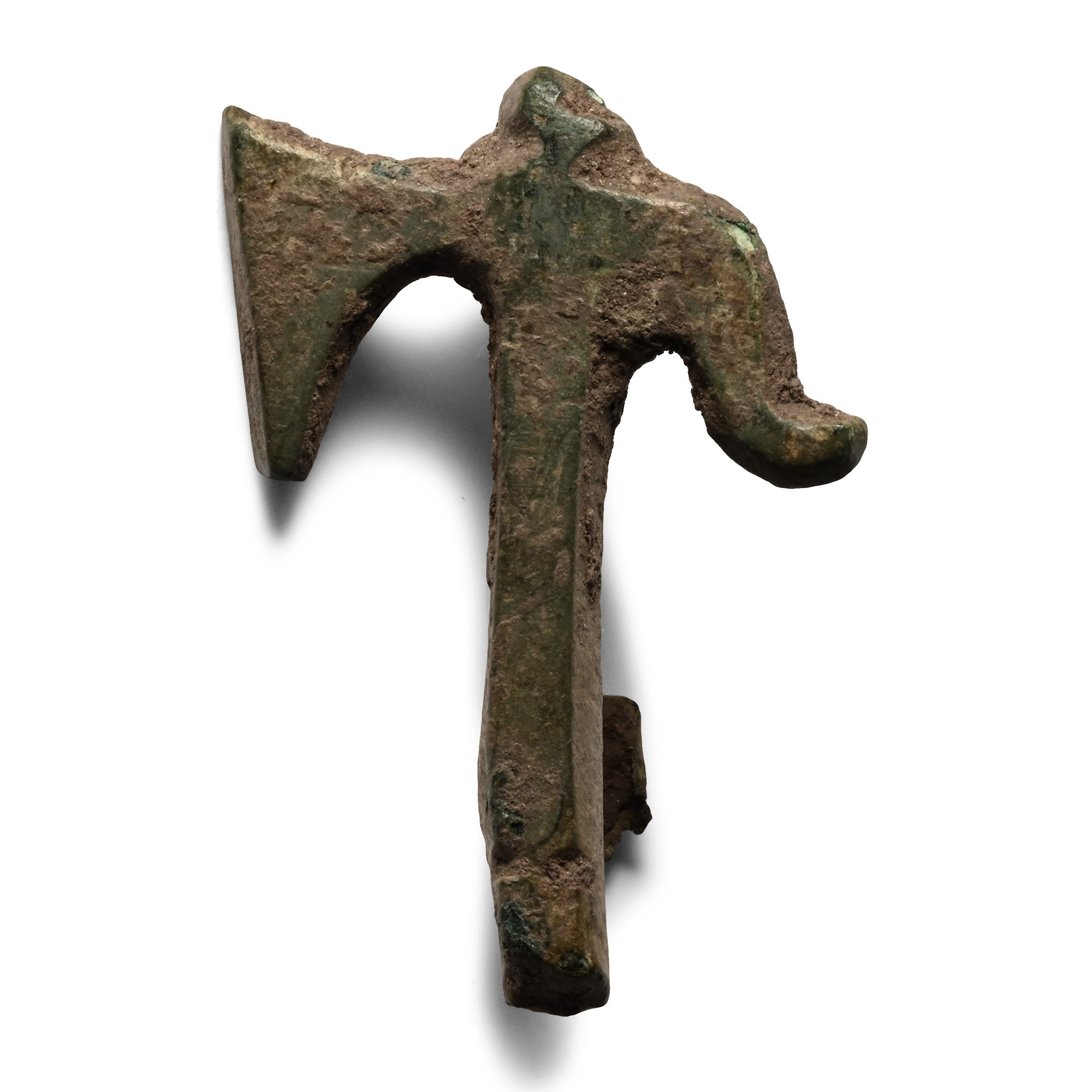
Roman Bronze Axe Brooch
1ST CENTURY A.D.
1 1/8 in. (4.58 grams, 29 mm).
Formed as an axe with slender handle, curved spur to rear; hinged pin and catch to the reverse. [No Reserve]
ProvenanceEx DRG Coins and Antiquities, Bishops Stortford, Essex, UK.
From the private collection of a West London, UK, gentleman, formed since the early 2000s.
Accompanied by a handwritten dealer's ticket.
Cf. Melchart, W., Antike Kostbarkeiten aus Osterreichischem privatbesitz, Wien, 1997, fig.22, for similar.
CONDITIONTimeLine Auctions follows a vetting process to ensure the authenticity and legality of all items, reinforcing our commitment to integrity and responsible trading. Each antiquity, antique, and coin lot undergoes thorough examination by a vetting committee of at least ten external specialists, professional trade association members, scientists, and archaeologists: Our Vetting Process
AUCTIONS:
TimeLine is a leading auction house specialising in antiquities, ancient art, collectables, natural history, coins, medals, and books. Our auctions offer museums, collectors, historians, and enthusiasts the opportunity to acquire unique and historically significant pieces.
-
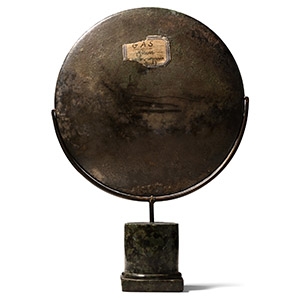
Roman Silver Mirror
1st-3rd century A.D.Sold for (Inc. bp): £1,755
Discoid with raised, rounded rim; a 19th-century collection label bearing a handwritten inscription: ‘GAS, Miroir, Gallo Romain’ indicating the findspot; mounted on a custom-made display stand with serpentine column base. 239 grams, 13.8 cm (426 grams total, 20.1 cm including stand)
19th century collection label inscribed in ink ‘GAS, Miroir, Gallo-Romain’, indicating that the mirror was discovered at Gas, Eure-et-Loir, northern France. Private collection, UK.
The British Museum houses several notable ancient Roman silver hand mirrors, including: 1. Bursa Treasure Mirror – Part of the Bursa Treasure, a 1st-century AD Roman silver hoard discovered near Bursa, Turkey. This collection includes a large silver mirror, reflecting the luxurious personal items used by elite Roman women. 2. Chaourse Treasure Mirror – found in 1883 near Chaourse, France, this 2nd–3rd century AD hoard contains various silver objects, including a silvered bronze mirror, offering insights into the affluent lifestyles of Roman society. These mirrors exemplify the exquisite craftsmanship and refined artistry of Roman silverwork, providing a glimpse into the daily grooming practices and material culture of the Roman elite. -
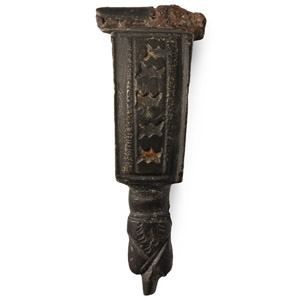
Romano-British Bronze Bow Brooch with Bird Terminal
2nd century A.D.Sold for (Inc. bp): £52
Wide bow with a raised decorative panel with polygonal cells for enamel, zoomorphic finial. 4.66 grams, 37 mm
Found Norfolk, UK. From a Kent collection formed in the 1990s. -
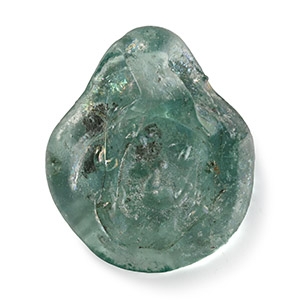
Roman Glass Pendant
1st-4th century A.D.Estimate: £100 - 140 (+bp*)
Opening Bid: £50
Discoid with impressed design of a bull's heads with cross above, objects in the field. 3.38 grams, 26 mm
From the private collection of the late Mr S.M., 1969-1999.
