
Loading, please wait...
LOT 0588
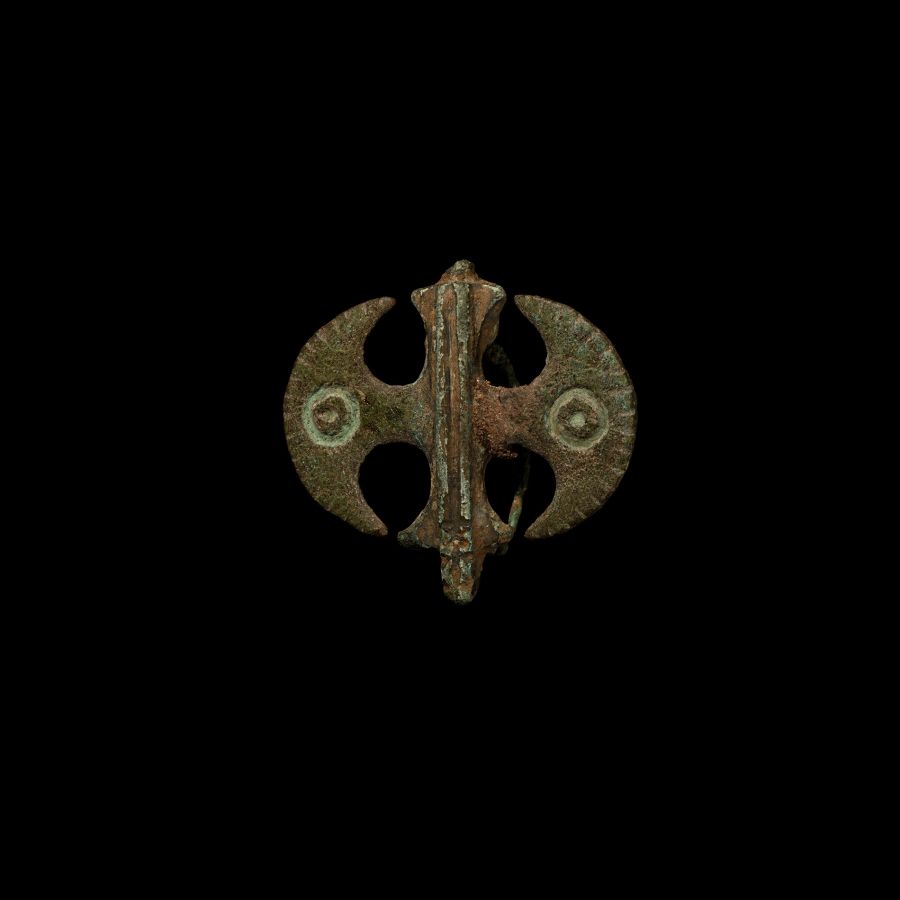
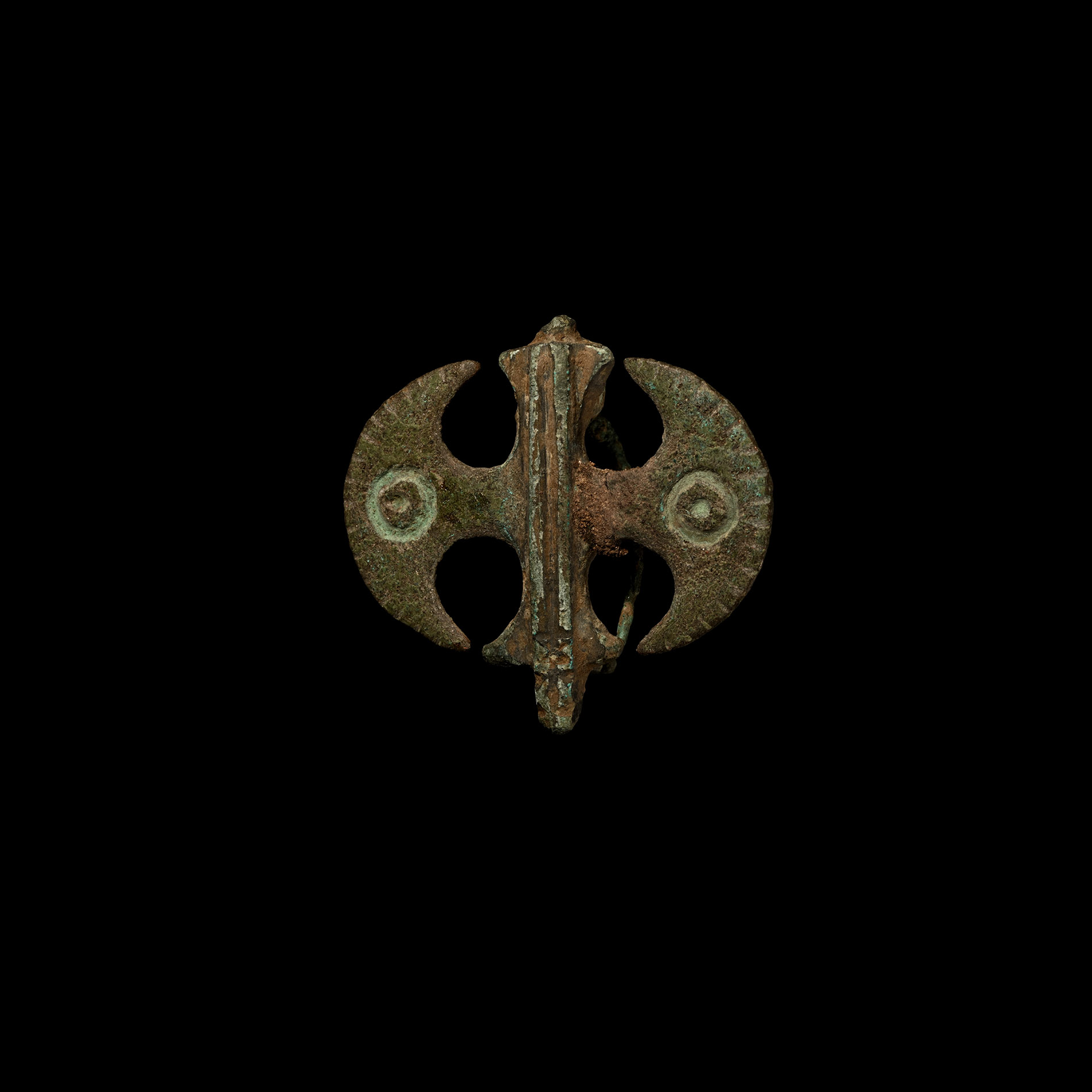
Roman Bronze Axe Brooch
3RD CENTURY A.D.
1 3/8 in. (9.2 grams, 37 mm).
Plate brooch with raised vertical shaft and lateral crescent blades each with notched outer edge and incised ring-and-dot motif; catch and pin to the reverse. [No Reserve]
ProvenanceEx Cambridgeshire, UK, collection, 1980s.
LiteratureCf. Heeren, S. & van der Feijst, L., Fibulae uit de Lage Landen. Beschrijving, Analyse en Interpretatie van een Archeologische Vondstcategorie, Amersfoort, 2017, item NL-0434-16a-442, for type.
CONDITIONTimeLine Auctions follows a vetting process to ensure the authenticity and legality of all items, reinforcing our commitment to integrity and responsible trading. Each antiquity, antique, and coin lot undergoes thorough examination by a vetting committee of at least ten external specialists, professional trade association members, scientists, and archaeologists: Our Vetting Process
AUCTIONS:
TimeLine is a leading auction house specialising in antiquities, ancient art, collectables, natural history, coins, medals, and books. Our auctions offer museums, collectors, historians, and enthusiasts the opportunity to acquire unique and historically significant pieces.
-
Roman Silver Ring with Gemstone
3rd century A.D.Sold for (Inc. bp): £442
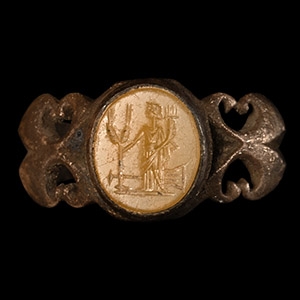
The hoop expanding to openwork double peltate shoulders, bezel set with intaglio gemstone portraying the goddess Fortuna. 10.92 grams, 26.70 mm overall, 21.03 mm internal diameter (approximate size British Q 1/2, USA 8 1/4, Europe 18.12, Japan 17)
From the collection of a North American gentleman, formed in the 1990s. -

Roman Bronze Triclinium Finial Set
1st-4th century A.D.Sold for (Inc. bp): £455
Comprising four bed finials, each with a bell-shaped body and baluster style finial; hollow to base. 1.18 kg total, 9.6-10.1 cm
Acquired before 2000. From the collection of a European gentleman living in the UK.
The Romans, like the Greeks, ate whilst reclined on beds. The eating bed (lectus triclinaris) was a luxury furniture item crafted by carpenters. From the 2nd century B.C., Romans started to create 'lecti aerati, inargentati, inaurati, eborati, testudinei,' i.e. beds made of wood and covered with bronze, silver, gold and ivory fittings or with scales of other precious material. Such elements were sometimes sculpted in the shape of an animal protome, or were simply bell-shaped, like our specimens. -
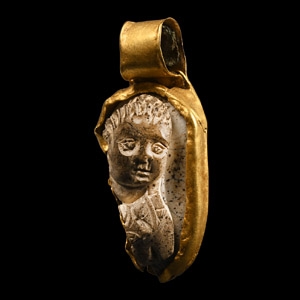
Roman Gold Pendant with Cameo
Circa 1st-2nd century A.D.Estimate: £600 - 800 (+bp*)
Opening Bid: £240
Suspension loop to one edge, the stone cameo fragment portraying a young boy. 3.84 grams, 30 mm
Acquired 1990s-early 2000s. East Anglian private collection.
