
Loading, please wait...
LOT 0642
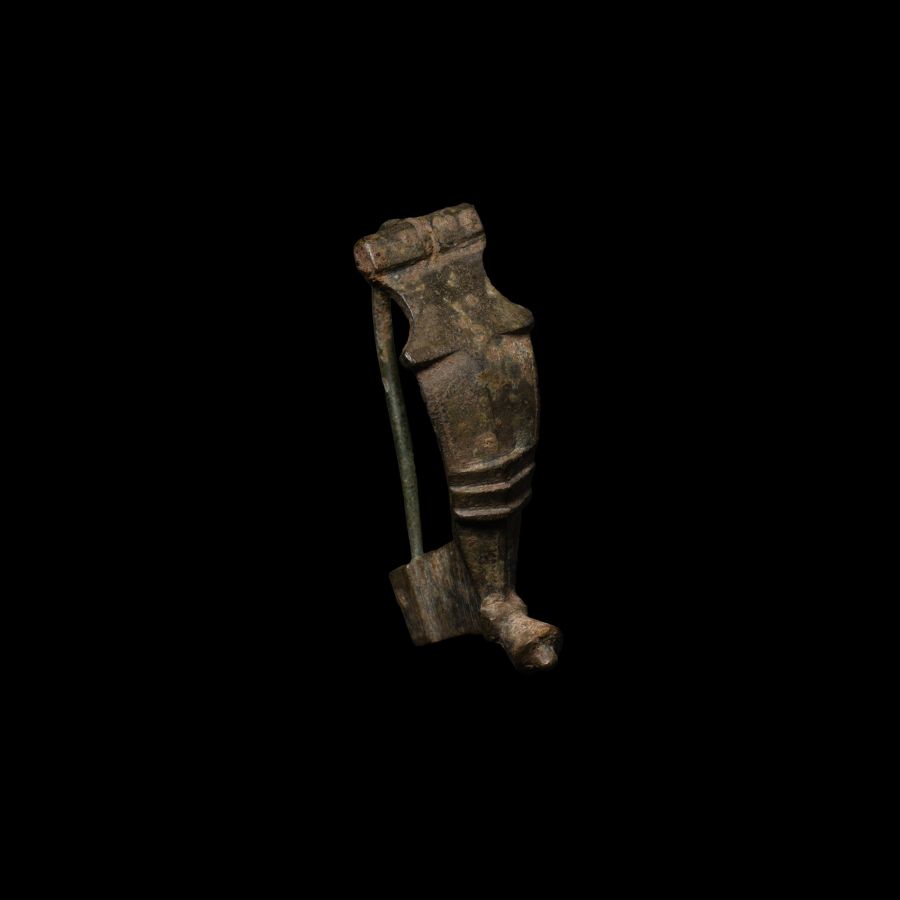
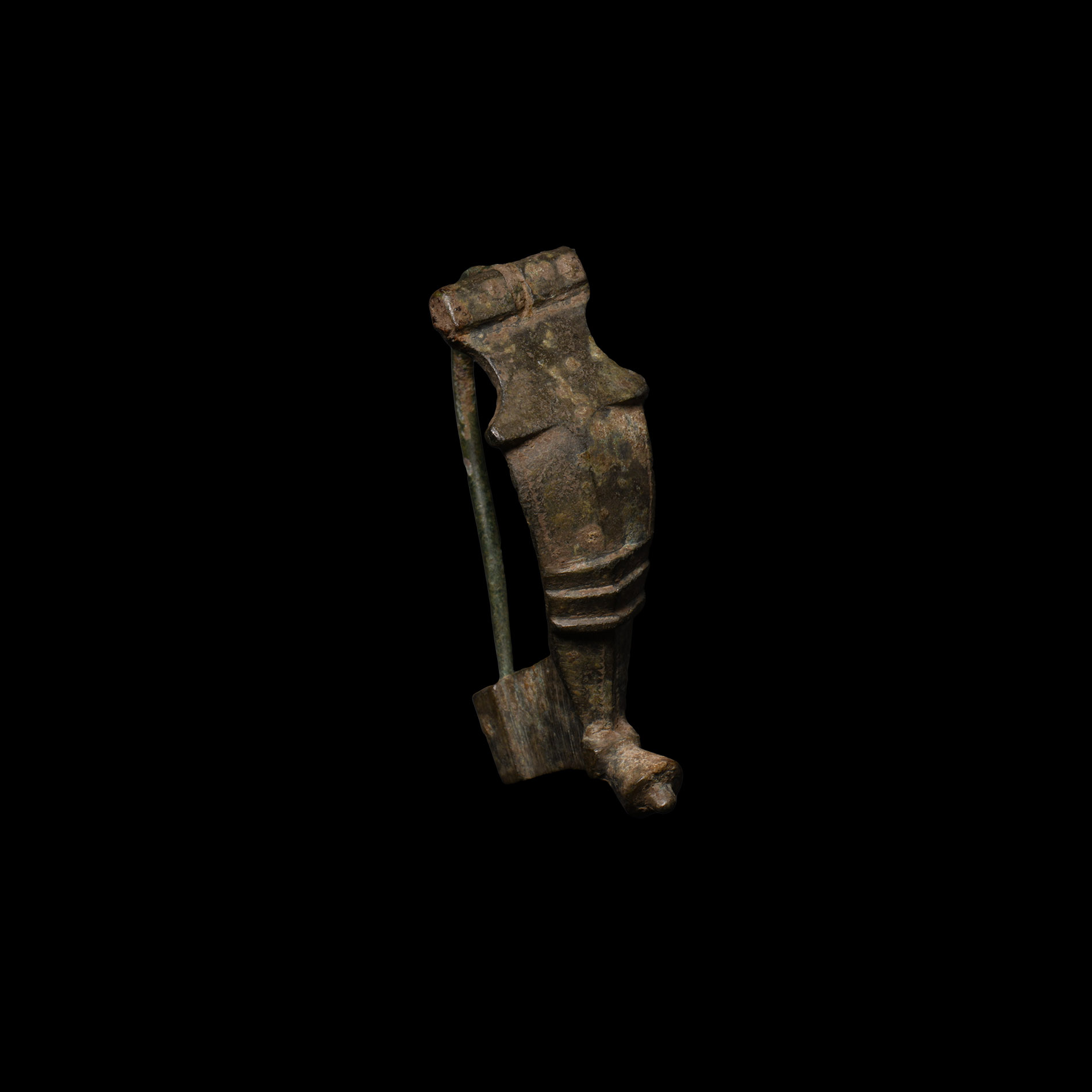
Roman Bronze Aussica Brooch
2ND-3RD CENTURY A.D.
1 7/8 in. (14.1 grams, 48 mm).
Complete with pin and catchplate to reverse; decorative transverse ribs and projecting boss. [No Reserve]
ProvenanceFound in South East England.
CONDITIONTimeLine Auctions follows a vetting process to ensure the authenticity and legality of all items, reinforcing our commitment to integrity and responsible trading. Each antiquity, antique, and coin lot undergoes thorough examination by a vetting committee of at least ten external specialists, professional trade association members, scientists, and archaeologists: Our Vetting Process
AUCTIONS:
TimeLine is a leading auction house specialising in antiquities, ancient art, collectables, natural history, coins, medals, and books. Our auctions offer museums, collectors, historians, and enthusiasts the opportunity to acquire unique and historically significant pieces.
-
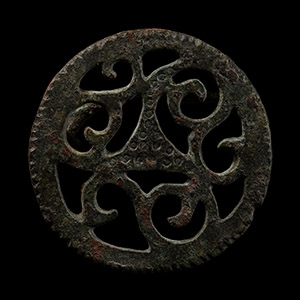
Roman Bronze Openwork Disc Brooch
3rd-4th century A.D.Sold for (Inc. bp): £72
Formed with a triangular central element surrounded by scrolled bars; the centre and rim with punched annular ornament; pin (bent), pin-lug and catchplate intact. 22.8 grams, 44 mm
Acquired prior to 1980. Ex UK art market. -
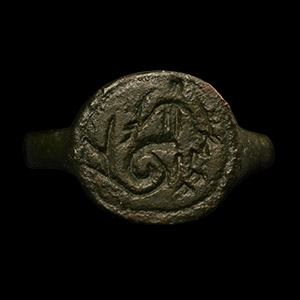
Roman Bronze Ring with Merman
2nd-4th century A.D.Sold for (Inc. bp): £72
Trumpet bezel with incuse Triton figure. 4.38 grams, 23.80 mm overall, 18.82 mm internal diameter (approximate size British Q 1/2, USA 8 1/4, Europe 18.12, Japan 17)
Private collection formed since the 1940s. UK art market. Property of an Essex gentleman. -
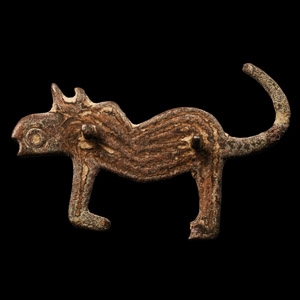
Roman Bronze Dog Brooch
2nd-3rd century A.D.Estimate: £150 - 200 (+bp*)
Opening Bid: £75
The body characterised by a series of horizontal grooves, raised pins to the front and back, the ones on the back probably for the attachment of the hinged pin. 2.5 grams, 34 mm
Acquire in the 1990s. Ex Cambridgeshire, UK, collection.
This unusual fibula was probably a provincial production. The dog was connected to the Celtic divinities and also with Silvanus, who was associated with healing, hunting, and dogs.
