
Loading, please wait...
LOT 0659
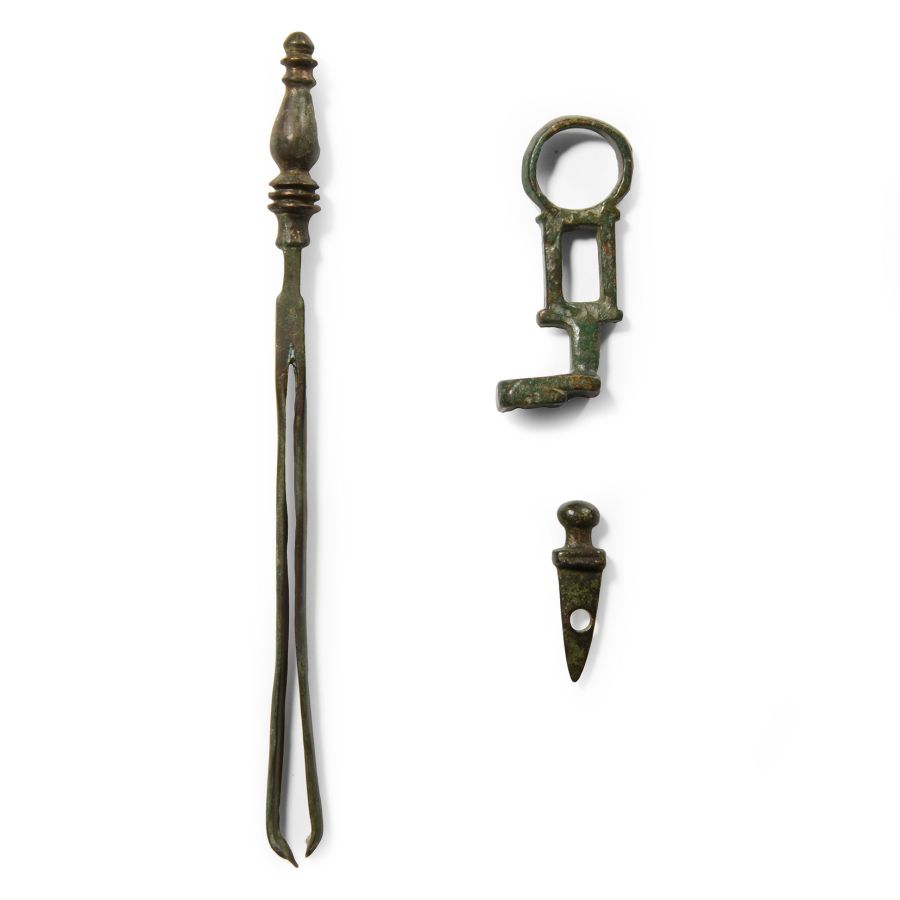
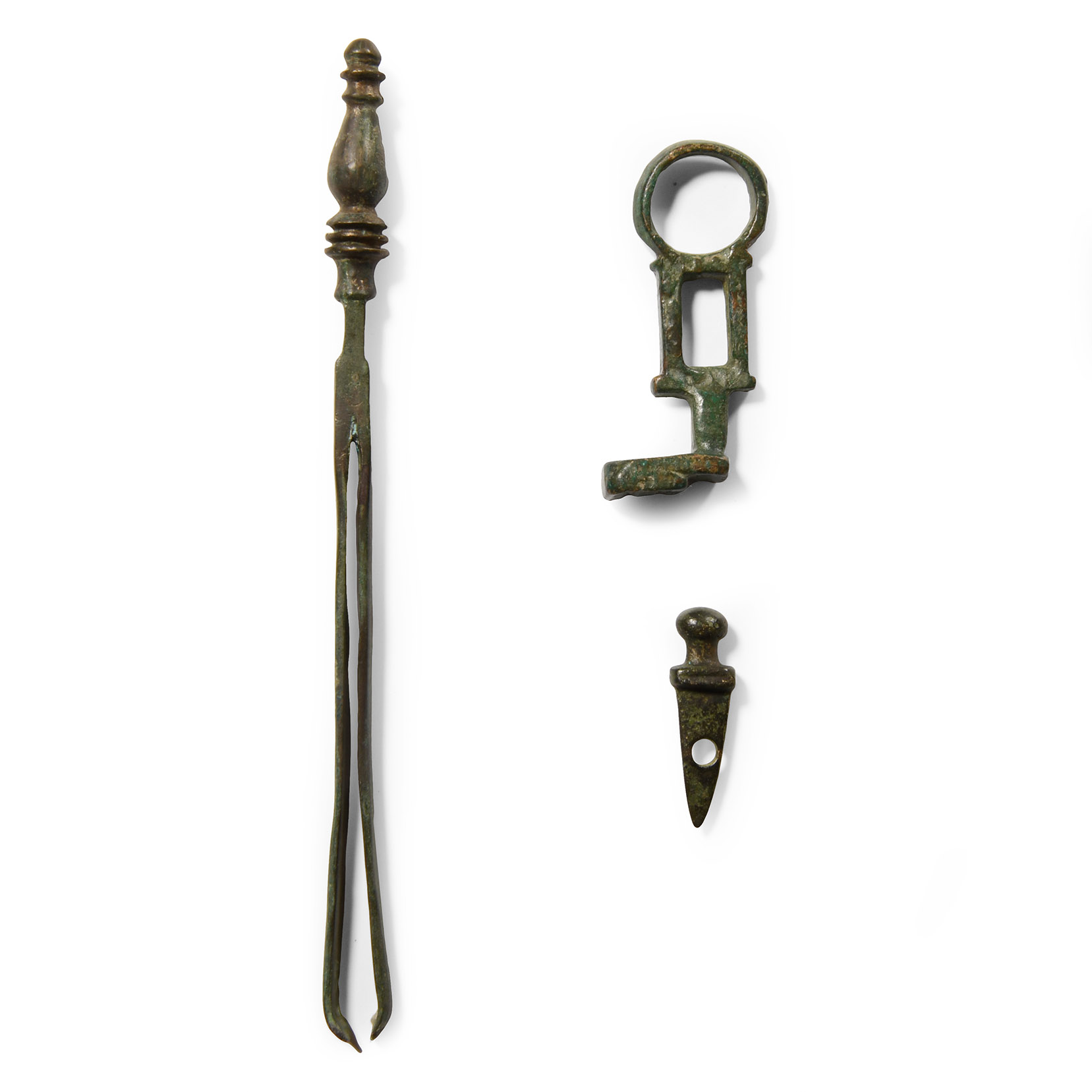
Roman Bronze Artefact Group
1ST-3RD CENTURY A.D.
1 1/8 - 5 1/2 in. (46 grams total, 3-13.9 cm).
Including a bronze tweezer set, openwork key, and gladius sword amulet. [3, No Reserve]
ProvenanceProperty of the vendor's grandfather, thence by family descent, circa 1985.
From the private collection of a New York, USA gentleman.
TimeLine Auctions follows a vetting process to ensure the authenticity and legality of all items, reinforcing our commitment to integrity and responsible trading. Each antiquity, antique, and coin lot undergoes thorough examination by a vetting committee of at least ten external specialists, professional trade association members, scientists, and archaeologists: Our Vetting Process
AUCTIONS:
TimeLine is a leading auction house specialising in antiquities, ancient art, collectables, natural history, coins, medals, and books. Our auctions offer museums, collectors, historians, and enthusiasts the opportunity to acquire unique and historically significant pieces.
-
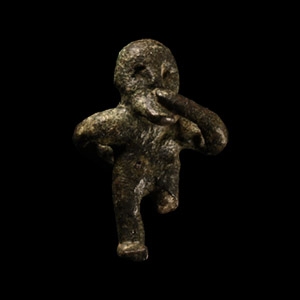
Roman Bronze Bearded Grotesque Statuette
Circa 3rd century A.D.Sold for (Inc. bp): £117
Modelled standing nude with left hand covering the mouth and right hand on the buttocks. 8.72 grams, 27 mm
From a collection acquired on the UK art market from various auction houses and collections mostly before 2000. From an important Cambridgeshire estate; thence by descent. -
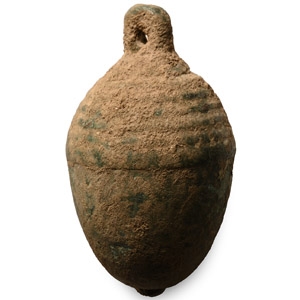
Roman Mason's Acorn-Shaped Plumb Bob Weight
1st-3rd century A.D.Sold for (Inc. bp): £208
Substantial lead-filled bronze with loop above and ribbed cup. 325 grams, 62 mm
From the private collection of the late Victor Brox. -
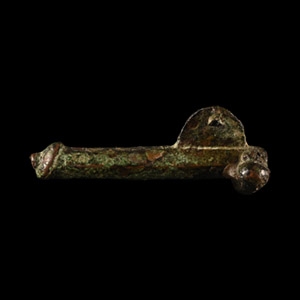
Roman Bronze Winged Phallus
1st-4th century A.D.Sold for (Inc. bp): £59
Amuletic pendant of a phallus with lateral D-shaped wings. 11.15 grams, 44 mm
From a collection acquired on the UK art market from various auction houses and collections mostly before 2000. From an important Cambridgeshire estate; thence by descent.
