Loading, please wait...

Roman Bronze Artefact Group Roman Bronze Artefact Group Roman Bronze Artefact Group
Use mousewheel to zoom in and out, click to enlarge
Details

LOT 0646

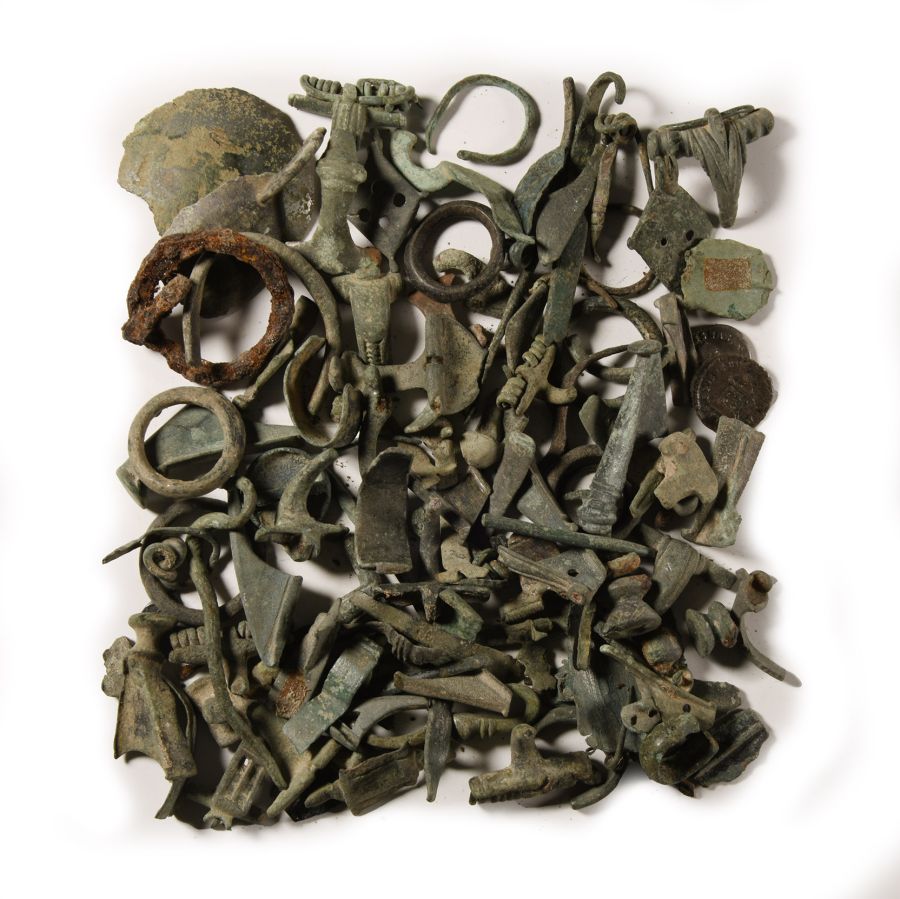
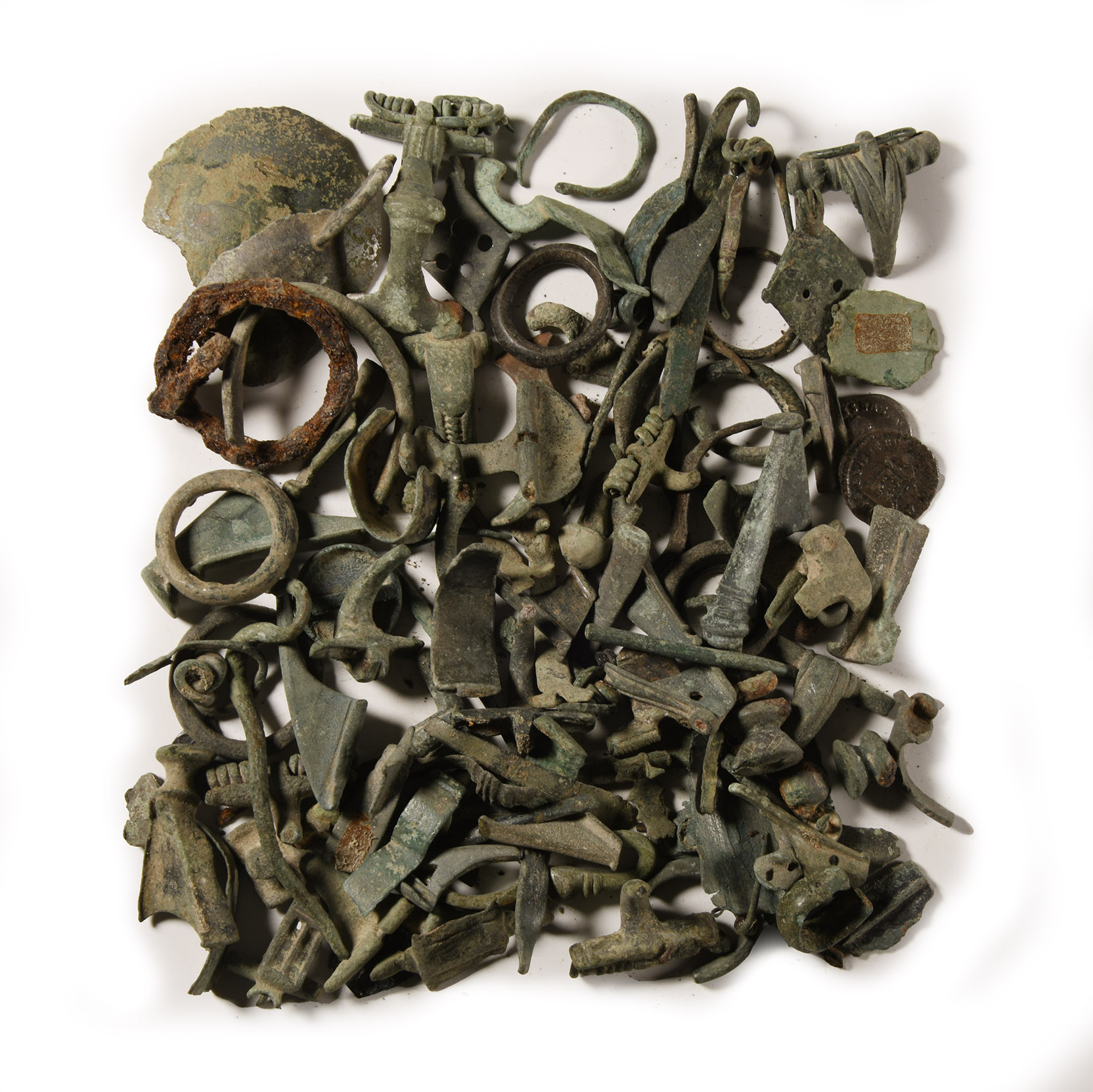
Roman Bronze Artefact Group

1ST-4TH CENTURY A.D.

1/8 - 3 1/4 in. (420 grams total, 5-83 mm).

Including bow brooch parts, belt fittings, silver coins, bowl mount and other items. [112, No Reserve]

Provenance

Found Wiltshire, UK, before 1974.

CONDITION
VETTING:

TimeLine Auctions follows a vetting process to ensure the authenticity and legality of all items, reinforcing our commitment to integrity and responsible trading. Each antiquity, antique, and coin lot undergoes thorough examination by a vetting committee of at least ten external specialists, professional trade association members, scientists, and archaeologists: Our Vetting Process


AUCTIONS:

TimeLine is a leading auction house specialising in antiquities, ancient art, collectables, natural history, coins, medals, and books. Our auctions offer museums, collectors, historians, and enthusiasts the opportunity to acquire unique and historically significant pieces.

LOT 0646

Roman Bronze Artefact Group

Sold for (Inc. bp): £124

Print page

RELATED LOTS
  • Roman Bronze Grotesque Figure with Paenula
    Roman Bronze Grotesque Figure with Paenula
    2nd century A.D.

    Sold for (Inc. bp): £468

    Hollow-formed with short hair and a beret, wearing a paenula military cloak extending to the hips; mounted on a custom-made display stand. 110 grams total, 90 mm including stand


    From a collection acquired on the UK art market from various auction houses and collections mostly before 2000. From an important Cambridgeshire estate; thence by descent.

    Telesphorus, dressed in the Gallo-Roman manner with the long hooded military cloak (folded on his back), was the subject of many votive statuettes in Roman Gaul. Son of Aesculapius, god of medicine, he certainly had a connection with the world of healing and medical care, and was associated with his sister Hygeia. He belonged to the Celtic pantheon and was spread to the East by the Galatians of Asia Minor. His cult then spread to the West, particularly in the Hadrianic period, as attested by his images found on the Wall at Birdoswald.

    Lot Details

  • Roman Lead Statuette of Mercury
    Roman Lead Statuette of Mercury
    1st-2nd century A.D.

    Sold for (Inc. bp): £221

    Standing in contrapposto pose, wearing a cloak draped from the right shoulder and tucked around the left arm supporting a caduceus with snake-head finials; broad-brimmed petasos with wings on the crown; the right arm held vertically at the side supporting the marsupium coin-purse; mounted on a custom-made display stand. 111 grams total, 88 mm including stand


    From a collection acquired on the UK art market from various auction houses and collections mostly before 2000. From an important Cambridgeshire estate; thence by descent.

    Mercury was the god of trade and industry, whose principle shrine in the city of Rome was at the Circus Maximus. The draped mantle is typical for statuary of Mercury from the 1st-2nd century A.D. (Boucher, pl.40, 43) as is the caduceus (Boucher, pl.46 (211)).

    Lot Details

  • Roman Bronze Square Bell
    Roman Bronze Square Bell
    1st-4th century A.D.

    Sold for (Inc. bp): £46

    With integral loop and four spurs to the lower edge; remains of ferrous clapper in situ. 43.1 grams, 42 mm


    Ex German art market, 2000s. Acquired from an EU collector living in London. From the collection of Surrey, UK, gentleman.

    Lot Details

Stay up-to-date with the latest from TimeLine Auctions by joining our mailing list