Loading, please wait...

Use mousewheel to zoom in and out, click to enlarge

Details

LOT 0678

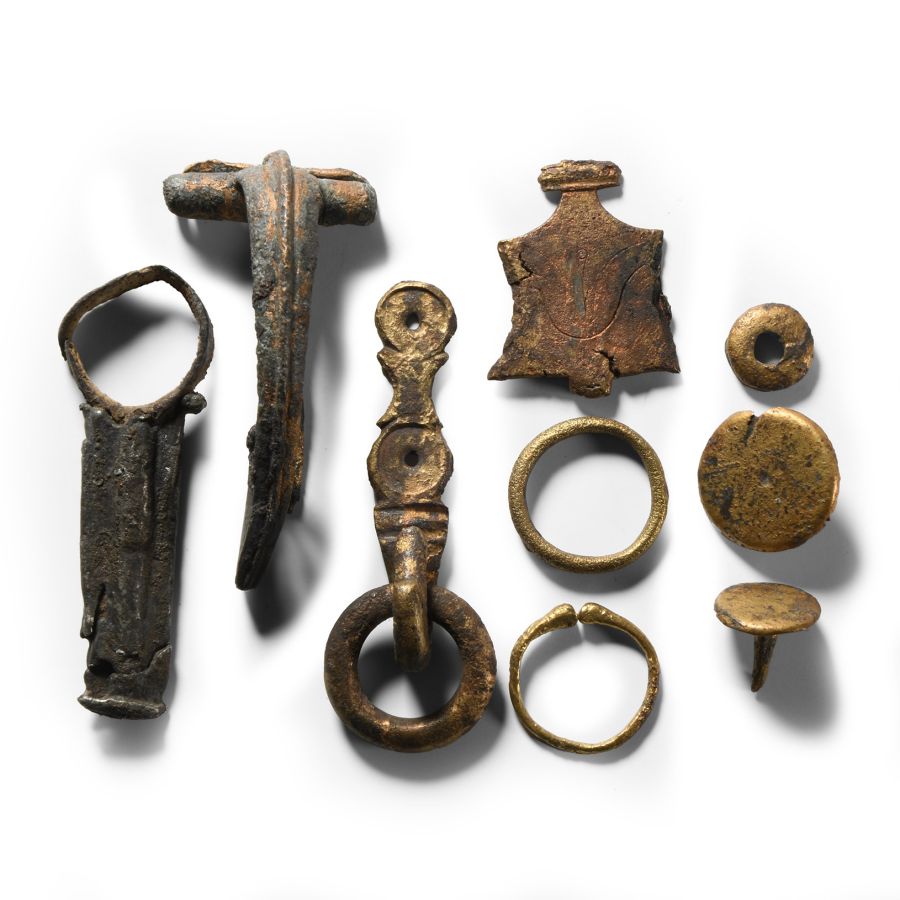
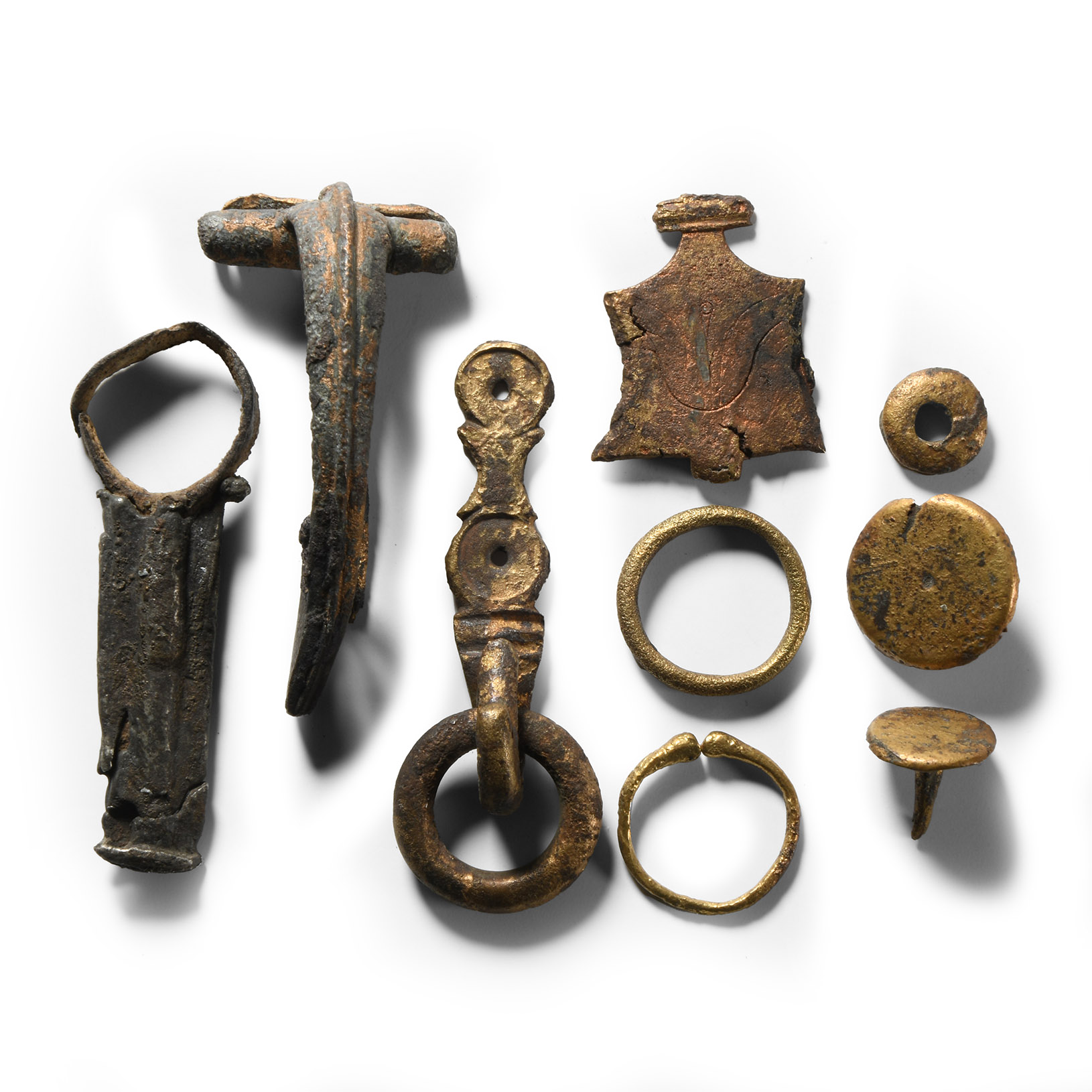
Roman Bronze Artefact Group

CIRCA 1ST CENTURY A.D.

1/2 - 2 3/4 in. (75 grams total, 12-69 mm).

Including a military belt plate and suspension ring, a penannular finger ring, a Polden Hill type bow brooch and other items. [9, No Reserve]

Provenance

Found City of London, UK.
Acquired from mudlark Steve Brooker in the early 2000s.
Ian Wilkinson collection, Nottinghamshire, UK, formed since 1985.

CONDITION

VETTING:

TimeLine Auctions follows a vetting process to ensure the authenticity and legality of all items, reinforcing our commitment to integrity and responsible trading. Each antiquity, antique, and coin lot undergoes thorough examination by a vetting committee of at least ten external specialists, professional trade association members, scientists, and archaeologists: Our Vetting Process


AUCTIONS:

TimeLine is a leading auction house specialising in antiquities, ancient art, collectables, natural history, coins, medals, and books. Our auctions offer museums, collectors, historians, and enthusiasts the opportunity to acquire unique and historically significant pieces.

LOT 0678

Roman Bronze Artefact Group

Sold for (Inc. bp): £52

Print page

RELATED LOTS

  • Roman Bronze Grotesque Figure with Paenula
    Roman Bronze Grotesque Figure with Paenula
    2nd century A.D.

    Sold for (Inc. bp): £468

    Hollow-formed with short hair and a beret, wearing a paenula military cloak extending to the hips; mounted on a custom-made display stand. 110 grams total, 90 mm including stand


    From a collection acquired on the UK art market from various auction houses and collections mostly before 2000. From an important Cambridgeshire estate; thence by descent.

    Telesphorus, dressed in the Gallo-Roman manner with the long hooded military cloak (folded on his back), was the subject of many votive statuettes in Roman Gaul. Son of Aesculapius, god of medicine, he certainly had a connection with the world of healing and medical care, and was associated with his sister Hygeia. He belonged to the Celtic pantheon and was spread to the East by the Galatians of Asia Minor. His cult then spread to the West, particularly in the Hadrianic period, as attested by his images found on the Wall at Birdoswald.

    Lot Details

  • Gallo-Roman Bronze Statuette of a Rider God
    Gallo-Roman Bronze Statuette of a Rider God
    1st century B.C.-1st century A.D.

    Sold for (Inc. bp): £182

    Modelled in the round as a nude horseman with legs spread, musculature suggested to the chest and abdomen, shoulder-length hair with wavy locks, almond-shaped eyes and snub nose; right hand extended palm-upwards; mounted on a custom-made display stand. 154 grams total, 11 cm including stand


    From a collection acquired on the UK art market from various auction houses and collections mostly before 2000. From an important Cambridgeshire estate; thence by descent.

    The type has similarities with representations of Mercury on horseback, who is shown in an identical position. Images of Romano-Celtic rider-gods, possibly associated with the Roman god of war Mars, used similar iconography. There are a number of such rider statuettes from Roman Britain and Gaul, potentially votive offerings to a deity.

    Lot Details

  • Roman Marble Statue of a Boar
    Roman Marble Statue of a Boar
    1st-2nd century A.D.

    Sold for (Inc. bp): £286

    Carved in parchment-coloured marble, the beast stands with head lowered; fur texture to the head and flanks; snout and tusks carefully detailed; mounted on a custom-made display stand. 935 grams total, 14.5 cm wide including stand


    From a collection acquired on the UK art market from various auction houses and collections mostly before 2000. From an important Cambridgeshire estate; thence by descent.

    Lot Details

Stay up-to-date with the latest from TimeLine Auctions by joining our mailing list