
Loading, please wait...
LOT 0921
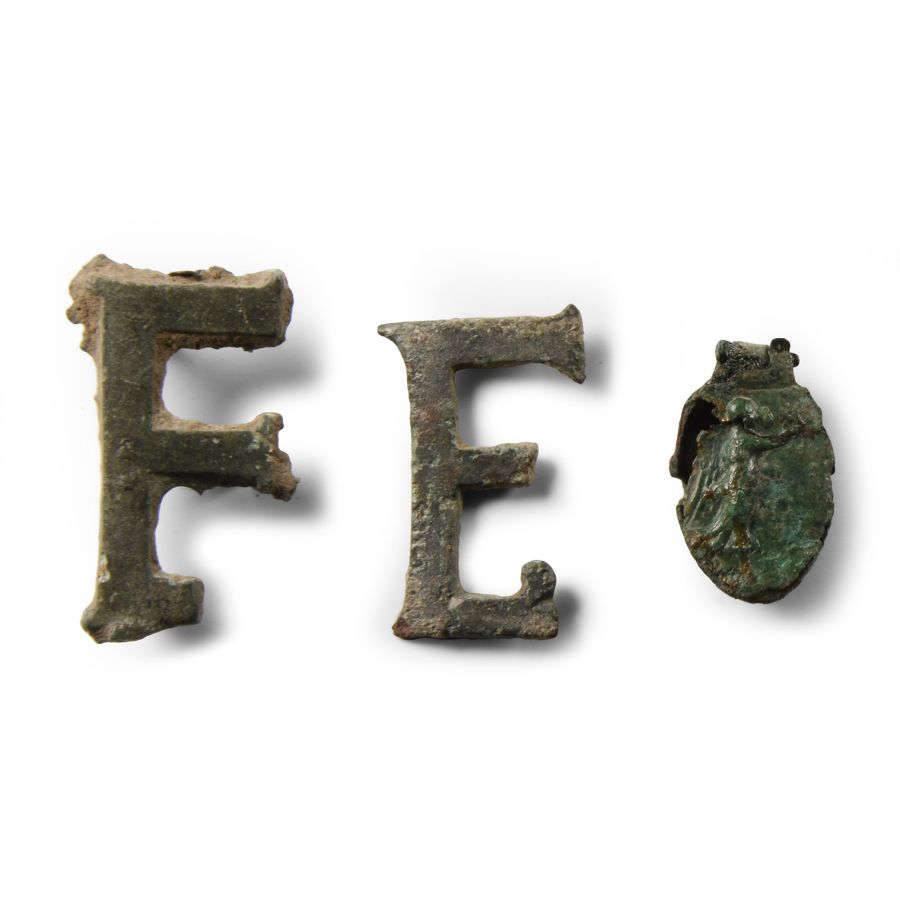
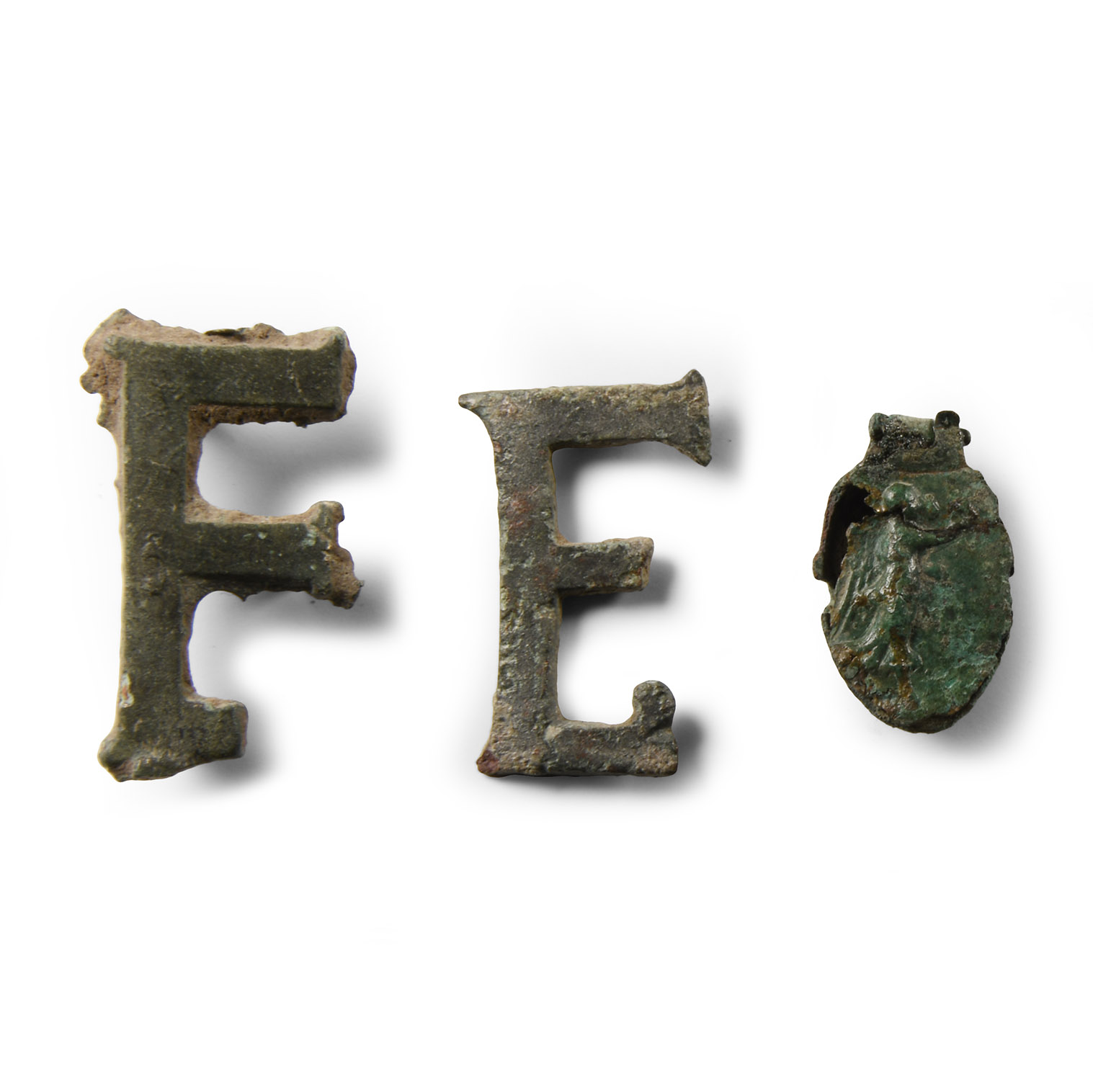
Roman Bronze Artefact Group
CIRCA 3RD CENTURY A.D.
7/8 - 1 3/8 in. (10 grams total, 21-37 mm).
Comprising: two seriffed capital letters 'F' and 'E' (from utere felix inscription); seal box with repoussé image of Victory. [3]
ProvenanceEx German art market, 2000s.
Acquired from an EU collector living in London.
From the collection of Surrey, UK, gentleman.
TimeLine Auctions follows a vetting process to ensure the authenticity and legality of all items, reinforcing our commitment to integrity and responsible trading. Each antiquity, antique, and coin lot undergoes thorough examination by a vetting committee of at least ten external specialists, professional trade association members, scientists, and archaeologists: Our Vetting Process
AUCTIONS:
TimeLine is a leading auction house specialising in antiquities, ancient art, collectables, natural history, coins, medals, and books. Our auctions offer museums, collectors, historians, and enthusiasts the opportunity to acquire unique and historically significant pieces.
-
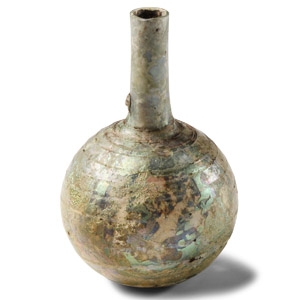
Roman Iridescent Glass Vessel
3rd-4th century A.D.Sold for (Inc. bp): £143
With globular body, columnar neck and ground rim; much iridescence remaining to surface. 20.7 grams, 89 mm
Acquired 1980-2015. Ex Abelita family collection. -
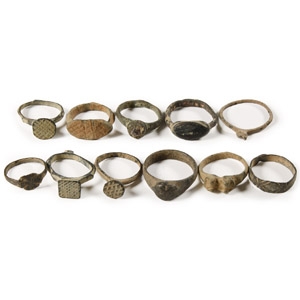
Roman and Byzantine Bronze Ring Group
Circa 3rd-16th century A.D.Sold for (Inc. bp): £111
Including trumpet-bezel, square bezel, ellipsoid bezel and other types. 25 grams total, 15-24 mm
Ex C. Sullivan collection, UK, 1990s. -
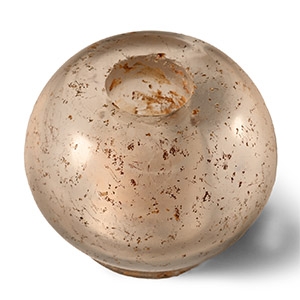
Roman Rock Crystal Vessel
1st-4th century A.D.Sold for (Inc. bp): £572
Globular in form with low basal disc, central socket. 36.7 grams, 32 mm
Acquired in the 1970s. Property of a London lady, part of her family's collection.
