
Loading, please wait...
LOT 0811
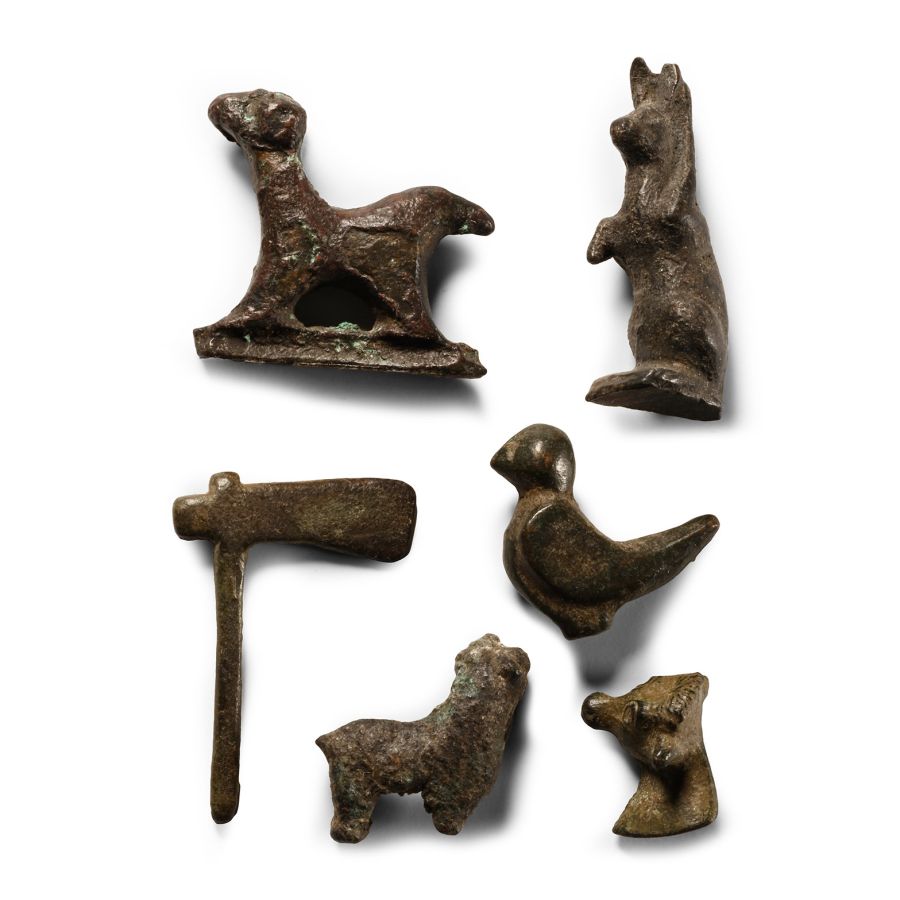
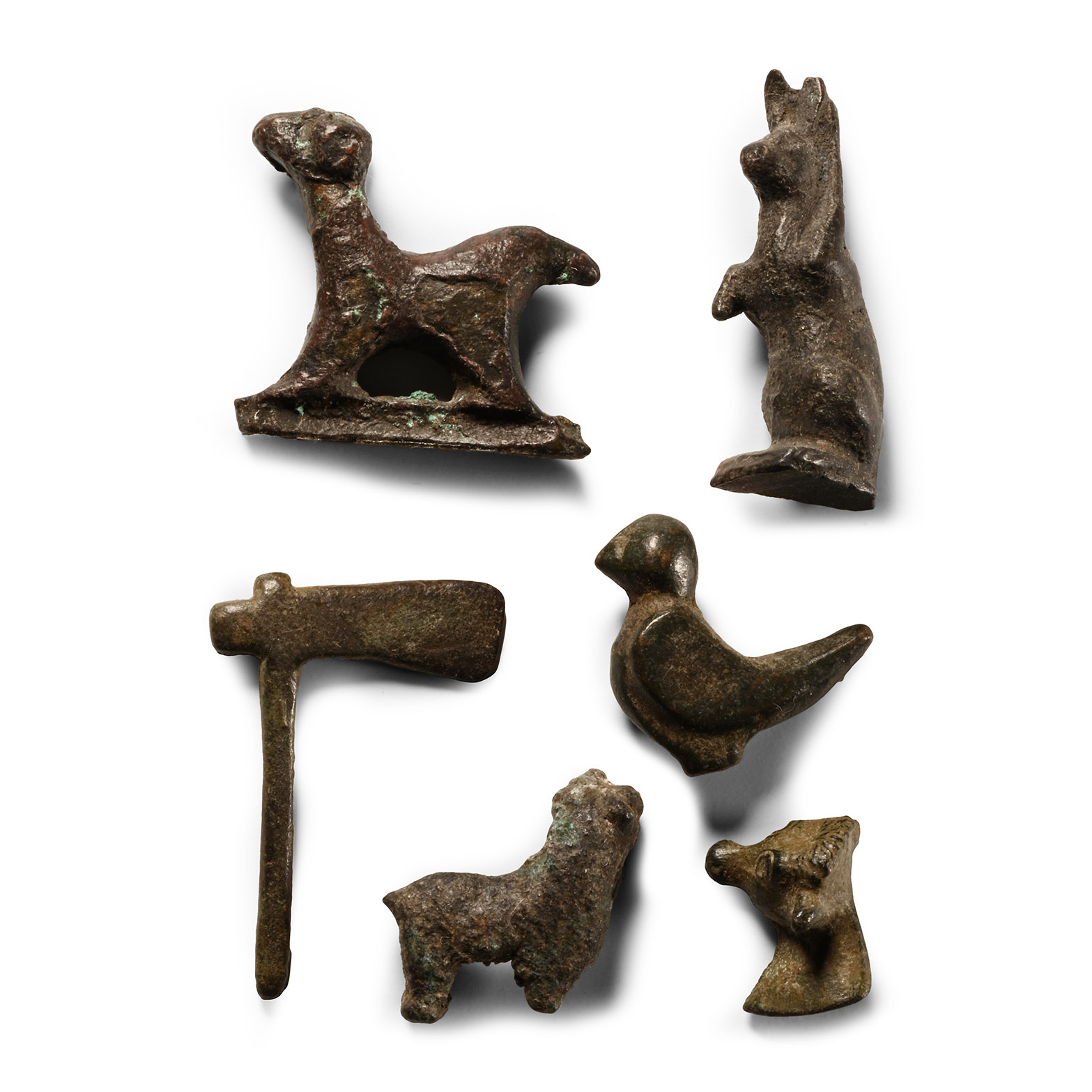
Roman Bronze Artefact Group
MAINLY 1ST-2ND CENTURY A.D.
5/8 - 1 1/4 in. (48 grams total, 15-33 mm).
Mixed group of votives including a hare, bull, axe and other items. [6, No Reserve]
ProvenanceFrom a collection acquired on the UK art market from various auction houses and collections mostly before 2000.
From an important Cambridgeshire estate; thence by descent.
TimeLine Auctions follows a vetting process to ensure the authenticity and legality of all items, reinforcing our commitment to integrity and responsible trading. Each antiquity, antique, and coin lot undergoes thorough examination by a vetting committee of at least ten external specialists, professional trade association members, scientists, and archaeologists: Our Vetting Process
AUCTIONS:
TimeLine is a leading auction house specialising in antiquities, ancient art, collectables, natural history, coins, medals, and books. Our auctions offer museums, collectors, historians, and enthusiasts the opportunity to acquire unique and historically significant pieces.
-
.jpg)
Romano-British Bronze Oil Lamp
Circa 1st century A.D.Sold for (Inc. bp): £1,105
Hollow-formed piriform lamp with D-shaped nozzle and small spout, recessed upper face with three piercings, swept handle formed as the neck of a goose with floral lobes and raised linear detailing. 896 grams, 20.5 cm
Found Bath, UK. From a collection acquired on the UK art market from various auction houses and collections mostly before 2000. From an important Cambridgeshire estate; thence by descent. -
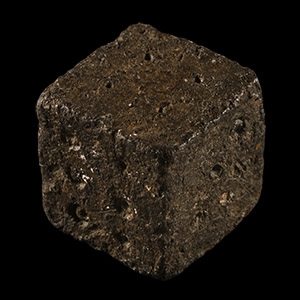
Large Romano-British 'Published' Lead Gaming Dice
Circa 1st-4th century A.D.Sold for (Inc. bp): £286
Cuboid with impressed ring-and-dot motifs disposed 6:5, 4:2, 3:1. 35 grams, 15 mm
Found UK prior to 2000. From the important private collection of dice and gaming pieces of Colin Narbeth, London, collection no.61. Accompanied by a copy of the relevant Celtic & Roman Artefacts book pages where this object is published.
The conventional Roman dice were made in bone or lead, with dots representing numbers from 1 to 6. Roman dice from the Romano-British settlements are often poorly made and often had opposite sides that do not add up to 7. -
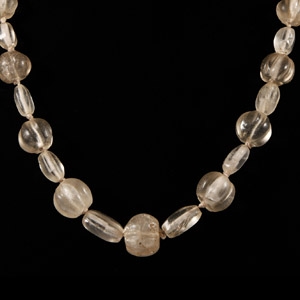
Roman Rock Crystal Bead Necklace
2nd-3rd century A.D.Sold for (Inc. bp): £468
Restrung group of clear quartz melon bead and hexagonal-section tubular beads. 103 grams, 53.5 cm long
with a London, UK gallery 1971.
