
Loading, please wait...
LOT 0726
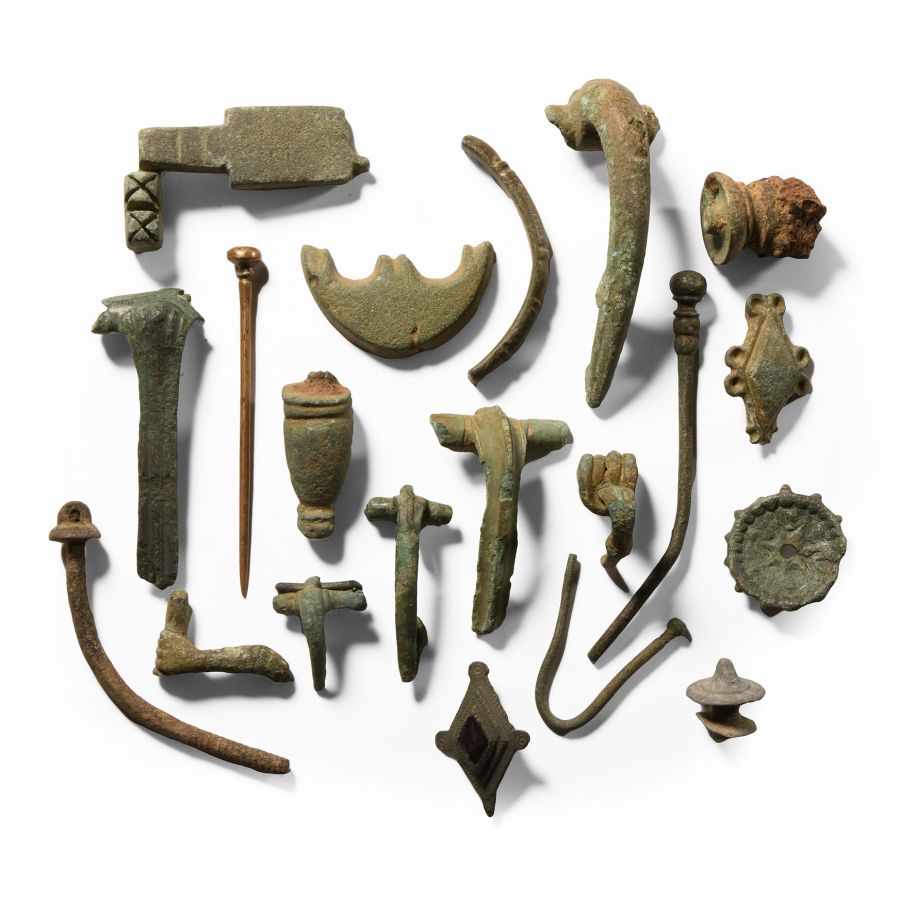
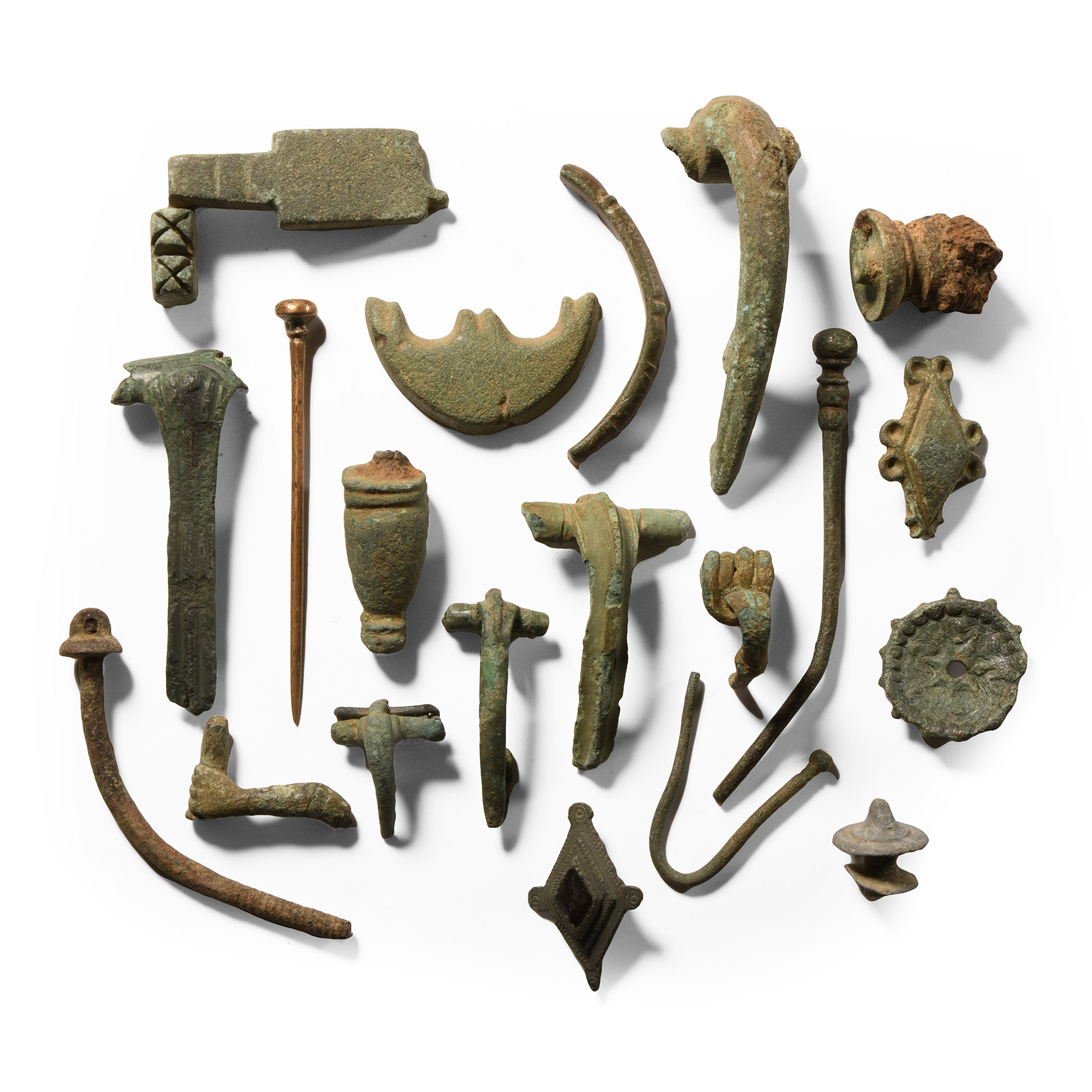
Roman Bronze Artefact Collection
1ST-3RD CENTURY A.D.
5/8 - 3 in. (208 grams total, 17-78 mm).
Including fragments of a bronze key, belt-mount with glass insert, dress pins, Colchester type bow brooch, arm from a figurine, scabbard chape, Langton Down type bow brooch and other items. [20, No Reserve]
ProvenanceFound on various UK sites since 1974.
Property of an Essex collector.
TimeLine Auctions follows a vetting process to ensure the authenticity and legality of all items, reinforcing our commitment to integrity and responsible trading. Each antiquity, antique, and coin lot undergoes thorough examination by a vetting committee of at least ten external specialists, professional trade association members, scientists, and archaeologists: Our Vetting Process
AUCTIONS:
TimeLine is a leading auction house specialising in antiquities, ancient art, collectables, natural history, coins, medals, and books. Our auctions offer museums, collectors, historians, and enthusiasts the opportunity to acquire unique and historically significant pieces.
-
.jpg)
Bronze Roman Coin and Limited Edition Framed Print
3rd century A.D. and laterSold for (Inc. bp): £20
The coin of Constantine the Great (272-337 A.D.) mounted on 22 carat gold foil, framed with an art print signed by the artist David McAllister, depicting scenes of Roman military activity; limited edition number 229/1150. 1.26 kg, 49.5 x 37.5 cm
UK gallery, early 2000s. Accompanied by a previous certificate of authenticity.
David McAllister's exciting design is a 'one of a kind' work that portrays the might and riches of the Roman civilisation. This limited edition print is a celebration of the award winning artist's lifetime dedication to historical paintings of the ancient world. To enhance appreciation of this rare and historic work, each individual print is signed and numbered by the artist. -
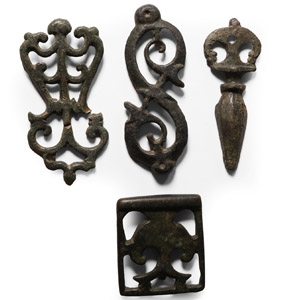
Roman Military Bronze Belt Mount Collection
2nd-3rd century A.D.Sold for (Inc. bp): £143
Including La Tène scrolls, rectangular panel with pelta and other types. 46 grams total, 32-53 mm
Property of the vendor's grandfather, thence by family descent, circa 1985. From the private collection of a New York, USA gentleman. -
.jpg)
Larger Than Life-Size Roman Bronze Foot Insert From a Statue
1st-3rd century A.D.Estimate: £4,000 - 6,000 (‡+bp*)
Opening Bid: £1,556
Hollow-formed front left sandaled foot with draped hem of a vestis talaris across the rear edge and tiered sole to the footwear, traces of gilding; supplied with a custom-made wooden stand. 847 grams total, 14 cm
Acquired in Germany in 2001. Acquired by the present owner from the above. Accompanied by an academic report by Dr Raffaele D’Amato. This lot has been checked against the Interpol Database of stolen works of art and is accompanied by search certificate number no.12192-222323.
The detailed bronze foot exhibits an incredible rendering of the smallest details; its dimensions suggest that the statue to which it belonged was nearly a human size sculpture, possibly a goddess, based on the footwear. Statues of the gods and goddesses were usually gilded.
