
Loading, please wait...
LOT 0838
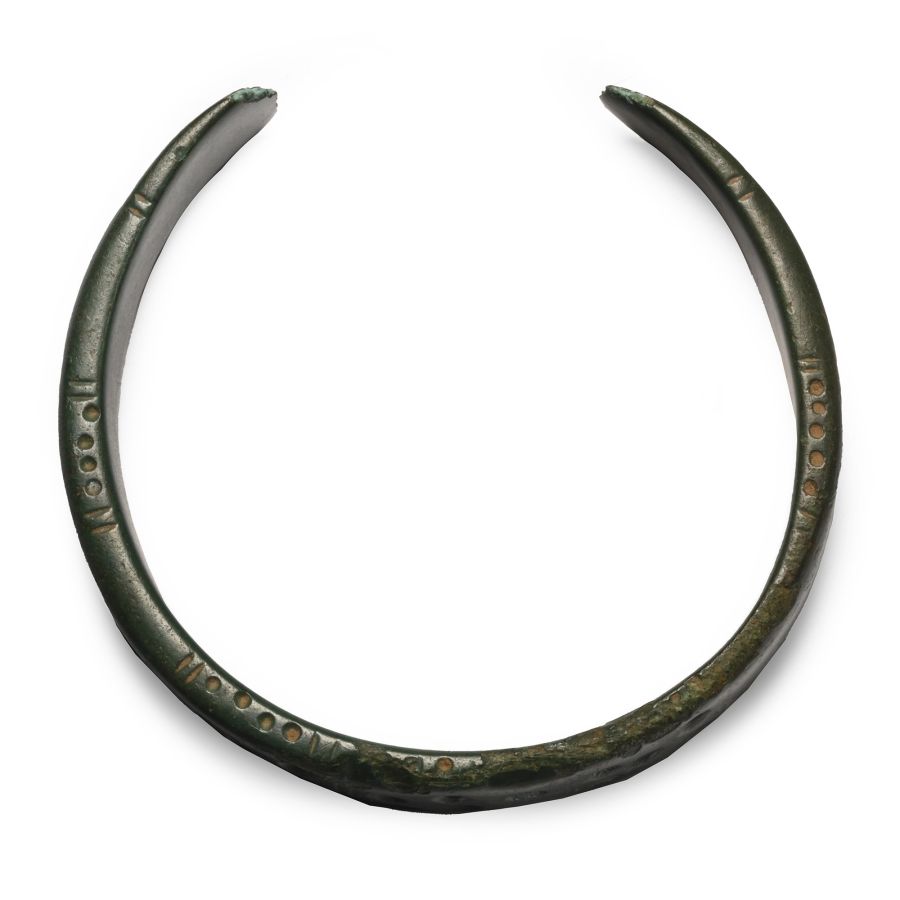
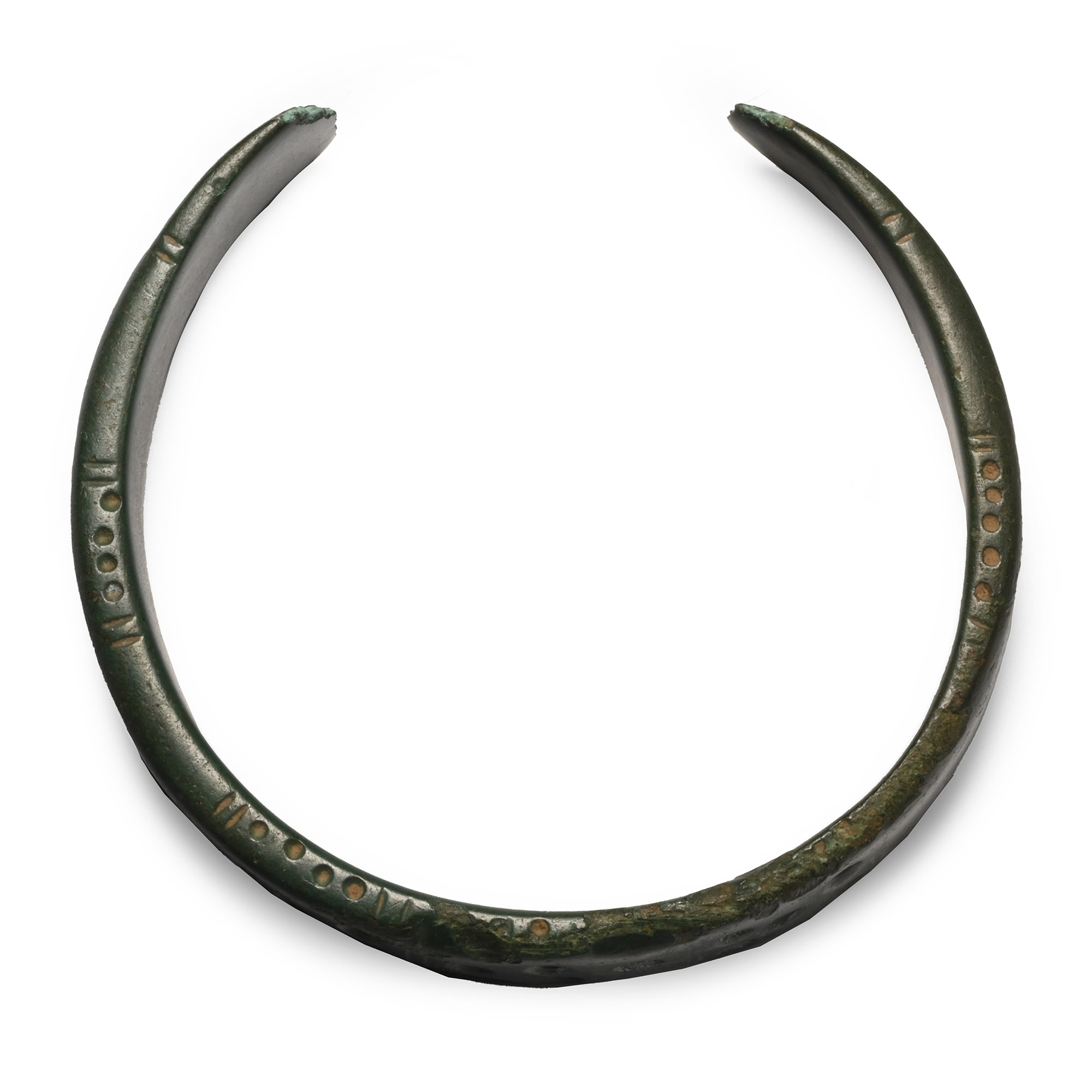
Roman Bronze Armilla Bracelet
3RD-4TH CENTURY A.D.
2 1/8 in. (34.6 grams, 56 mm).
Flat-section thick penannular body with rounded terminals, the upper body and sides divided into segments with vertical lines, each segment with punched pellet decoration. [No Reserve]
ProvenanceEx German art market, 2000s.
Acquired from an EU collector living in London.
From the collection of a Surrey, UK, gentleman.
This lot is accompanied by an illustrated lot declaration signed by the Head of the Antiquities Department, Dr Raffaele D'Amato.
TimeLine Auctions follows a vetting process to ensure the authenticity and legality of all items, reinforcing our commitment to integrity and responsible trading. Each antiquity, antique, and coin lot undergoes thorough examination by a vetting committee of at least ten external specialists, professional trade association members, scientists, and archaeologists: Our Vetting Process
AUCTIONS:
TimeLine is a leading auction house specialising in antiquities, ancient art, collectables, natural history, coins, medals, and books. Our auctions offer museums, collectors, historians, and enthusiasts the opportunity to acquire unique and historically significant pieces.
-
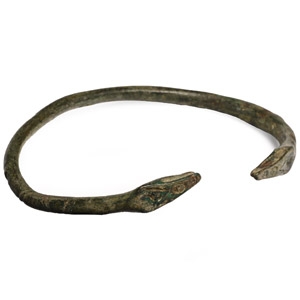
Late Roman Bronze Bracelet with Snake-Heads
4th-5th century A.D.Sold for (Inc. bp): £85
Round-section penannular body and stylised lozenge-shaped snake-head finials. 11.68 grams, 62 mm
Ex German art market, 2000s. Acquired from an EU collector living in London. From the collection of a Surrey, UK, gentleman. This lot is accompanied by an illustrated lot declaration signed by the Head of the Antiquities Department, Dr Raffaele D'Amato. -
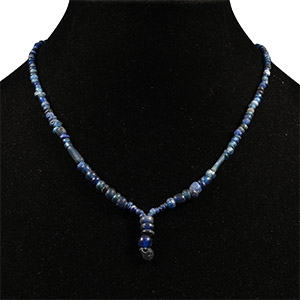
Roman Blue Glass Bead Necklace String
1st-4th century A.D. and laterSold for (Inc. bp): £72
A graduated group of mainly oblate beads restrung to a Y-shape. 11.3 grams, 37 cm
Ex London, UK, collection, 1990s. This lot is accompanied by an illustrated lot declaration signed by the Head of the Antiquities Department, Dr Raffaele D'Amato. -
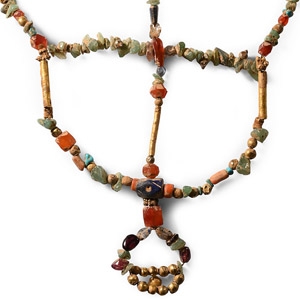
Roman Gold and Other Bead Necklace
1st-4th century A.D.Estimate: £1,800 - 2,400 (‡+bp*)
Opening Bid: £810
Restrung necklace of three strands connected by a median vertical column; comprising mainly gold tubular beads with ribbing to the outer face, polyhedral carnelian beads, irregular green glass beads, square-section lapis lazuli beads and other types; the lower node a larger polyhedral lapis lazuli bead with loop of barrel-shaped gold beads and other types. 78 grams, 57 cm
Acquired in the 1980s. Private collection, Switzerland, thence by descent. Private collection, since the late 1990s. This lot has been checked against the Interpol Database of stolen works of art and is accompanied by a search certificate number no.12678-234685. This lot has been cleared against the Art Loss Register database, and is accompanied by an illustrated lot declaration signed by the Head of the Antiquities Department, Dr Raffaele D'Amato.
