
Loading, please wait...
LOT 0670
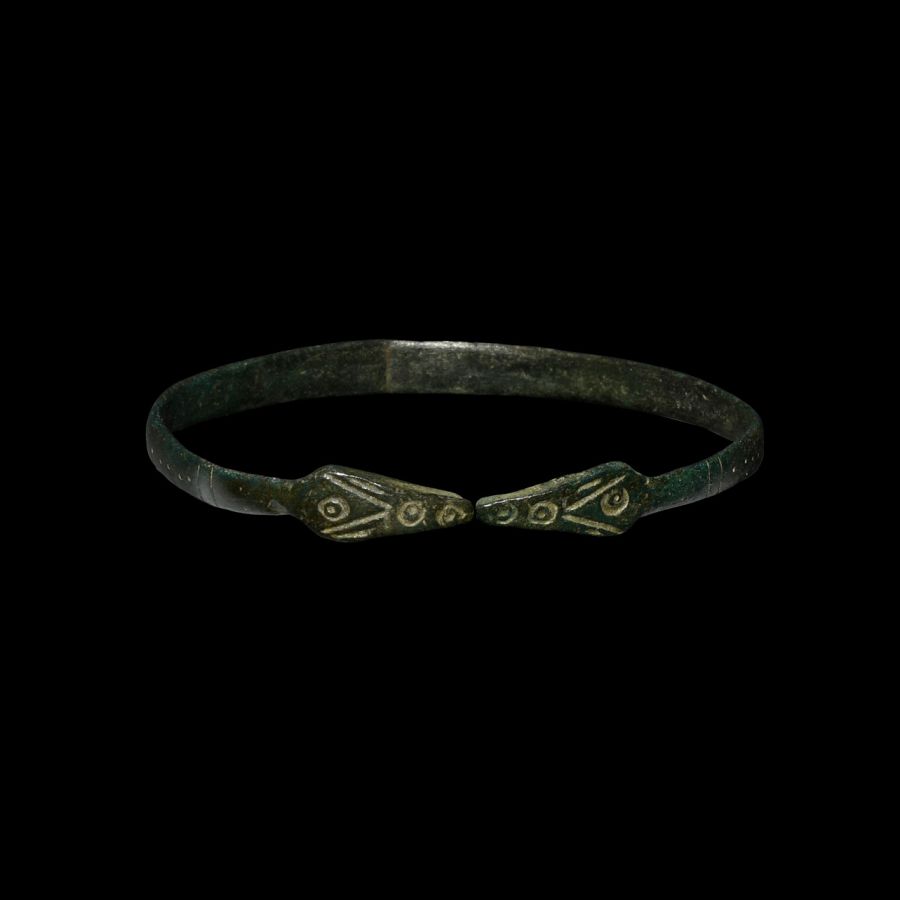
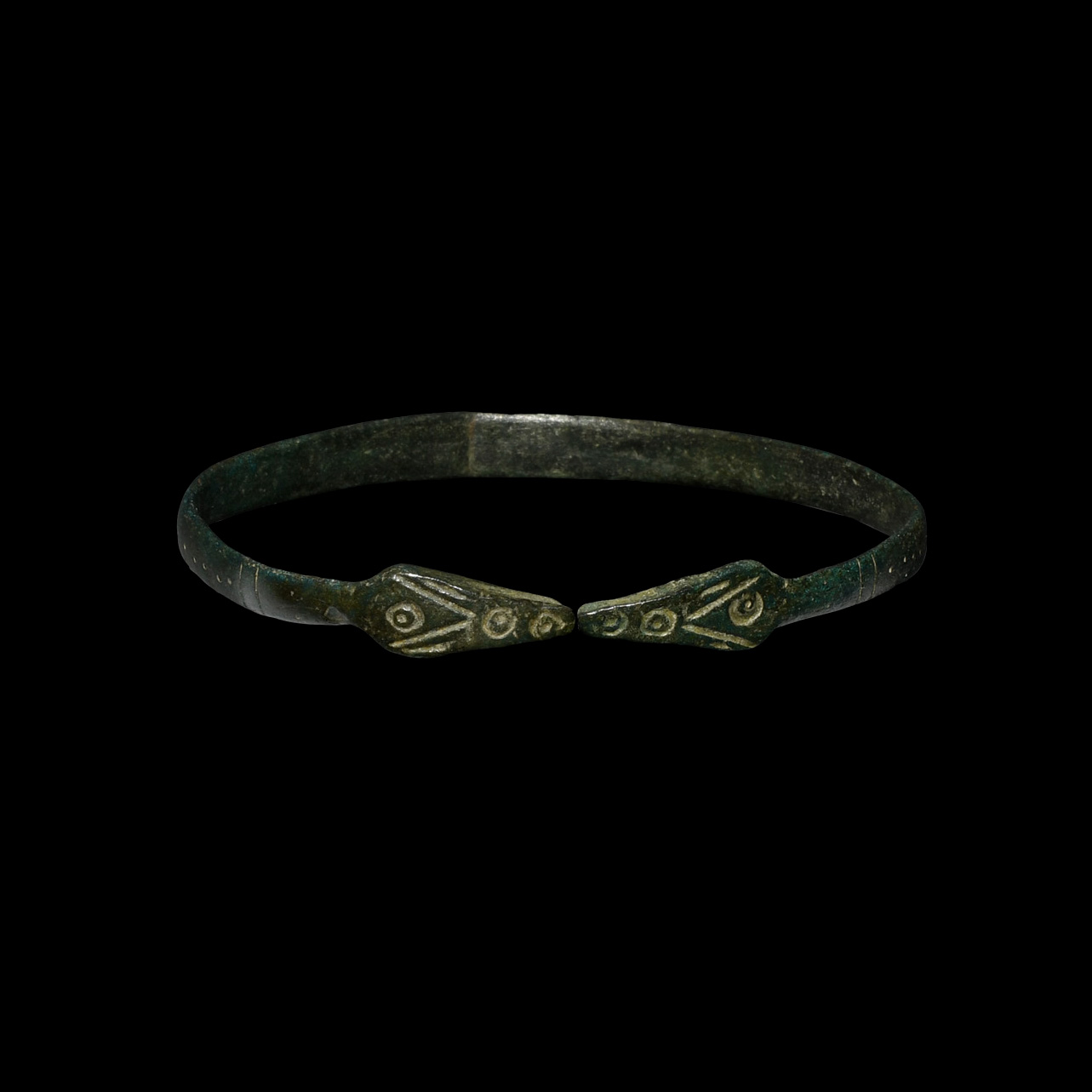
Roman Bronze Armilla Bracelet
1ST-2ND CENTURY A.D.
2 1/4 in. (8.6 grams, 59 mm).
With snake-head terminals, the heads with pellet-in-circle decoration, the body with bands of transverse lines and punched pellets. [No Reserve]
ProvenanceAcquired in the 1980s.
From a North West London collection.
TimeLine Auctions follows a vetting process to ensure the authenticity and legality of all items, reinforcing our commitment to integrity and responsible trading. Each antiquity, antique, and coin lot undergoes thorough examination by a vetting committee of at least ten external specialists, professional trade association members, scientists, and archaeologists: Our Vetting Process
AUCTIONS:
TimeLine is a leading auction house specialising in antiquities, ancient art, collectables, natural history, coins, medals, and books. Our auctions offer museums, collectors, historians, and enthusiasts the opportunity to acquire unique and historically significant pieces.
-
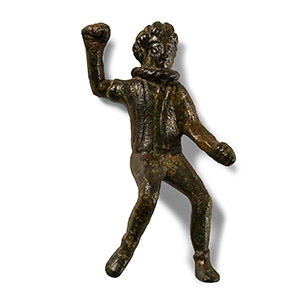
Romano-Celtic Bronze Statuette of a Warrior Wearing Torc
Circa 1st-2nd century A.D.Sold for (Inc. bp): £390
Modelled in the round, standing with right leg bent, right arm raised and left extended before the body; with thick tousled hair, exaggerated torc to the neck, jacket with incised vertical lines, tight-fitting trousers and ankle-boots. 53 grams total, 67 mm
From a collection acquired on the UK art market from various auction houses and collections mostly before 2000. From an important Cambridgeshire estate; thence by descent.
The pose of the figure suggests that he is in the action of brandishing a weapon, or possibly holding the reins of a team of horses pulling a chariot. Caesar mentions the expert use of the war-chariot by the Britons (Conquest of Gaul, IV.33). The padded garment suggests a Celtic auxiliary in the Roman army. -
.jpg)
Roman Marble Panther Protome Fragment
1st century A.D.Sold for (Inc. bp): £2,860
Sculpted as a panther with head turned on its long muscular neck, mouth open and teeth bared; highly polished finish; mounted on a custom-made stand. 758 grams total, 15 cm high including stand
Previously acquired from a USA collection, 1980s. Ex private German collection. This lot has been checked against the Interpol Database of stolen works of art and is accompanied by search certificate no.12082-213586. -
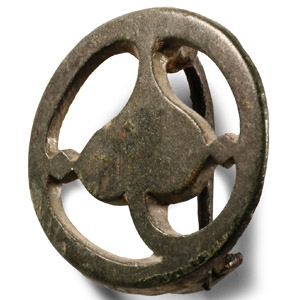
Roman Bronze Plate Brooch with Vine Leaf
Circa 2nd century A.D.Sold for (Inc. bp): £46
Complete with pin lug, pin and catchplate to reverse. 10 grams, 29 mm
Acquired prior to 2000. Ex private collection, Cambridgeshire, UK.
