
Loading, please wait...
LOT 0904
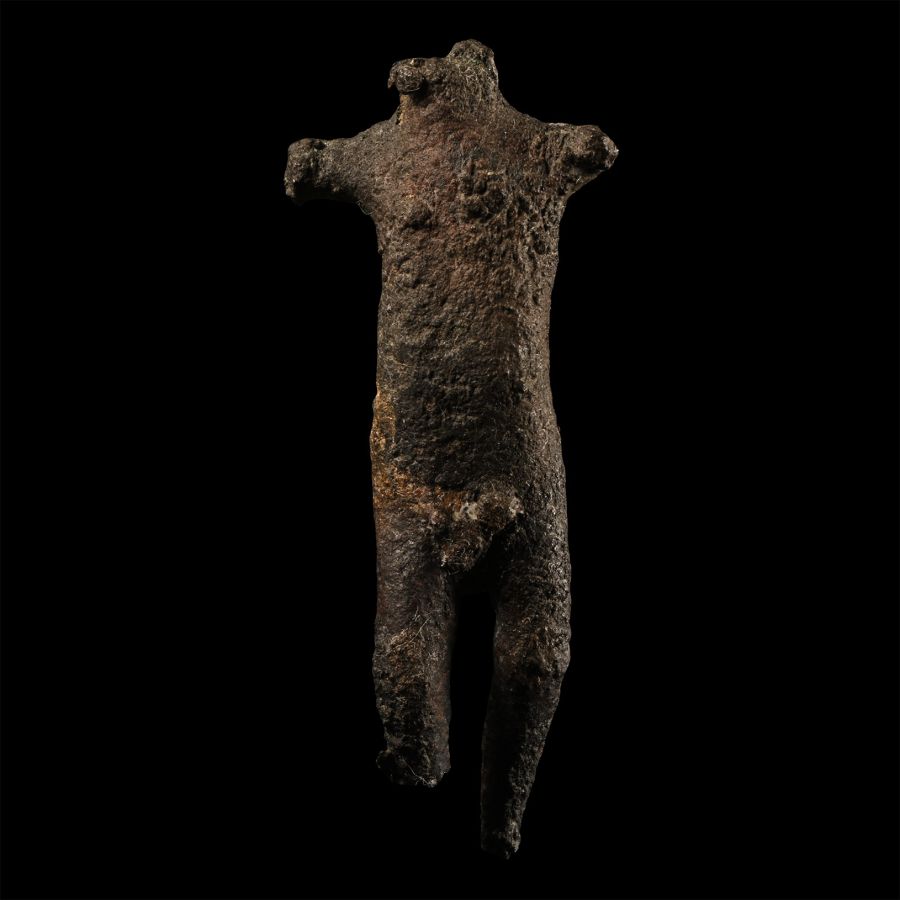
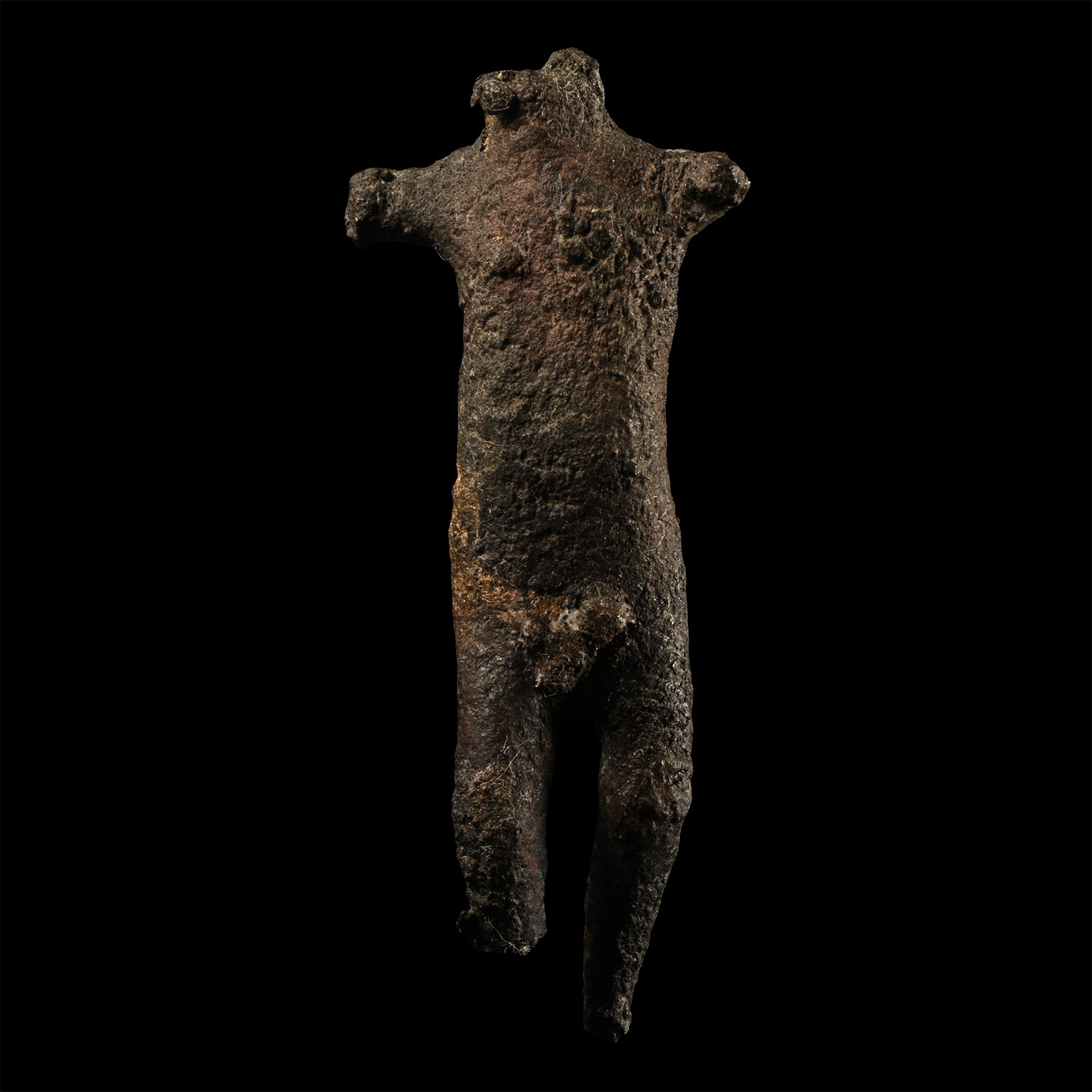
Roman Bronze Apollo Statuette
1ST CENTURY B.C.-1ST CENTURY A.D.
2 3/8 in. (37 grams, 60 mm).
Standing nude with arms raised, legs in advancing pose. [No Reserve]
ProvenanceFrom a collection acquired on the UK art market from various auction houses and collections mostly before 2000.
From an important Cambridgeshire estate; thence by descent.
Cf. Boucher, S. & Tassinari, S., Musée de la Civilisation Gallo-Romaine a Lyon: Bronzes Antiques I. Inscriptions, Statuaire, Vaisselle, Lyon, 1976, item 54, for similar figure of Neptune, item 60, for similar figure of Sucellus.
CONDITIONTimeLine Auctions follows a vetting process to ensure the authenticity and legality of all items, reinforcing our commitment to integrity and responsible trading. Each antiquity, antique, and coin lot undergoes thorough examination by a vetting committee of at least ten external specialists, professional trade association members, scientists, and archaeologists: Our Vetting Process
AUCTIONS:
TimeLine is a leading auction house specialising in antiquities, ancient art, collectables, natural history, coins, medals, and books. Our auctions offer museums, collectors, historians, and enthusiasts the opportunity to acquire unique and historically significant pieces.
-
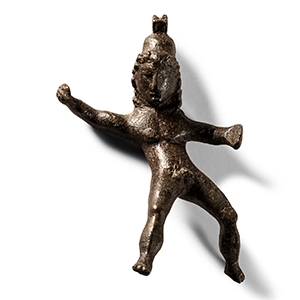
Roman Bronze Mars Rider Statuette
2nd-3rd century A.D.Sold for (Inc. bp): £111
Modelled in the round, nude male with legs in straddling pose, left hand thrust forward and right arm raised with hand open; head exaggerated with shoulder-length hair and crested helmet. 35.6 grams, 60 mm
From a collection acquired on the UK art market from various auction houses and collections mostly before 2000. From an important Cambridgeshire estate; thence by descent. -
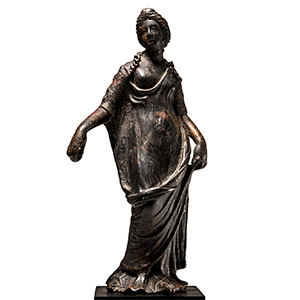
Roman Bronze Figurine of Venus
Circa 50 A.D.Sold for (Inc. bp): £5,980
The figure standing with her head turned slightly to the right, elegant hair falling to the shoulders in two long tresses; chiton draped around the left shoulder and sagging to expose the right breast; left hand holding a fold of the robe at her thigh, right hand slightly extended holding an apple; toes exposed beneath the fringe of her robe; mounted on a custom-made stand. 1.17 kg total, 27.3 cm high including stand
European private collection, acquired 1980s, or before. Subsequently British private collection, acquired late 1990s from the previous. Acquired directly from the above by the current owner. This lot has been checked against the Interpol Database of stolen works of art and is accompanied by search certificate no.12052-210844. -
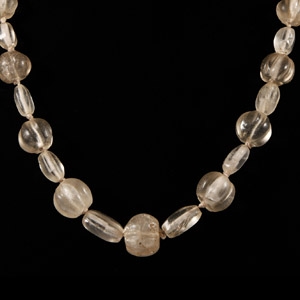
Roman Rock Crystal Bead Necklace
2nd-3rd century A.D.Sold for (Inc. bp): £468
Restrung group of clear quartz melon bead and hexagonal-section tubular beads. 103 grams, 53.5 cm long
with a London, UK gallery 1971.
