Loading, please wait...
Details
LOT 0711
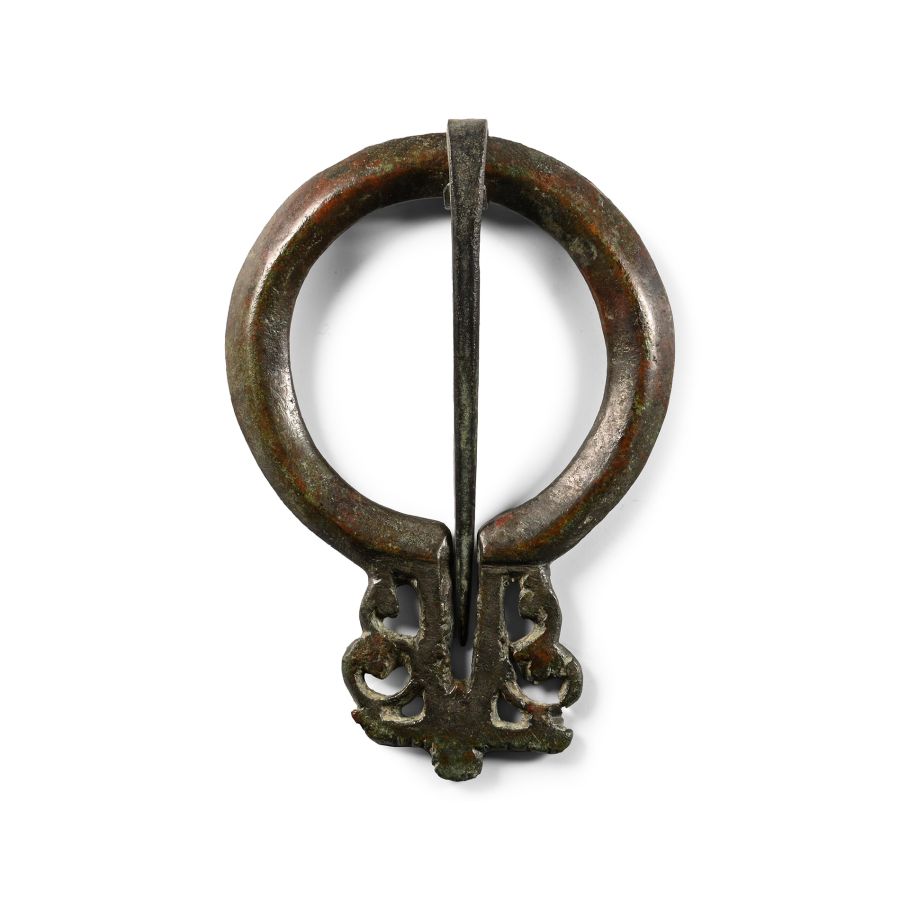
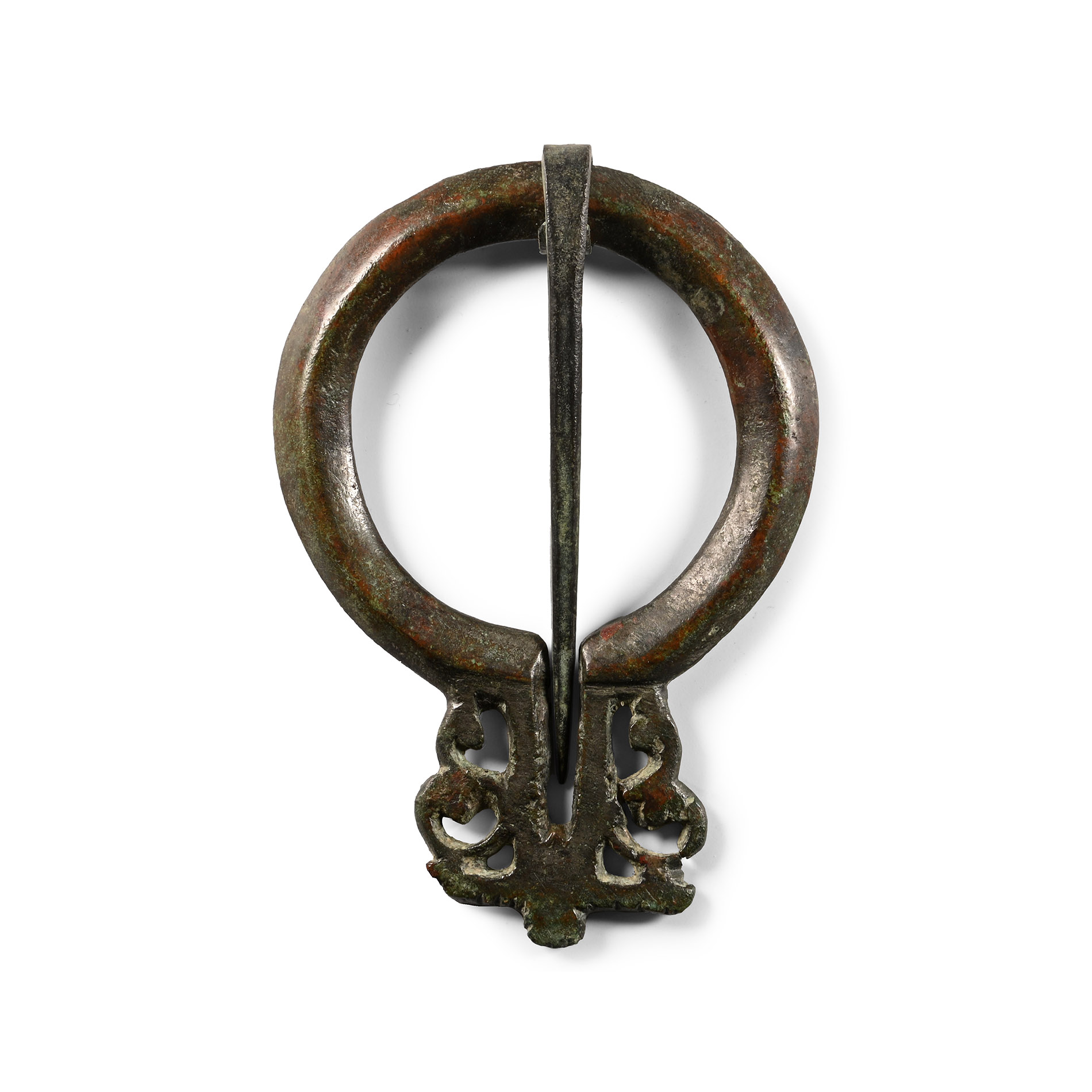
Roman Bronze Annular Buckle
3RD-4TH CENTURY A.D.
3 1/4 in. (50 grams, 84 mm).
Substantial keeled body with free-running pin, an openwork extension formed of volute scrolls projecting from the body.
Provenance
Ex German art market, 2000s.
Acquired from an EU collector living in London.
From the collection of Surrey, UK, gentleman.
VETTING:
TimeLine Auctions follows a vetting process to ensure the authenticity and legality of all items, reinforcing our commitment to integrity and responsible trading. Each antiquity, antique, and coin lot undergoes thorough examination by a vetting committee of at least ten external specialists, professional trade association members, scientists, and archaeologists: Our Vetting Process
AUCTIONS:
TimeLine is a leading auction house specialising in antiquities, ancient art, collectables, natural history, coins, medals, and books. Our auctions offer museums, collectors, historians, and enthusiasts the opportunity to acquire unique and historically significant pieces.
RELATED LOTS
-
Late Roman Iron Branding Signaculum
5th-6th century A.D.Sold for (Inc. bp): £85
Featuring an elaborate monogram composed of Greek letters M and O, supported by decoratively twisted prongs; tapering cylindrical socket. 521 grams, 37.5 cm
Acquired 1990s-early 2000s. East Anglian private collection.
Branding stamps or signacula, in particular those with large single letters, were used for marking livestock to identify the ownership, the breed, the quality and other features of the animal. The signacula were usually made in bronze, but iron examples are also preserved. -
Large Gallo-Roman Bronze Statuette of Cupid
1st-3rd century A.D.Estimate: £3,000 - 4,000 (‡+bp*)
Opening Bid: £1,667
Modelled in the round leaping and winged, his right hand reaching above his head seemingly gesturing to retrieve arrows from a quiver once carried on his back, dressed in an exomis tunic leaving him naked below the torso, wearing a helmet or cap and ankle boots. 403 grams, 16 cm high
Acquired in Europe before 1994. Private collection, Europe. Accompanied by an academic report by Dr Raffaele D’Amato. This lot has been checked against the Interpol Database of stolen works of art and is accompanied by search certificate no.11808-206795.
Often the statues of puttos or amorini (small loves) depicting personifications of Eros were covered with gold leaf. This was a frequent practice and the figures, when represented with wings, were known as chrysopteroi, meaning 'with golden wings'. -
Roman Marble Head of a Young Man
2nd-3rd century A.D.Estimate: £3,500 - 4,500 (‡+bp*)
Opening Bid: £1,250
Worked in high-relief with hairstyle typical of the transitional period from the Consulate to the Empire; oval face with a prominent forehead, oval eyelids and clearly defined lines around the eyes; hair arranged in vertical lines combed back from the forehead; pronounced lips, typical rendering of the wide auricles; the lower part of the tunic visible with a well defined round edge around the neck; mounted on a custom-made display stand. 5.94 kg total, 22.5 cm high including stand
Acquired from Gallery Gryphos, Munich, 1992. European private collection. Accompanied by an academic report by Dr Raffaele D’Amato. This lot has been checked against the Interpol Database of stolen works of art and is accompanied by search certificate number no.11996-211878.
The head was probably pertinent to a series of funerary family portraits. It has realistic modelling of male features, which speaks of a portrait in reduced dimensions or a reference to a well-known person in the environment where it was exhibited. The portrait is worked only on the front, leaving the back, as well as the lower part of the sculpture, roughly treated.