
Loading, please wait...
LOT 0713
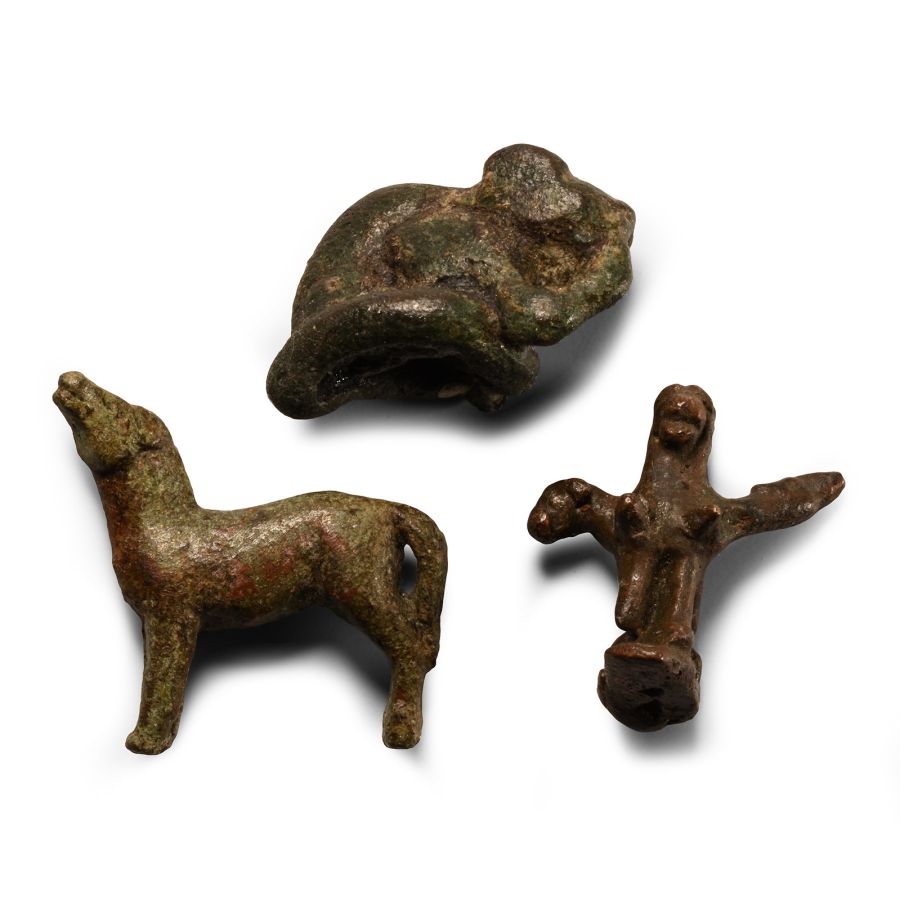
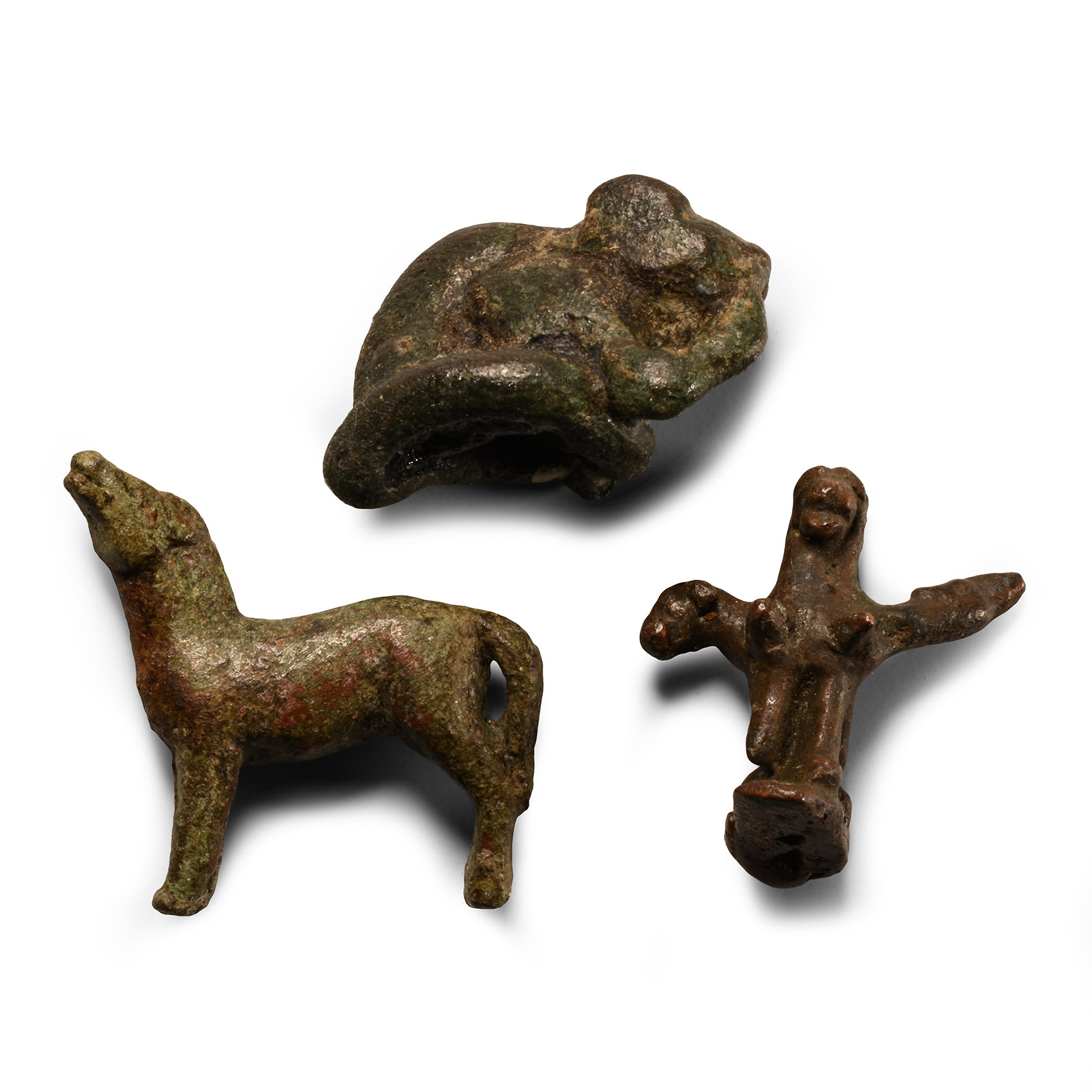
Roman Bronze Animal Statuette Group
1ST-2ND CENTURY A.D.
1 1/8 - 1 3/8 in. (60.5 grams total, 29- 35 mm).
Mixed group comprising: three-headed dog, Cerberus, on an ellipsoid base; mouse holding an item of food to its mouth; baying hound with head raised. [3, No Reserve]
ProvenanceFrom a collection acquired on the UK art market from various auction houses and collections mostly before 2000.
From an important Cambridgeshire estate; thence by descent.
Cf. Durham, E., Metal Figurines in Roman Britain, vol. 2, Reading, 2010, pl.294, for mouse.
CONDITIONTimeLine Auctions follows a vetting process to ensure the authenticity and legality of all items, reinforcing our commitment to integrity and responsible trading. Each antiquity, antique, and coin lot undergoes thorough examination by a vetting committee of at least ten external specialists, professional trade association members, scientists, and archaeologists: Our Vetting Process
AUCTIONS:
TimeLine is a leading auction house specialising in antiquities, ancient art, collectables, natural history, coins, medals, and books. Our auctions offer museums, collectors, historians, and enthusiasts the opportunity to acquire unique and historically significant pieces.
-
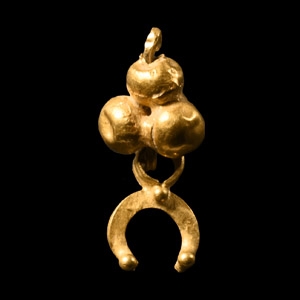
Roman Gold Pendant with Crescent Moon
1st-2nd century A.D.Sold for (Inc. bp): £143
Comprising a crescent with applied granules to the finials, ribbed loop below with granule supporting a cluster of hollow-formed spheres. 0.76 grams, 17 mm
Acquired London, UK, 1980-2015. From the Abelita family collection. -
.jpg)
Roman Decorated Votive Lead Mirror
2nd-3rd century A.D.Sold for (Inc. bp): £117
With ribbed handle, discoid plate with raised rib to one face, running scrolls to the other, lateral struts. 43 grams, 11 cm
Ex German art market, 2000s. Acquired from an EU collector living in London. From the collection of Surrey, UK, gentleman.
Many examples of this category from the Danube region were found in female graves, where they possibly served as grave goods considered appropriate for their connection with general issues of fertility, good fortune, and beauty, or even as protective amulets. Since lead mirror frames have been found in this Roman province only in graves of women, it is probable that these miniature mirrors, fitted with a central glass, were expected to serve as ritual or magical tools to assist souls of dead women in the afterlife. -
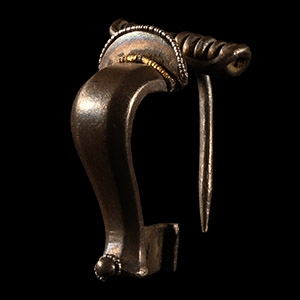
Roman Silver Knee Brooch
2nd century A.D.Sold for (Inc. bp): £325
With transverse bar, D-shaped headplate, facetted piriform body, knop finial, extended catch and hinged pin to the reverse. 6.99 grams, 28 mm
Ex property of an Austrian private collector since the 1970s.
