
Loading, please wait...
LOT 0676
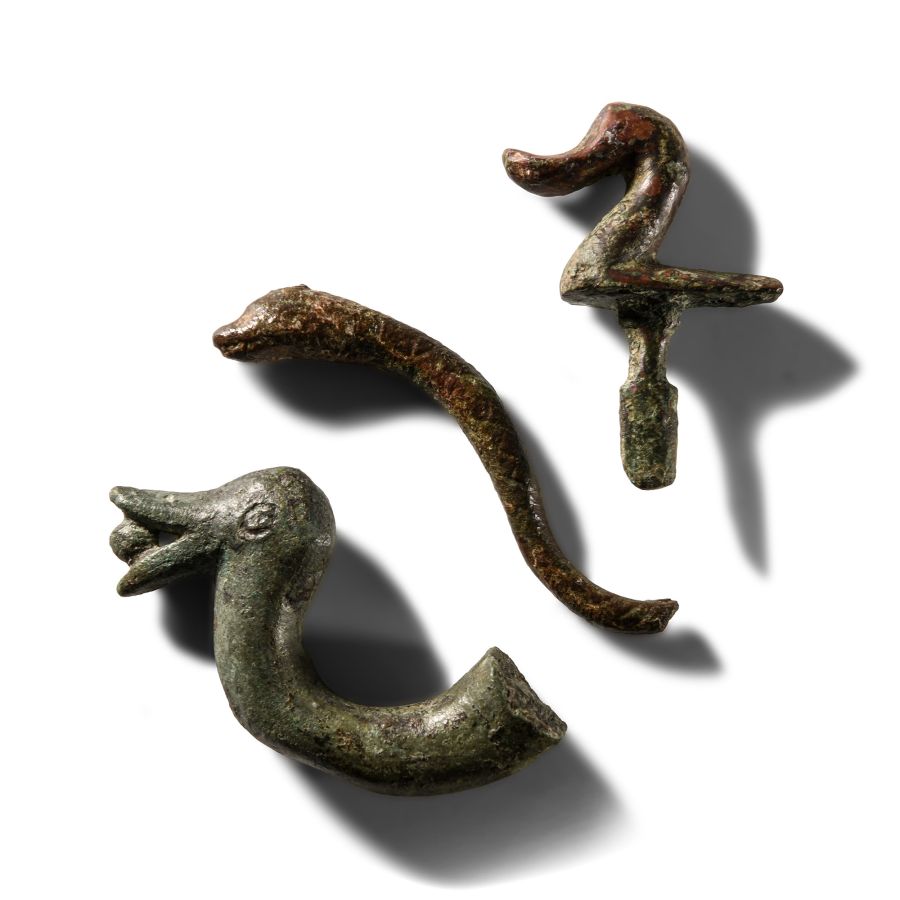
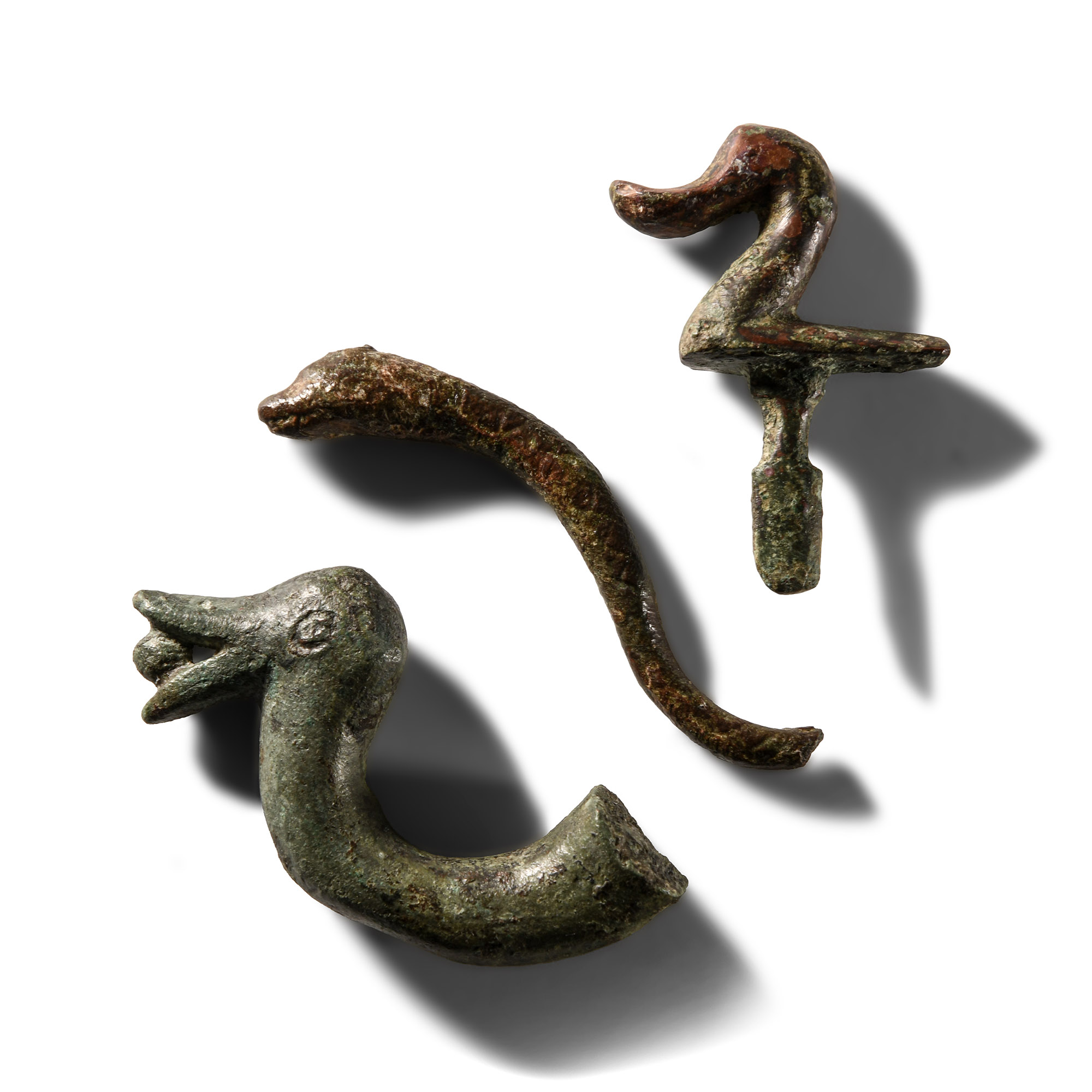
Roman Bronze Animal Mount Group
3RD CENTURY A.D.
2 1/8 - 3 in. (160 grams total, 54-74 mm).
Comprising: a sinuous serpent with lattice detailing; a duck with tab-handle to the underside; a goose with head thrown back, pellet in the beak. [3, No Reserve]
ProvenanceFrom a collection acquired on the UK art market from various auction houses and collections mostly before 2000.
From an important Cambridgeshire estate; thence by descent.
TimeLine Auctions follows a vetting process to ensure the authenticity and legality of all items, reinforcing our commitment to integrity and responsible trading. Each antiquity, antique, and coin lot undergoes thorough examination by a vetting committee of at least ten external specialists, professional trade association members, scientists, and archaeologists: Our Vetting Process
AUCTIONS:
TimeLine is a leading auction house specialising in antiquities, ancient art, collectables, natural history, coins, medals, and books. Our auctions offer museums, collectors, historians, and enthusiasts the opportunity to acquire unique and historically significant pieces.
-
.jpg)
Roman Marble Panther Protome Fragment
1st century A.D.Sold for (Inc. bp): £2,860
Sculpted as a panther with head turned on its long muscular neck, mouth open and teeth bared; highly polished finish; mounted on a custom-made stand. 758 grams total, 15 cm high including stand
Previously acquired from a USA collection, 1980s. Ex private German collection. This lot has been checked against the Interpol Database of stolen works of art and is accompanied by search certificate no.12082-213586. -
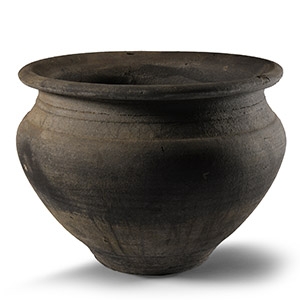
Large Roman 'Upchurch' Greyware Storage Jar
2nd century A.D.Sold for (Inc. bp): £845
With everted rim and decorative geometric band to the shoulder. 1.98 kg, 28 cm wide
Found Upchurch Marshes, Kent, UK, in the 1980s. Ex Winter Collection, Kent, UK.
The Roman pottery kilns on what are now the tidal marshes at Upchurch, Kent, are justly famed as a thriving pottery production area with many kiln and related sites. The London clay in this area is of fine quality and was thus suitable for pottery making. With the rise in the sea level, the area is now mostly inundated and, as tidal forces erode the silts, pottery (often 'seconds'), is sometimes exposed. The soft muds and general inaccessibility of the area make collection difficult. -
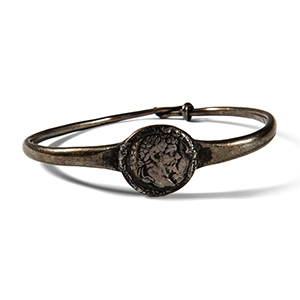
Roman Silver Denarius Bracelet
2nd century A.D.Sold for (Inc. bp): £312
Penannular form with one end wound about the shank, centrepiece a denarius coin with portrait bust. 22 grams, 68 mm
Ex Lincolnshire, UK, collection, 1990s.
