
Loading, please wait...
LOT 0733
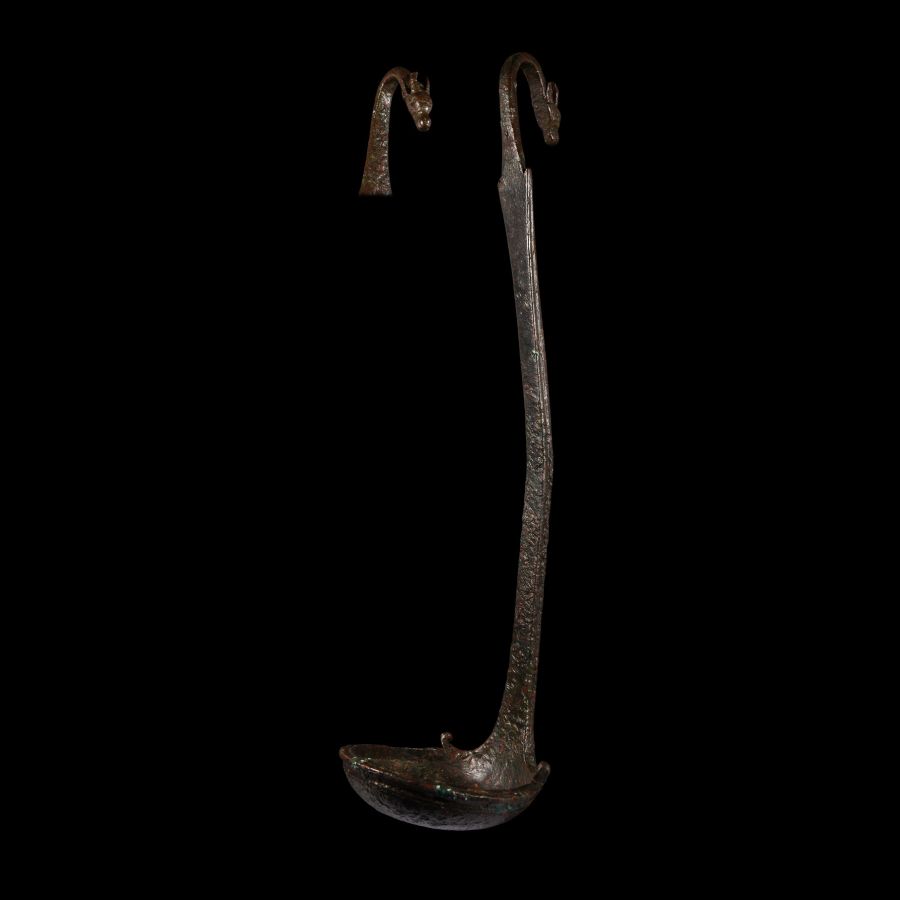
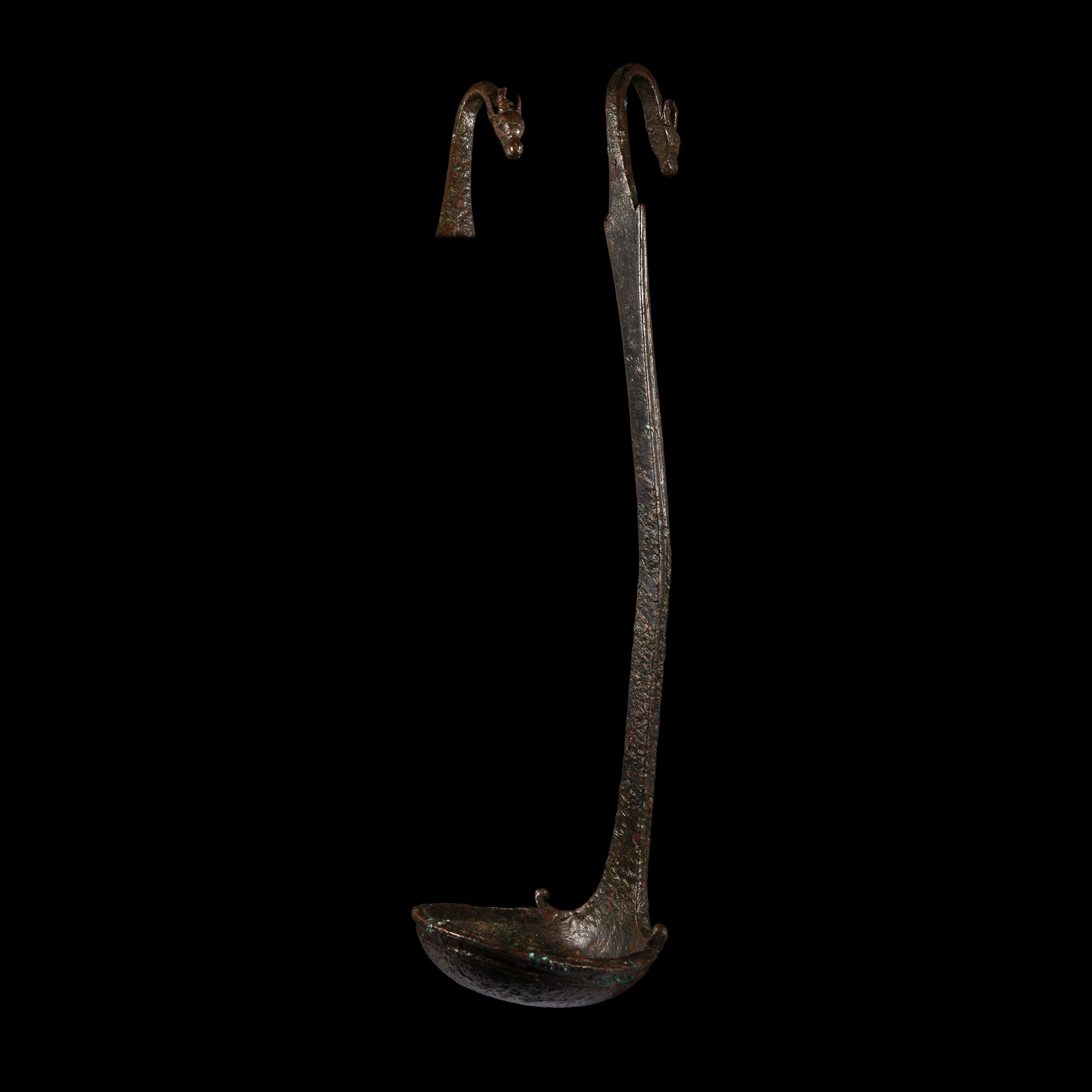
Roman Bronze Animal-Headed Ladle
CIRCA 2ND CENTURY A.D.
9 7/8 in. (147 grams, 25 cm).
With broad bowl featuring two spurs to the rim flanking the junction with the handle, carinated band below the rim, concentric rings to the base; flat-section handle with gussets to the edges and rear, hooked ibex-head finial.
ProvenanceAcquired 1980-2015.
Ex Abelita family collection.
Cf. Tassinari, S., La Vaisselle de Bronze, Romaine et Provinciale, au Musée des Antiquités Nationales, XXIXe supplément de Gallia, Paris, 1975, items 40-3, for ladles with similar animal-head finials; cf. also Boucher, S., Inventaire des Collections Publiques Françaises - 17 Vienne: Bronzes Antiques, Paris, 1971, pp.168-169, for similar specimens.
CONDITIONTimeLine Auctions follows a vetting process to ensure the authenticity and legality of all items, reinforcing our commitment to integrity and responsible trading. Each antiquity, antique, and coin lot undergoes thorough examination by a vetting committee of at least ten external specialists, professional trade association members, scientists, and archaeologists: Our Vetting Process
AUCTIONS:
TimeLine is a leading auction house specialising in antiquities, ancient art, collectables, natural history, coins, medals, and books. Our auctions offer museums, collectors, historians, and enthusiasts the opportunity to acquire unique and historically significant pieces.
LOT 0733
Roman Bronze Animal-Headed Ladle
Estimate £300 - 400€350 - 460 (for guidance only)$410 - 540 (for guidance only)
-
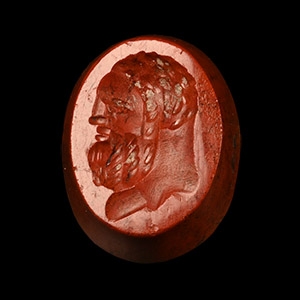
Roman Hercules Jasper Intaglio Gemstone
1st-3rd century A.D.Sold for (Inc. bp): £715
Oval-shaped, displaying bust of the god Hercules in profile left, shown with a muscular neck and full beard. 0.88 grams, 12 mm
Altstetten collection since 1969. -
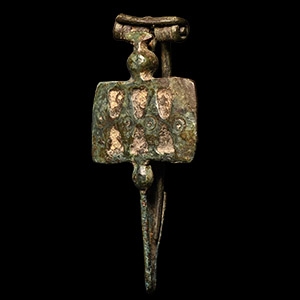
Roman Bronze Hod Hill Type Brooch
1st century A.D.Sold for (Inc. bp): £78
Of unusual style, similar to the Hod Hill type with a rectangular plate, two bulbs above and below, integral spring and pin to the reverse; below the plate a fine extension returned beneath to form the catchplate. 6.56 grams, 50 mm
Acquired 1970s-1980s. From a London brooch collector. -
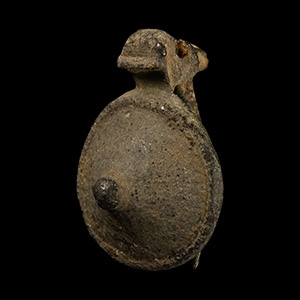
Roman Miniature Bronze Turretted Brooch
1st-4th century A.D.Sold for (Inc. bp): £13
Composed of a roughly conical body and pin lug above; detached pin. 2.27 grams, 21 mm
Found Essex, UK.
