
Loading, please wait...

LOT 0880
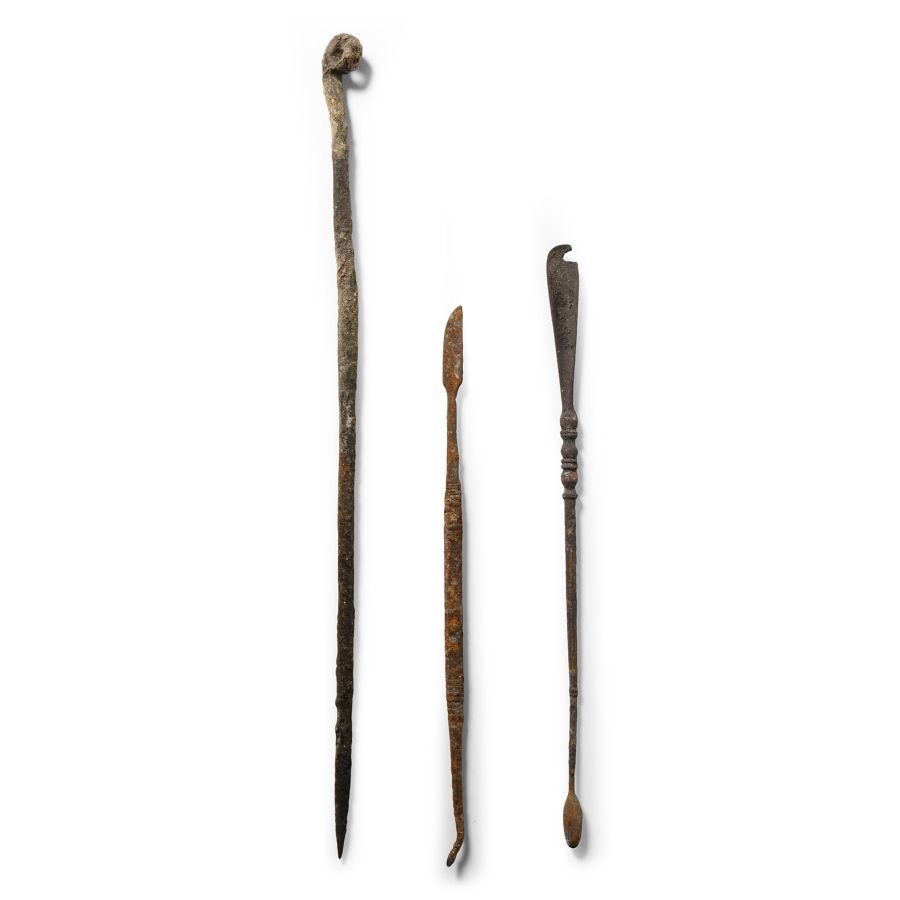
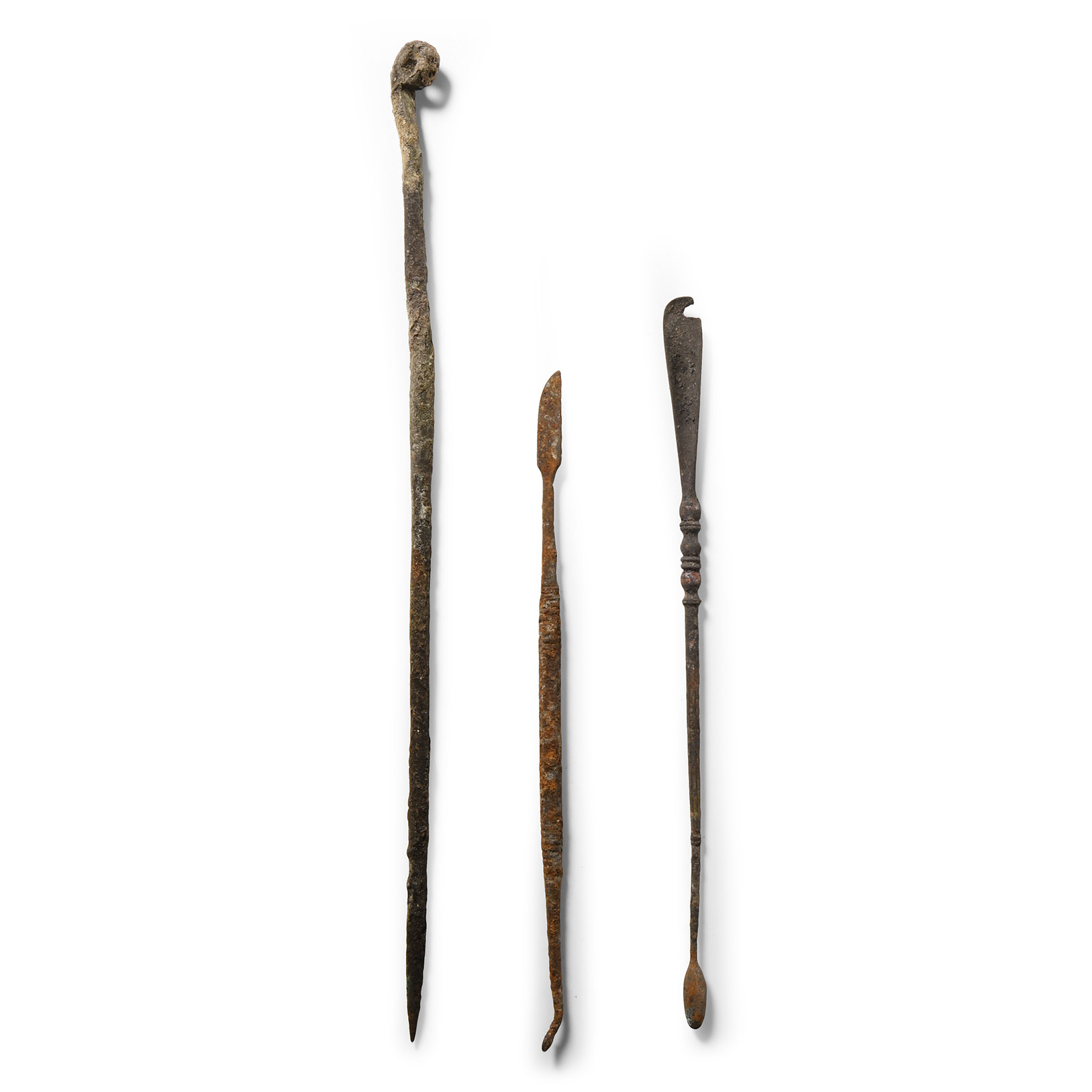
Roman Bronze and Other Medical Implement and Pin Collection
1ST-4TH CENTURY A.D.
6 - 8 3/4 in. (50 grams total, 15.2-22.2 cm).
Including a ligula with bulb finial probe and other items. [3, No Reserve]
ProvenanceFrom a collection acquired on the UK art market from various auction houses and collections mostly before 2000.
From an important Cambridgeshire estate; thence by descent.
TimeLine Auctions follows a vetting process to ensure the authenticity and legality of all items, reinforcing our commitment to integrity and responsible trading. Each antiquity, antique, and coin lot undergoes thorough examination by a vetting committee of at least ten external specialists, professional trade association members, scientists, and archaeologists: Our Vetting Process
AUCTIONS:
TimeLine is a leading auction house specialising in antiquities, ancient art, collectables, natural history, coins, medals, and books. Our auctions offer museums, collectors, historians, and enthusiasts the opportunity to acquire unique and historically significant pieces.
LOT 0880
Roman Bronze and Other Medical Implement and Pin Collection
Sold for (Inc. bp): £117
-
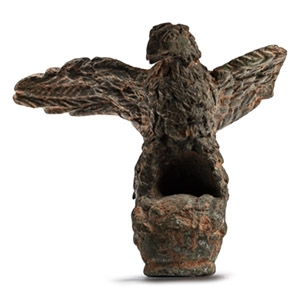
Roman Bronze Eagle Staff Terminal
2nd-3rd century A.D.Estimate: £1,800 - 2,400 (‡+bp*)
Opening Bid: £1,000
Comprising a hollow-formed knop with collar to the socket, eagle modelled in the round perching on the knop with wings spread and head turned; socket behind the shoulders. 236 grams, 81 mm
Acquired in the mid 1980s-1990s. Private collection, Switzerland, thence by descent. Private collection, since the late 1990s. This lot has been checked against the Interpol Database of stolen works of art and is accompanied by search certificate number no.12238-222314. -
.jpg)
Roman Glass Intaglio with Scenic Group
2nd-3rd century A.D.Estimate: £800 - 1,000 (+bp*)
Opening Bid: £400
Ellipsoid in plan with bevelled edge, intaglio frieze depicting an altar with aedus and flames arising; robed human worshipper with votive offering above the flames; flanked by two priapic fauns with hands raised. 10.5 grams, 41 mm
Collected from 1970-1999. From the collection of the late Mr S.M., London, UK. -
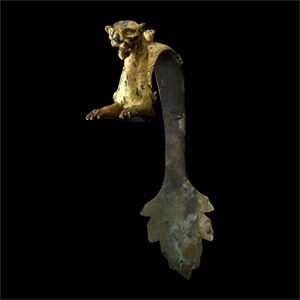
Roman Gilt Bronze Panther Handle
1st-2nd century A.D.Estimate: £800 - 1,000 (+bp*)
Opening Bid: £400
D-section strap handle with palmate finial below, transverse bar and thumb-pad, upper end developing to the foreparts of a panther with forelegs spread. 128 grams, 11 cm
Acquired in the late 1960s-early 1970s. Private collection, England.
