
Loading, please wait...

LOT 0719
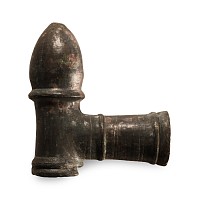
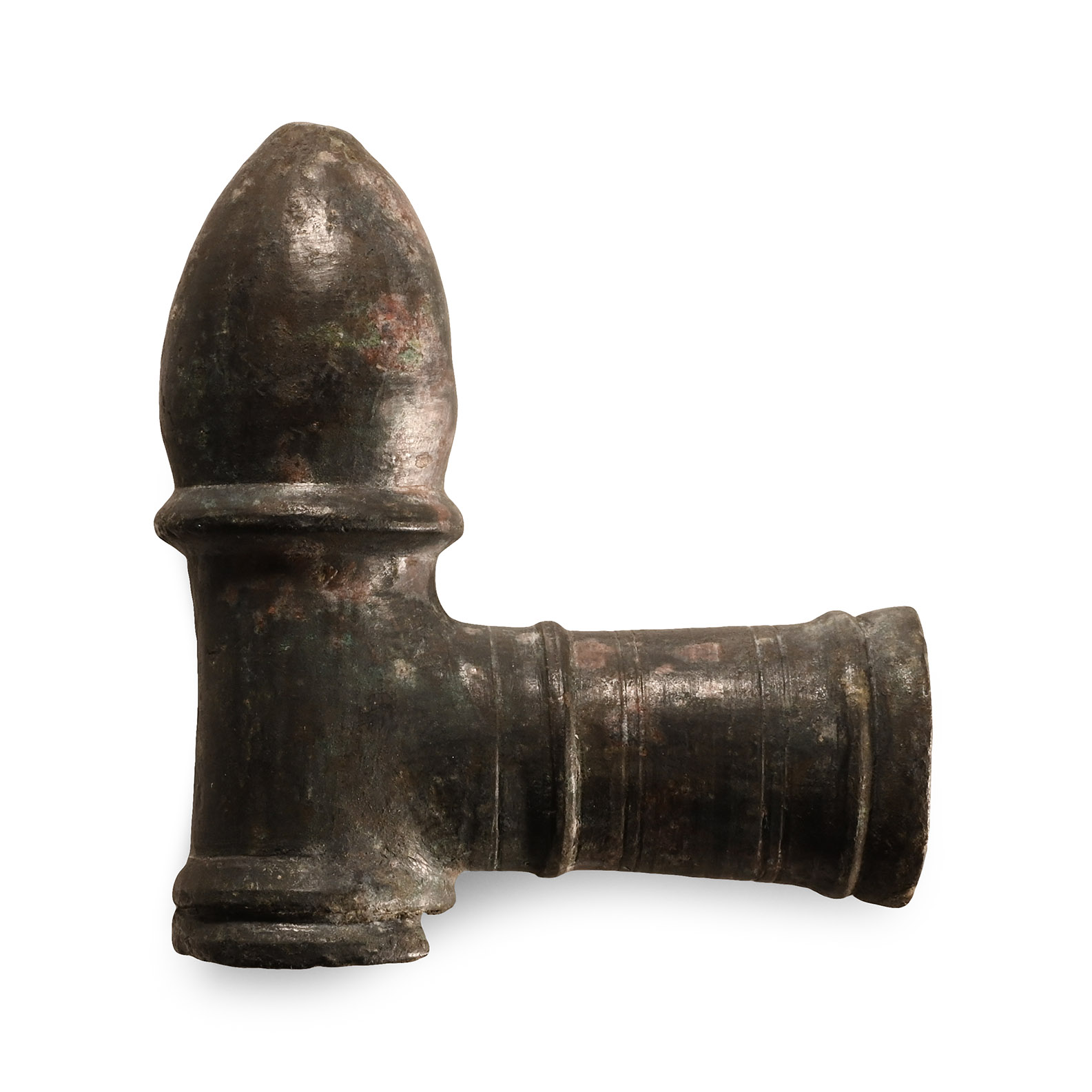
Roman Bronze Acorn-Shaped Chair Back Finial
3RD-4TH CENTURY A.D. OR LATER
3 3/8 in. (155 grams, 86 mm).
Comprising a tubular vertical fitting with perpendicular tube and flared socket, acorn finial. [No Reserve]
ProvenanceFrom the private collection of M. Cummings, Lincolnshire, UK, 1990s.
CONDITIONTimeLine Auctions follows a vetting process to ensure the authenticity and legality of all items, reinforcing our commitment to integrity and responsible trading. Each antiquity, antique, and coin lot undergoes thorough examination by a vetting committee of at least ten external specialists, professional trade association members, scientists, and archaeologists: Our Vetting Process
AUCTIONS:
TimeLine is a leading auction house specialising in antiquities, ancient art, collectables, natural history, coins, medals, and books. Our auctions offer museums, collectors, historians, and enthusiasts the opportunity to acquire unique and historically significant pieces.
-
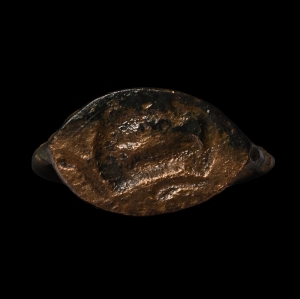
Roman Bronze Ring with Lion
1st century B.C.-1st century A.D.Sold for (Inc. bp): £59
With ellipsoid bezel, low-relief figure of a regardant lion with tail raised and foreleg extended. 3.23 grams, 23.62 mm overall, 19.50 mm internal diameter (approximate size British R, USA 8 1/2, Europe 18 3/4, Japan 18)
UK private collection before 2000. Acquired on the UK art market. Property of a London gentleman. -
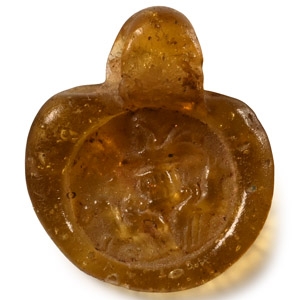
Late Roman Glass Pendant with Helios Apollo on Quadriga
4th century A.D.Sold for (Inc. bp): £117
Discoid in plan with integral loop, impressed design of Helios-Apollo in his quadriga chariot. 1.4 grams, 21 mm
Collected from 1970-1999. From the collection of the late Mr S.M., London, UK. -
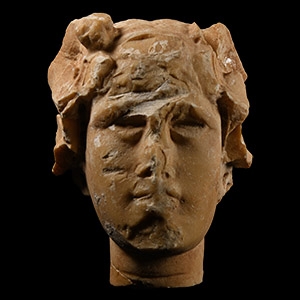
Roman Giallo Antico Head of Dionysus
2nd century A.D.Sold for (Inc. bp): £1,105
Modelled in the half-round with soft youthful features, wavy hair framed by a wreath of berries and leaves; eyes modelled empty to accept glass inserts. 989 grams, 12.5 cm
Acquired on the European art market, 1990s. English private collection.
