
Loading, please wait...
LOT 0876
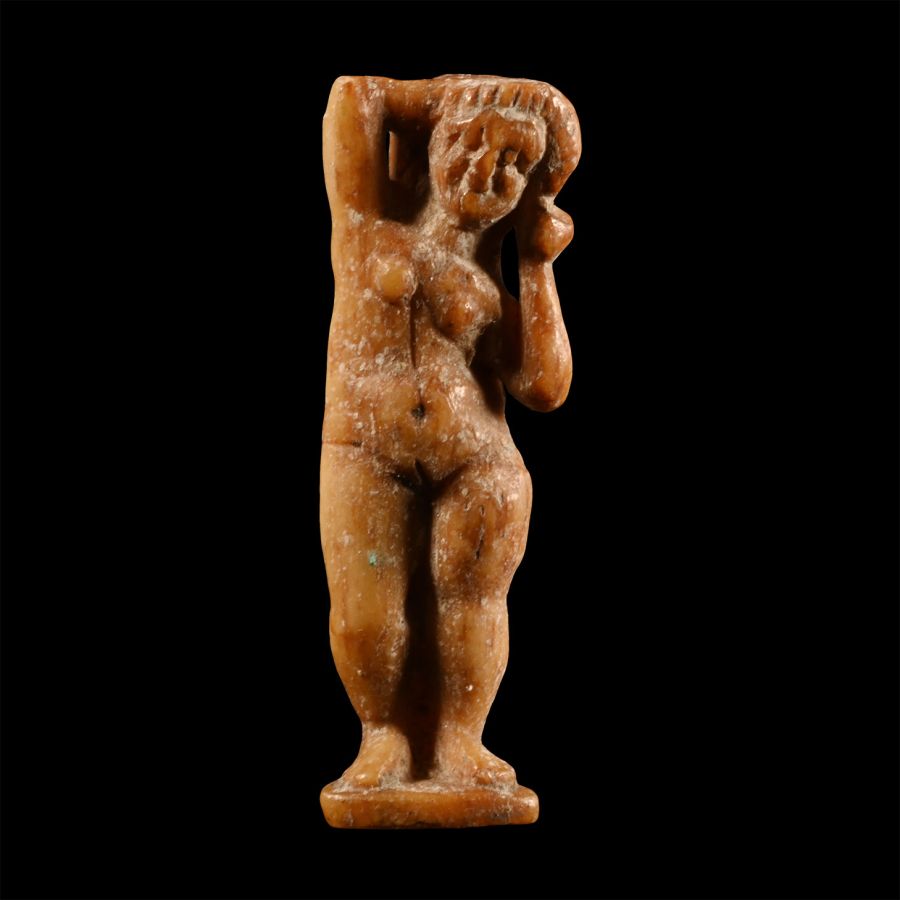
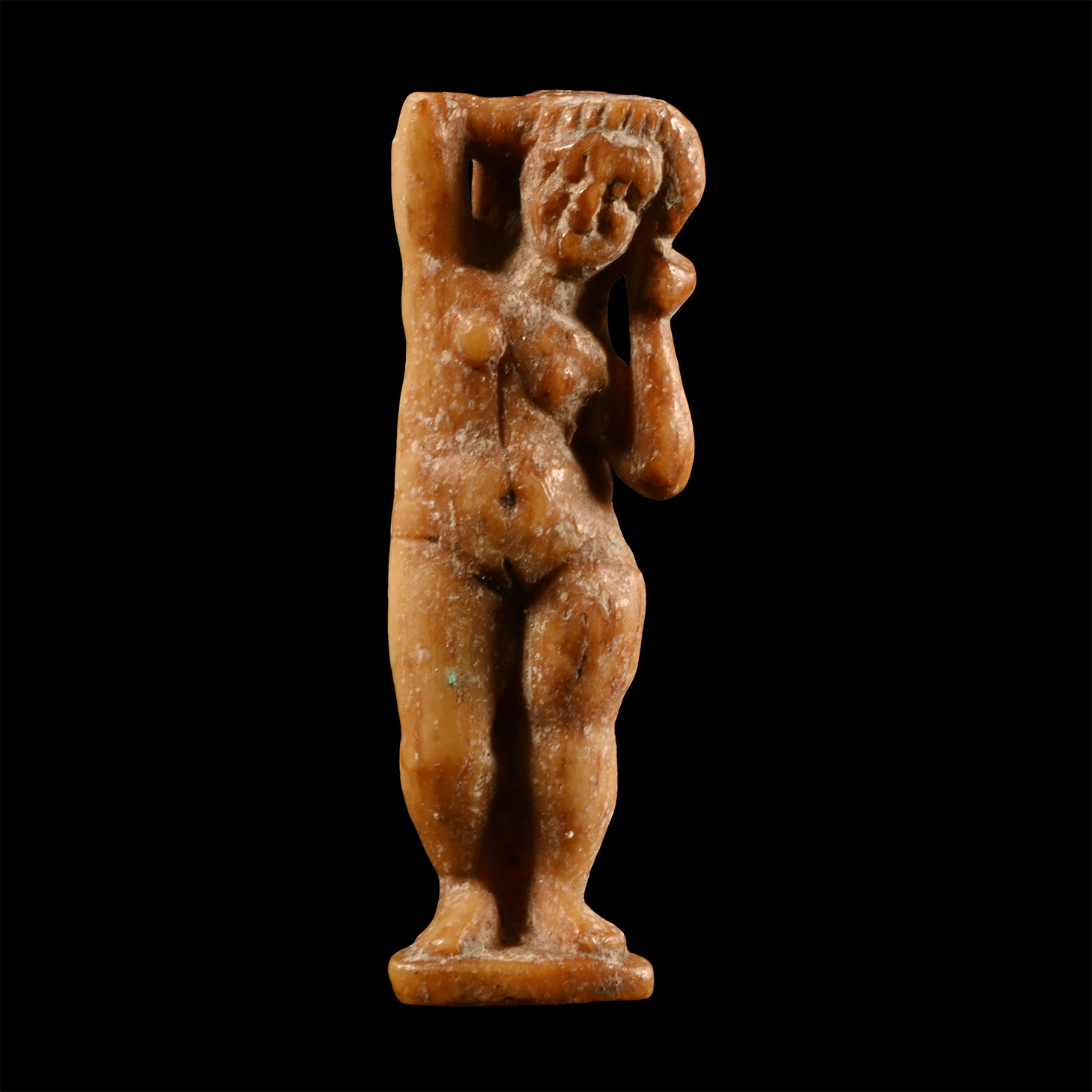
Roman Bone Venus Statuette
2ND-3RD CENTURY A.D.
1 5/8 in. (4.9 grams, 40 mm).
Modelled in the round, Venus standing nude with hands raised to dress her hair; dorsal pillar pierced at shoulder height for suspension. [No Reserve]
ProvenanceFrom a collection acquired on the UK art market from various auction houses and collections mostly before 2000.
From an important Cambridgeshire estate; thence by descent.
Cf. Rolland, H., Bronzes Antiques de Haute Provence, Paris, 1965, item 78, for type; Ogden, J.M., Gold Jewellery in Ptolemaic, Roman and Byzantine Egypt,Durham, 1990, Vol.2, fig.13, for identical statuette in cast bronze.
FootnotesThe iconography of Venus Anadyomene was one of the most commonly used images of the goddess in classical sculpture, and was still popular during the late Roman Empire. The best example of this is the Louvre Venus Anadyomene (Ma 3537) of the 4th century A.D., found in the 19th century at Saint George de la Montagne near Bordeaux, inside a rich aristocratic house and coming from Aphrodisias, an ancient place of statuary production for export.
CONDITIONTimeLine Auctions follows a vetting process to ensure the authenticity and legality of all items, reinforcing our commitment to integrity and responsible trading. Each antiquity, antique, and coin lot undergoes thorough examination by a vetting committee of at least ten external specialists, professional trade association members, scientists, and archaeologists: Our Vetting Process
AUCTIONS:
TimeLine is a leading auction house specialising in antiquities, ancient art, collectables, natural history, coins, medals, and books. Our auctions offer museums, collectors, historians, and enthusiasts the opportunity to acquire unique and historically significant pieces.
-
.jpg)
Romano-British Bronze Oil Lamp
Circa 1st century A.D.Sold for (Inc. bp): £1,105
Hollow-formed piriform lamp with D-shaped nozzle and small spout, recessed upper face with three piercings, swept handle formed as the neck of a goose with floral lobes and raised linear detailing. 896 grams, 20.5 cm
Found Bath, UK. From a collection acquired on the UK art market from various auction houses and collections mostly before 2000. From an important Cambridgeshire estate; thence by descent. -
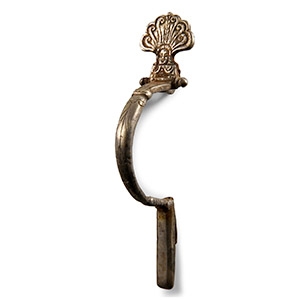
Large Roman Silver Bow Brooch
Circa 2nd-3rd century A.D.Sold for (Inc. bp): £130
With incised foliage detail to the high arched bow and flat head plate with human face and radiating floral pattern engraved on both sides; catchplate and pin-loop to the reverse. 36.5 grams, 10.5 cm
Ex European collection, 1990s. Ex Den of Antiquity, Cambridgeshire, UK. Accompanied by a dealer's catalogue information card.
The fibula seems to be provincial type, of Romano-Germanic inspiration. This particularly characteristic fibula shape of the Romano-Germanic army, worn probably by the Germanic mercenaries of the Roman army, appeared in the later 2nd and partly at the beginning of the 3rd century A.D., under a form of large bow brooches with various types of head plates or spiral sleeves. -
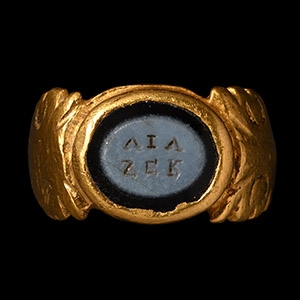
Roman Gold Ring with Gemstone for Servius
Mid 3rd century A.D.Sold for (Inc. bp): £2,340
With balustered hoop, broad shoulders with scrolled foliage detailing, discoid bezel with cell, inset nicolo gemstone with reversed 'SER/VIV' for SER(VI) VIV(AS) inscription in seriffed capitals, meaning 'Long may you live Servius'. 11.63 grams, 20.37 mm overall, 16.48 mm internal diameter (approximate size British J, USA 4 3/4, Europe 8.69, Japan 8)
UK private collection formed before 2000. Ex North London, UK, gallery. Accompanied by an academic report by Dr Raffaele D’Amato. This lot has been checked against the Interpol Database of stolen works of art and is accompanied by a search certificate number no.11995-211017.
'Serviu[s]' is a second declension praenomen (Glare, P.G.W., A Latin Dictionary, London, 1968-82, page 1,746/3) apparently based on the noun 'servus' (servant, minister, office-holder). The name was in use in Consular and Imperial times, and was the patronym of important Roman Gens, like the Gens Servilia.
