
Loading, please wait...
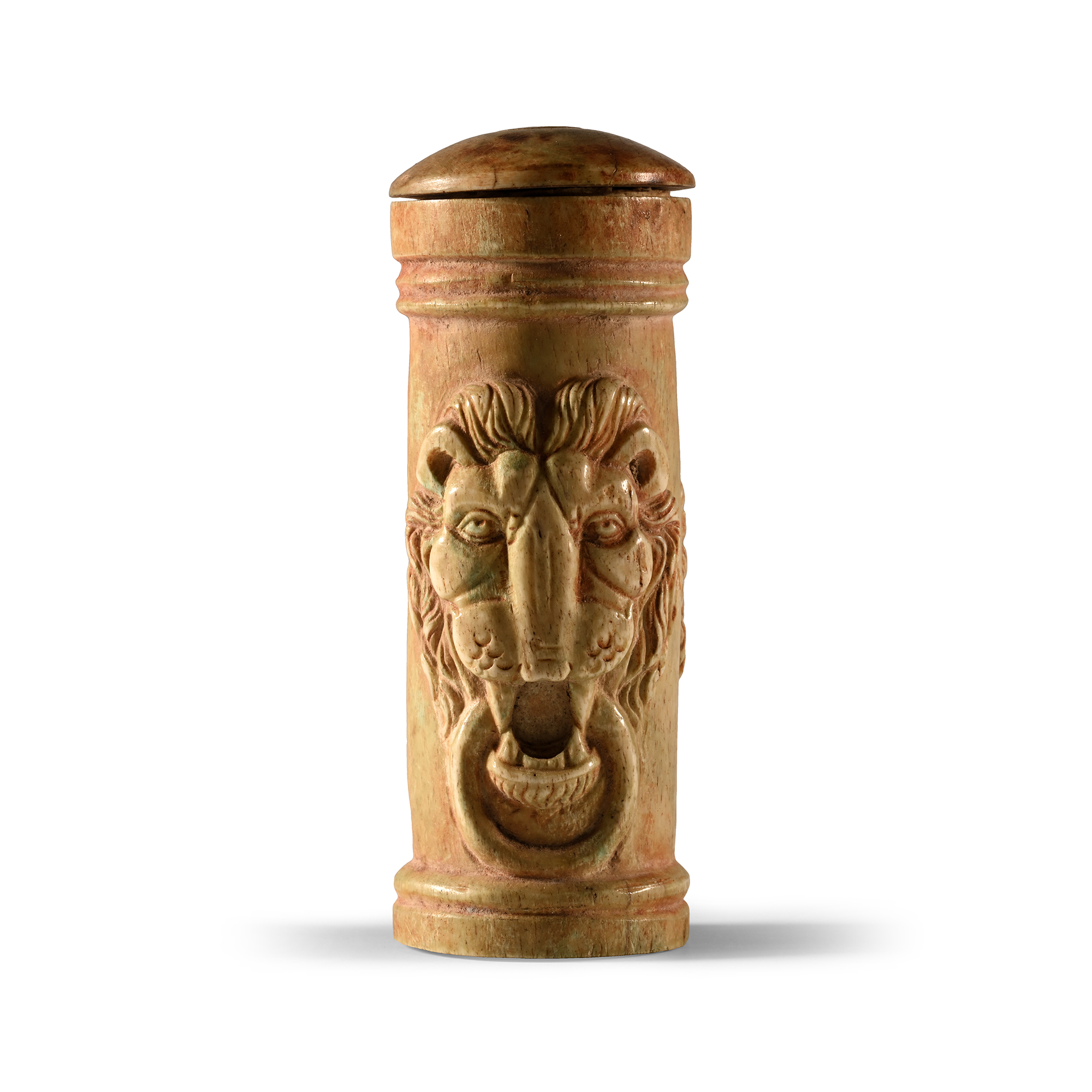
LOT 0101
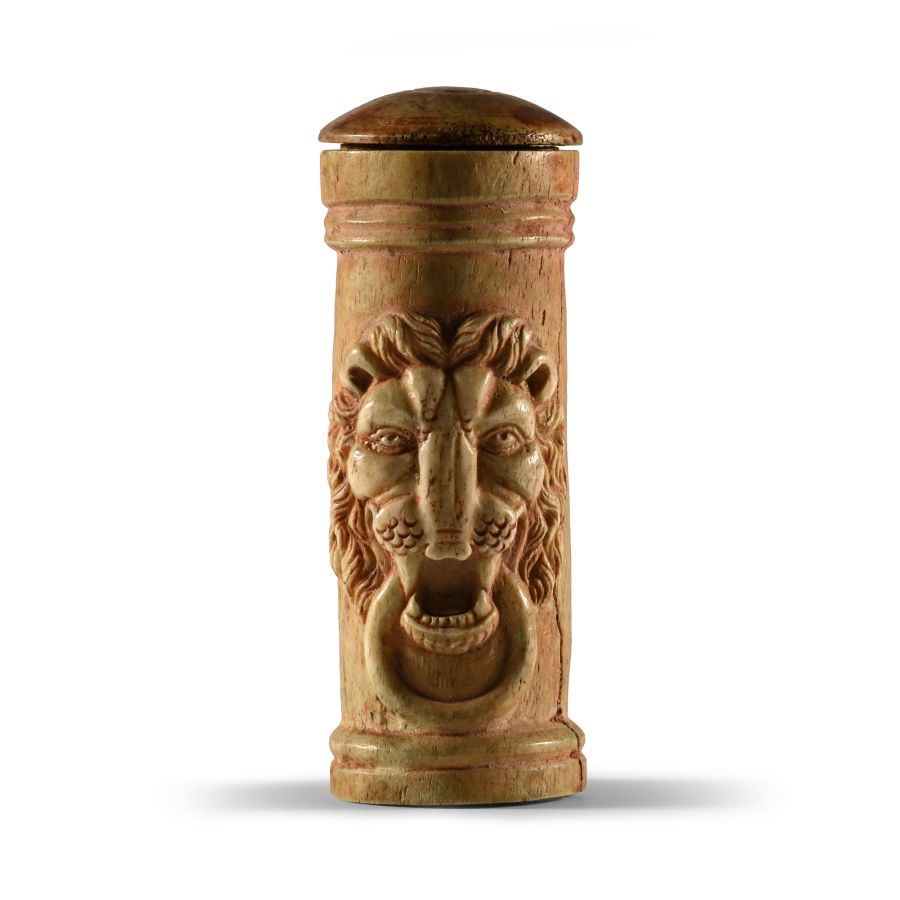
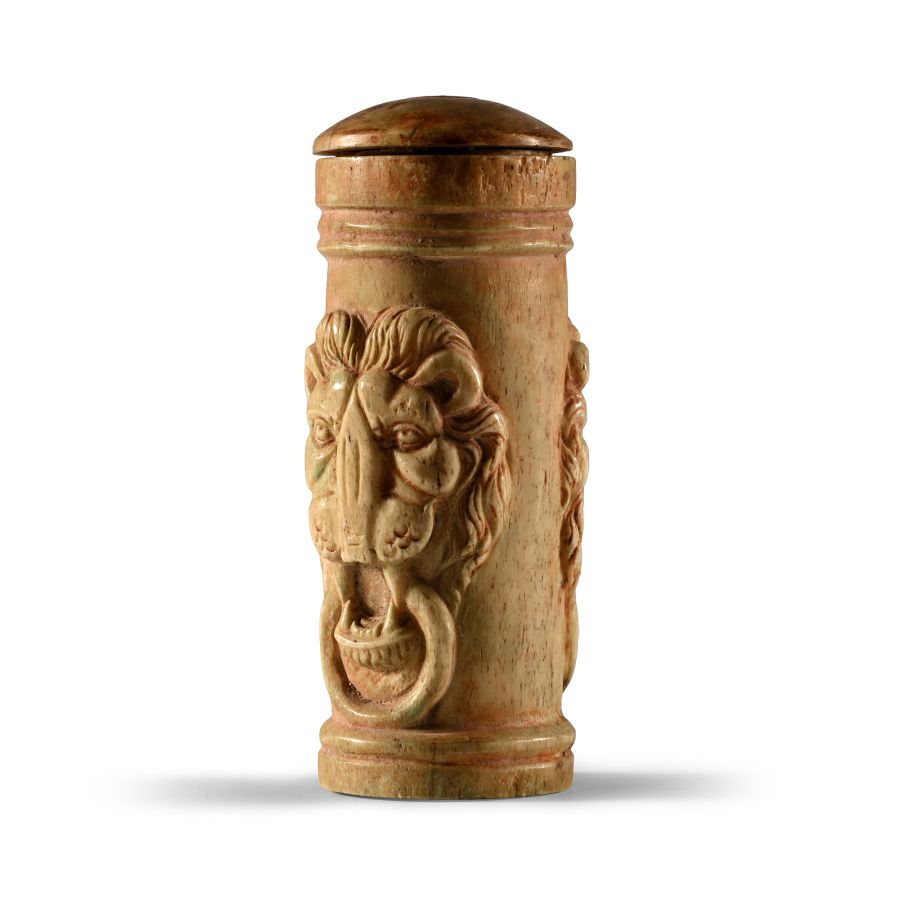
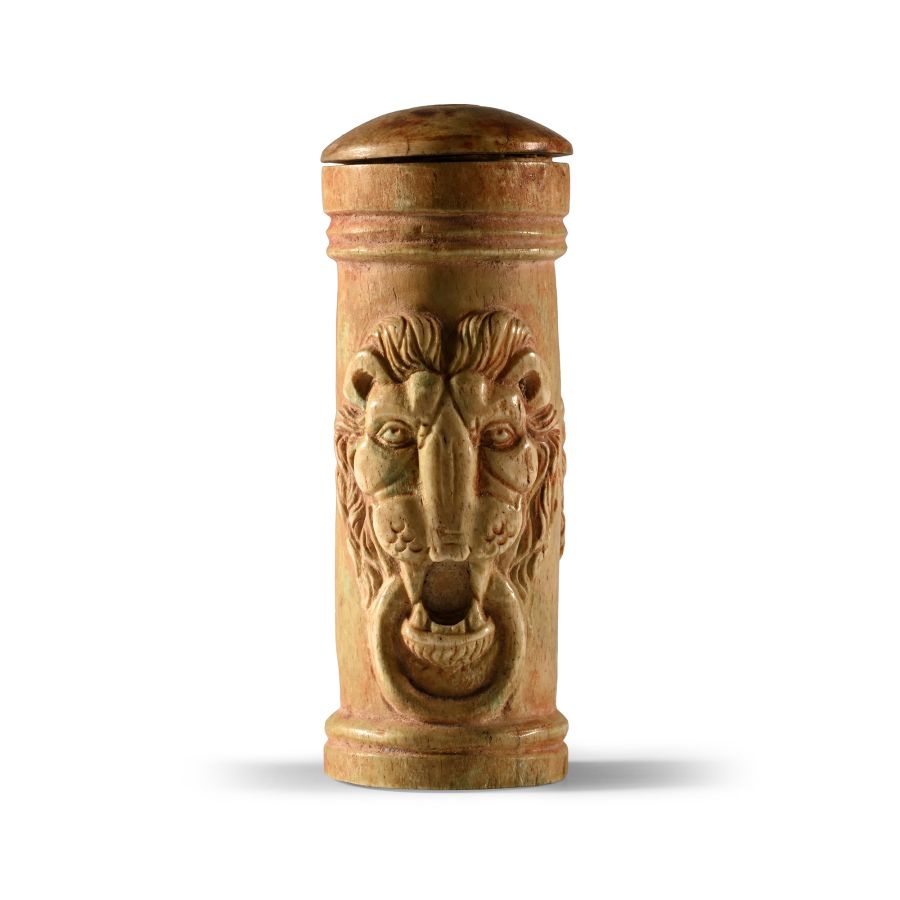
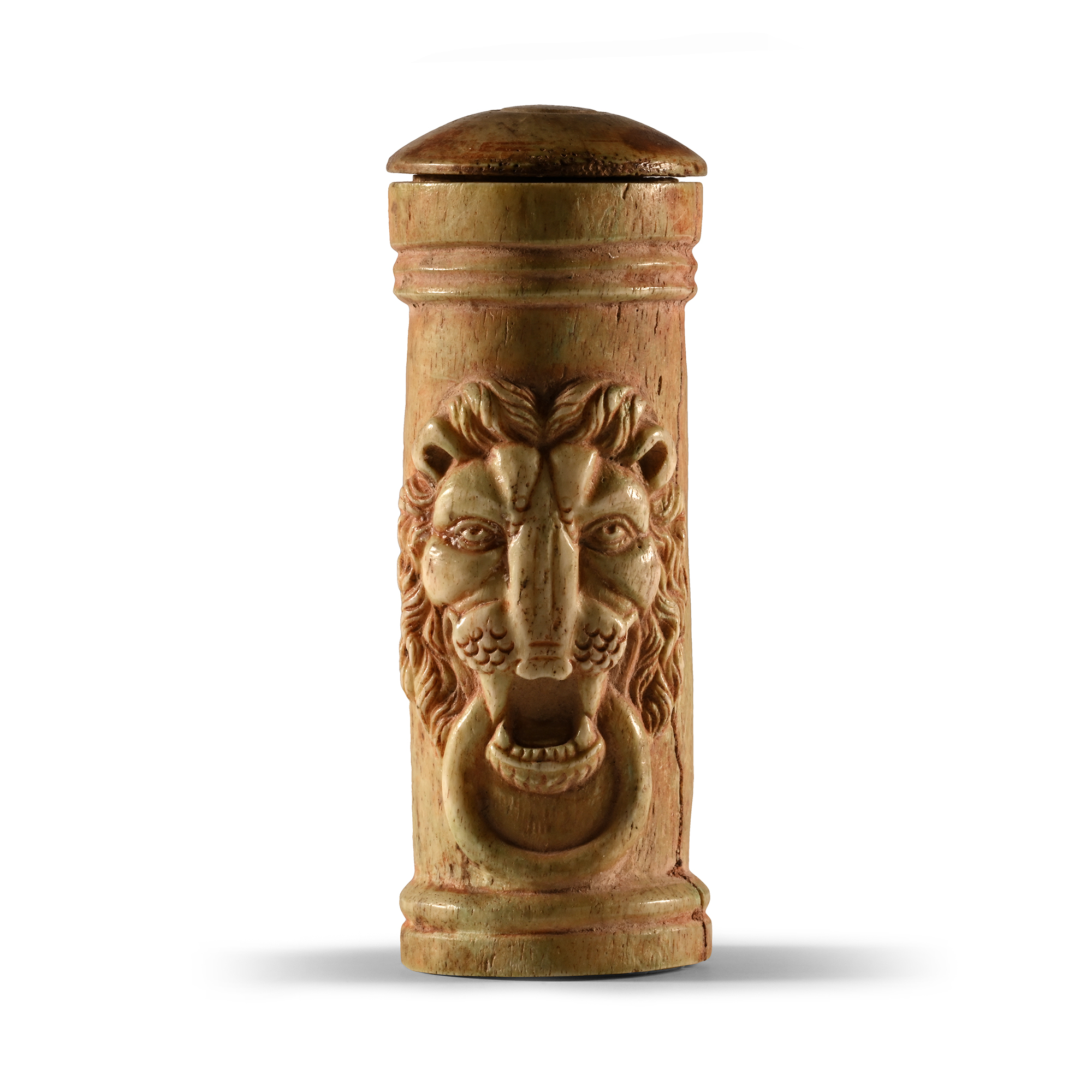
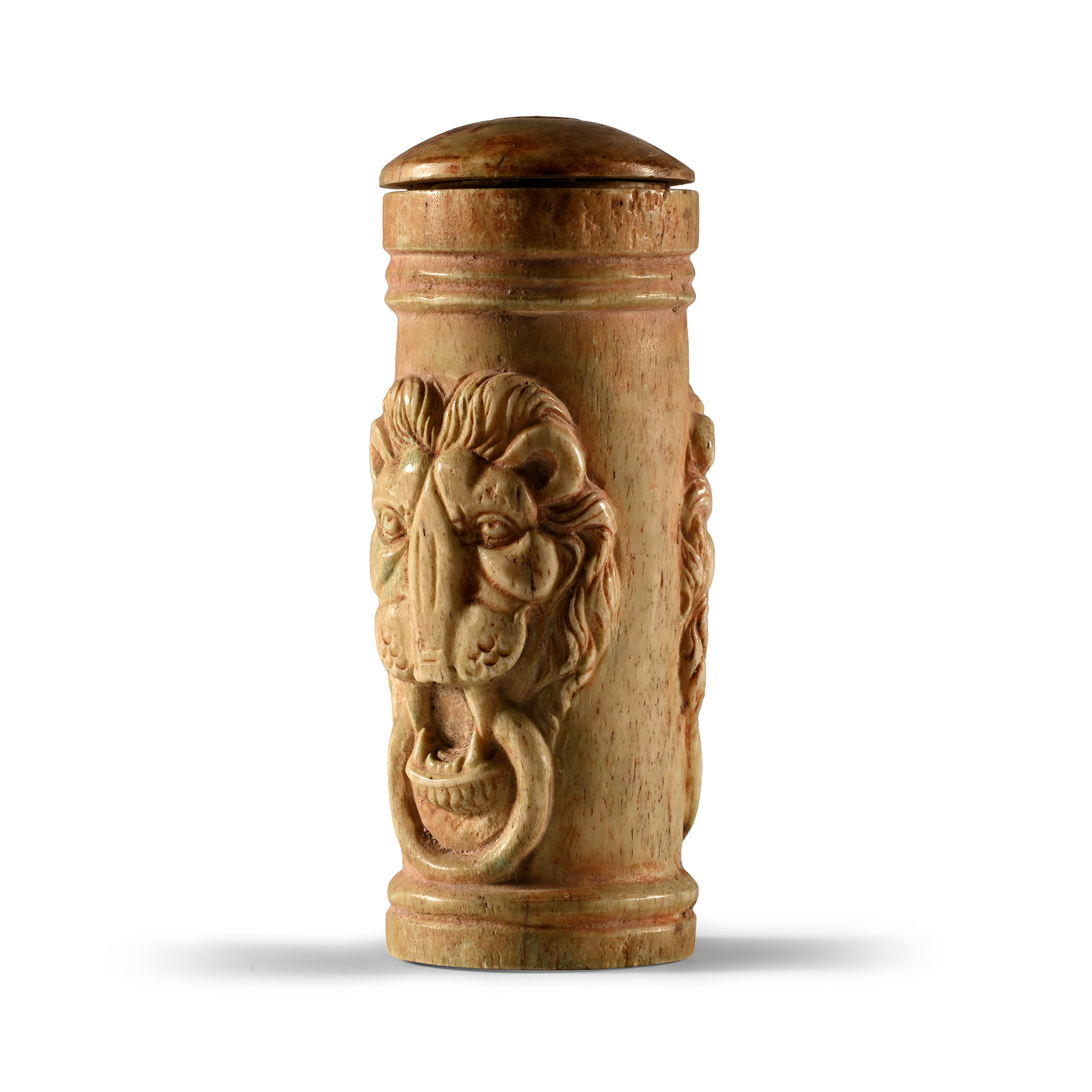
Roman Bone Pyxis with Lion Heads
CIRCA 1ST CENTURY B.C.-1ST CENTURY A.D.
2 3/4 in. (39.7 grams, 71 mm).
Carved with thick rim to each end, ogee above the base and double band beneath the mouth; two facing lion masks modelled in high-relief, each with gaping jaws and a ring held between the jaws; disc to the base, domed lid. [No Reserve]
ProvenanceFrom the old collection of Colonel Ronde, circa 1980s.
Property of a French collector.
This lot has been checked against the Interpol Database of stolen works of art and is accompanied by a search certificate number no.12094-214901.
Cf. similar pyxis in style with a putto in the Metropolitan Museum of Art, New York, accession number: 23.160.61a, b.
FootnotesAccording to archaeologists, the pyxis could have served as a container for cosmetics, medicinal ointments, or perfume. Soldiers’ posessions often included carved vessels and lathe-turned bowls, spoons, spatulas, knives, discs and lids, as well as pyxides, which have been found in high numbers in military camps.
CONDITIONTimeLine Auctions follows a vetting process to ensure the authenticity and legality of all items, reinforcing our commitment to integrity and responsible trading. Each antiquity, antique, and coin lot undergoes thorough examination by a vetting committee of at least ten external specialists, professional trade association members, scientists, and archaeologists: Our Vetting Process
AUCTIONS:
TimeLine is a leading auction house specialising in antiquities, ancient art, collectables, natural history, coins, medals, and books. Our auctions offer museums, collectors, historians, and enthusiasts the opportunity to acquire unique and historically significant pieces.
-
.jpg)
Roman Translucent Glass Bowl
3rd century A.D.Sold for (Inc. bp): £494
Translucent aqua glass with moulded texture to the outer face. 209 grams, 16 cm wide
From the collection of a late East Anglian teacher and antiquarian who retired to the Isle of Wight in Hampshire, UK. He amassed a large collection of objects between the 1960s-1980s. -
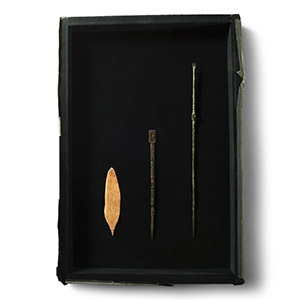
Roman Medical Instrument, Stylus and Spatula Group
3rd-5th century A.D.Sold for (Inc. bp): £260
Comprising: a leaf-shaped bone spatula with pointed tang; stylus with twisted grip and median baluster, rectangular head with erasing blade; slender bronze probe (cyathiscomele) with one pointed end, small measuring spoon to the other and median baluster with incised pellets; mounted in a glass-fronted wooden case. 750 grams total, 22 x 32 cm
Private collection, USA, formed in the 1980s. -
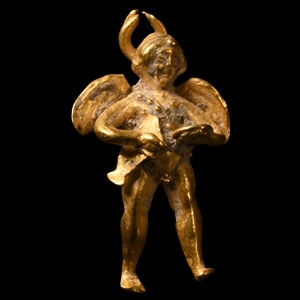
Roman Gold Cupid Pendant
Circa 1st-4th century A.D.Sold for (Inc. bp): £364
Standing nude and holding a patera and lyre, wings spread to the rear, suspension loop to rear of head. 2.44 grams, 18 mm
From the collection of a gentleman, acquired on the London art market in the 1990s.
