
Loading, please wait...
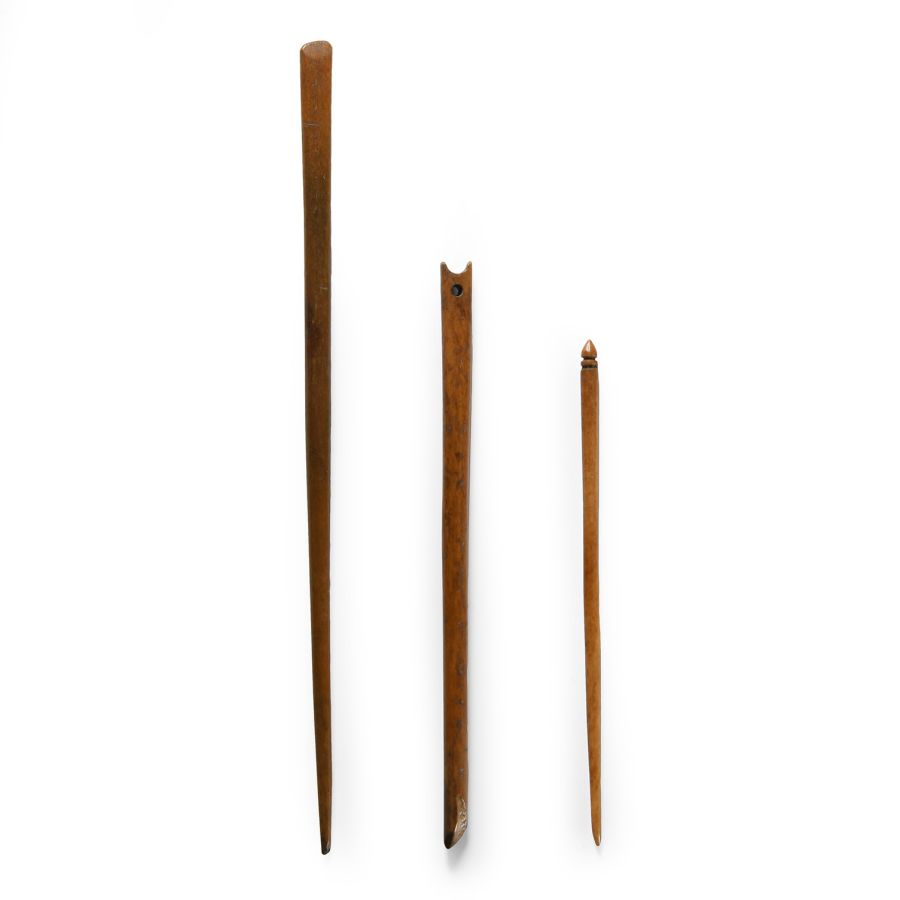
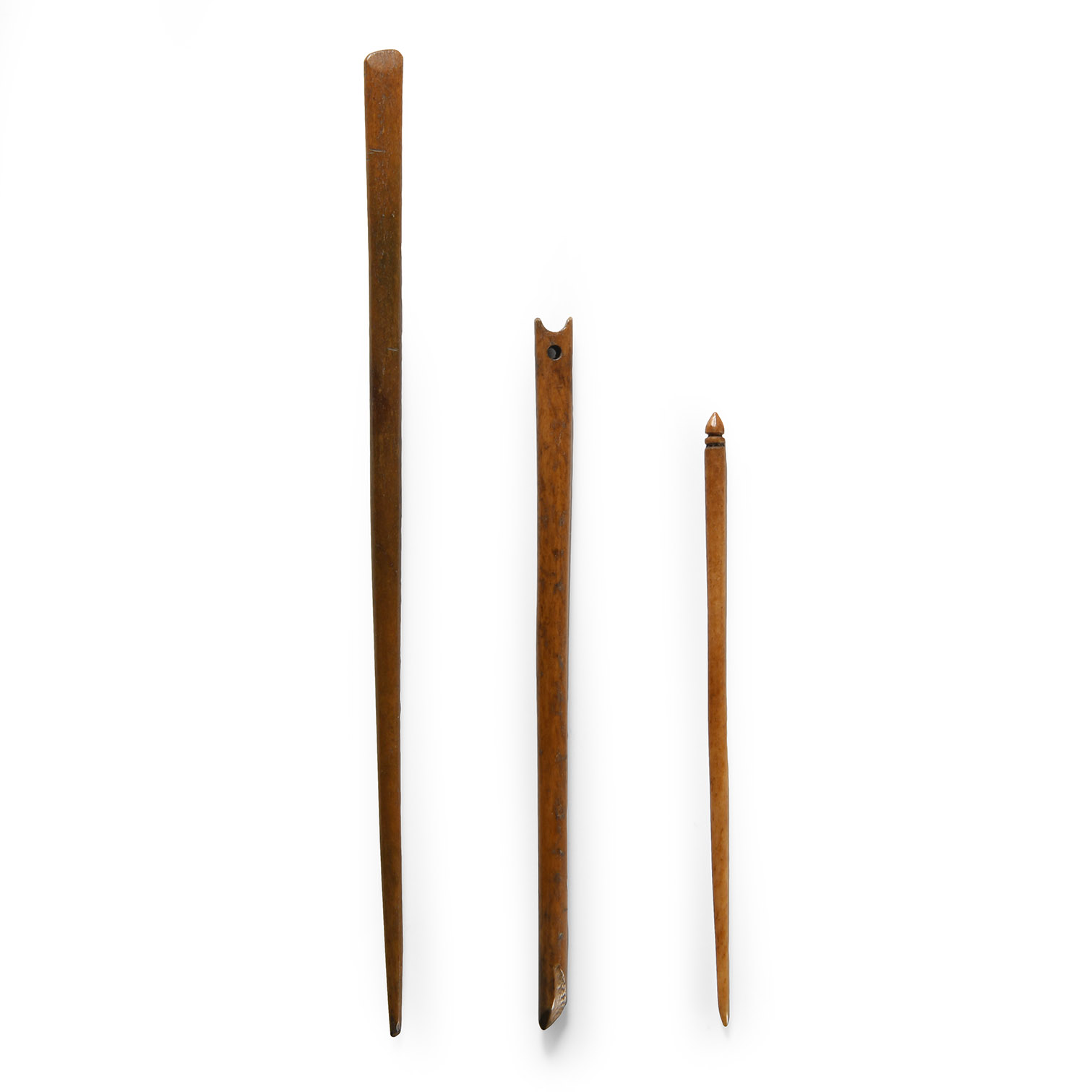
LOT 0705
Roman Bone Medical Implement Group
CIRCA 1ST CENTURY A.D.
3 3/4 - 6 1/8 in. (10.2 grams total, 9.6-15.5 cm).
Including a dress pin and two probes, one with a pierced end for suspension. [3, No Reserve]
ProvenanceFound City of London, UK.
Acquired from mudlark Steve Brooker in the early 2000s.
Ian Wilkinson collection, Nottinghamshire, UK, formed since 1985.
TimeLine Auctions follows a vetting process to ensure the authenticity and legality of all items, reinforcing our commitment to integrity and responsible trading. Each antiquity, antique, and coin lot undergoes thorough examination by a vetting committee of at least ten external specialists, professional trade association members, scientists, and archaeologists: Our Vetting Process
AUCTIONS:
TimeLine is a leading auction house specialising in antiquities, ancient art, collectables, natural history, coins, medals, and books. Our auctions offer museums, collectors, historians, and enthusiasts the opportunity to acquire unique and historically significant pieces.
-
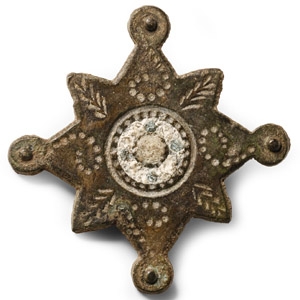
Roman Bronze Star-Shaped Plate Brooch
2nd-3rd century A.D.Sold for (Inc. bp): £234
With enamelled central panel to obverse, fronds and scrolls, studs to the arms. 12.1 grams, 42 mm
Ex German art market, 2000s. Acquired from an EU collector living in London. From the collection of Surrey, UK, gentleman. -
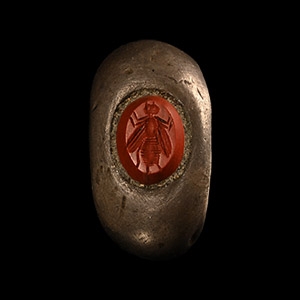
Roman Silver Ring with Fly Gemstone
2nd-3rd century A.D. and laterSold for (Inc. bp): £546
With later rounded plaque and inset jasper stud with intaglio fly motif. 17.26 grams, 26.69 mm overall, 19.90 mm internal diameter (approximate size British P, USA 7 1/2, Europe 16.23, Japan 15)
Acquired on the UK art market in the 1980s. From an East Anglian private collection. -
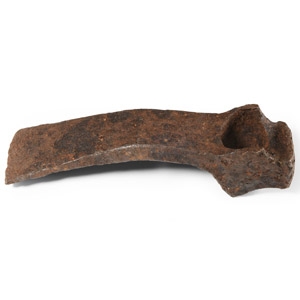
Late Roman Socketted Iron Adze Hammer
Circa 6th century A.D.Sold for (Inc. bp): £325
Flat-section blade with gently curved cutting edge, round socket with spurs to both edges, clubbed hammerhead to the rear. 752 grams, 19.5 cm
Found near Wetwang, East Yorkshire, UK. Acquired circa 2005. Ian Wilkinson collection, Nottinghamshire, UK.
