
Loading, please wait...
LOT 0786
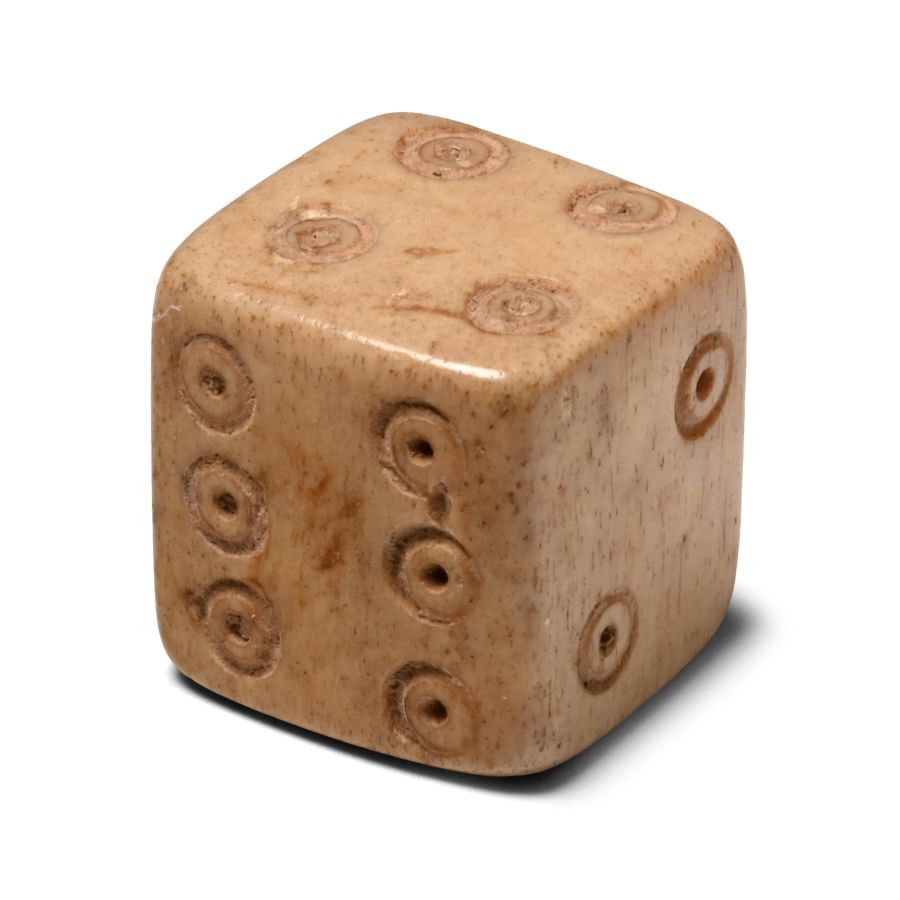
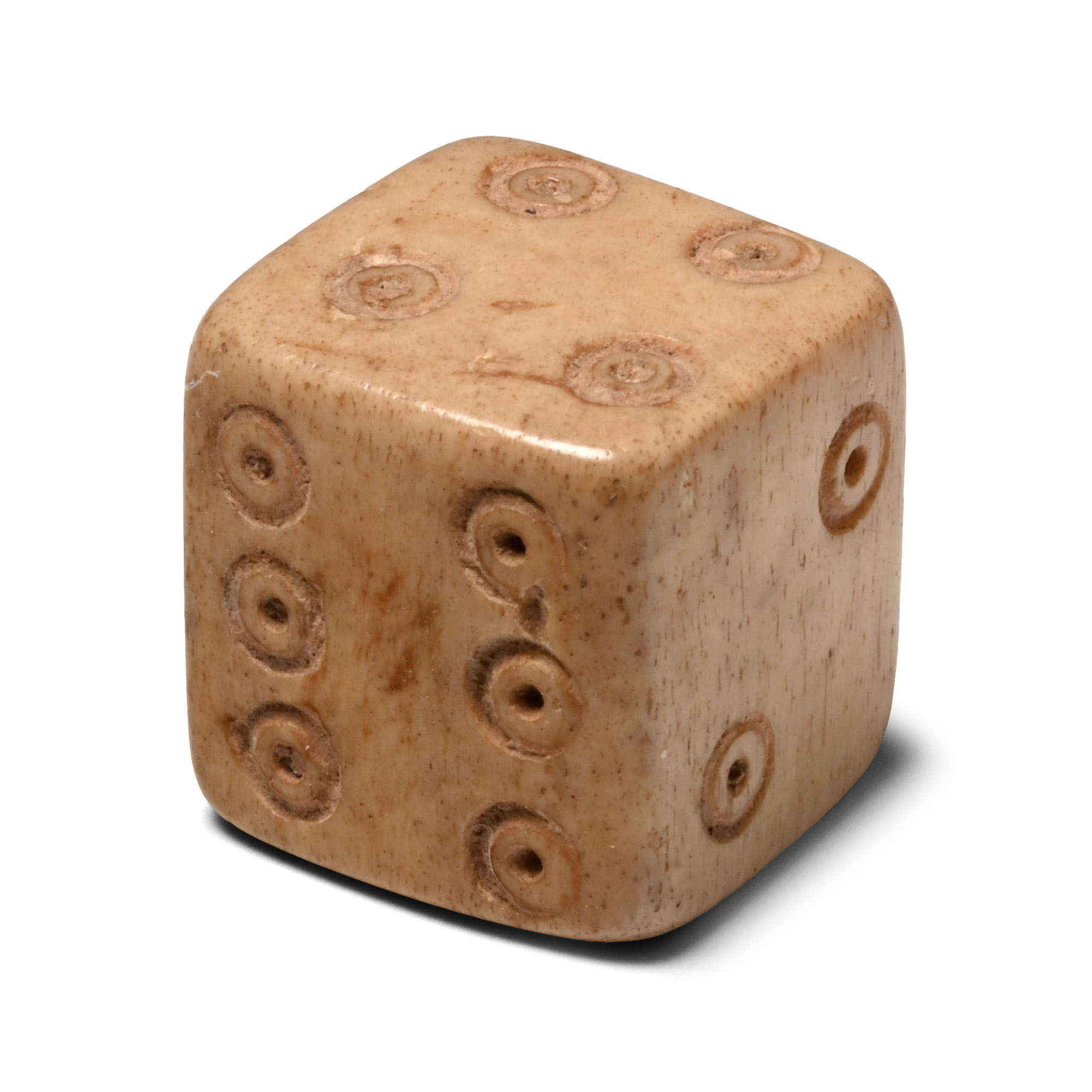
Roman Bone Gaming Dice
1ST-2ND CENTURY A.D.
1/2 in. (5.42 grams, 14 mm).
With incised ring-and-dot markings disposed 1:6, 2:5, 3:4. [No Reserve]
ProvenanceFrom a collection of gaming items, formed 1980-1990s.
LiteratureCf. Allason-Jones, L. & Miket, R., The Catalogue of Small Finds from South Shields Roman Fort, Newcastle, 1984, item 2.82.
CONDITIONTimeLine Auctions follows a vetting process to ensure the authenticity and legality of all items, reinforcing our commitment to integrity and responsible trading. Each antiquity, antique, and coin lot undergoes thorough examination by a vetting committee of at least ten external specialists, professional trade association members, scientists, and archaeologists: Our Vetting Process
AUCTIONS:
TimeLine is a leading auction house specialising in antiquities, ancient art, collectables, natural history, coins, medals, and books. Our auctions offer museums, collectors, historians, and enthusiasts the opportunity to acquire unique and historically significant pieces.
-
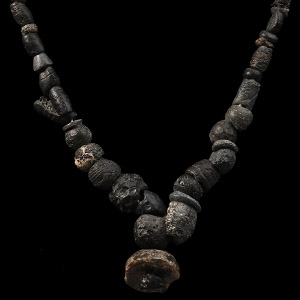
Roman and Later Black Glass Bead Necklace String
1st-4th century A.D. and laterSold for (Inc. bp): £20
Restrung group of tubular, oblate and other types with pendant centrepiece. 33.8 grams, 39 cm
London, UK, collection, 2000s. -
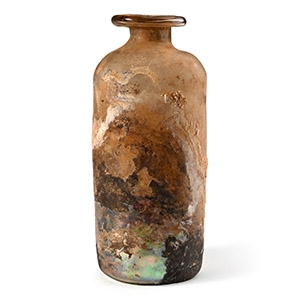
Roman Light Brown Glass Bottle
1st century B.C.-1st century A.D.Estimate: £200 - 300 (+bp*)
Opening Bid: £100
Mould-blown, comprising a flat-based tubular body and short neck with returned flange rim. 69 grams, 14.4 cm
From an important collection of glass, London, UK, 1990s. -
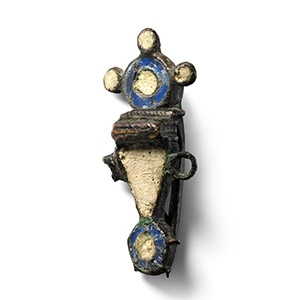
Roman Enamelled Bronze Plate Brooch
2nd century A.D.Sold for (Inc. bp): £169
Of stepped profile comprising: annular head with three radiating lobes, stepped bow, triangular body with lateral loops, annular foot; hinged pin to reverse with catch. 10.6 grams, 43 mm
Ex Chris Rudd collection, no.806. Ex David Miller, Hemel Hempstead, London, UK. From the private collection of a West London, UK, gentleman, formed since the early 2000s. Accompanied by a hand written dealer's ticket.
