
Loading, please wait...
LOT 0644
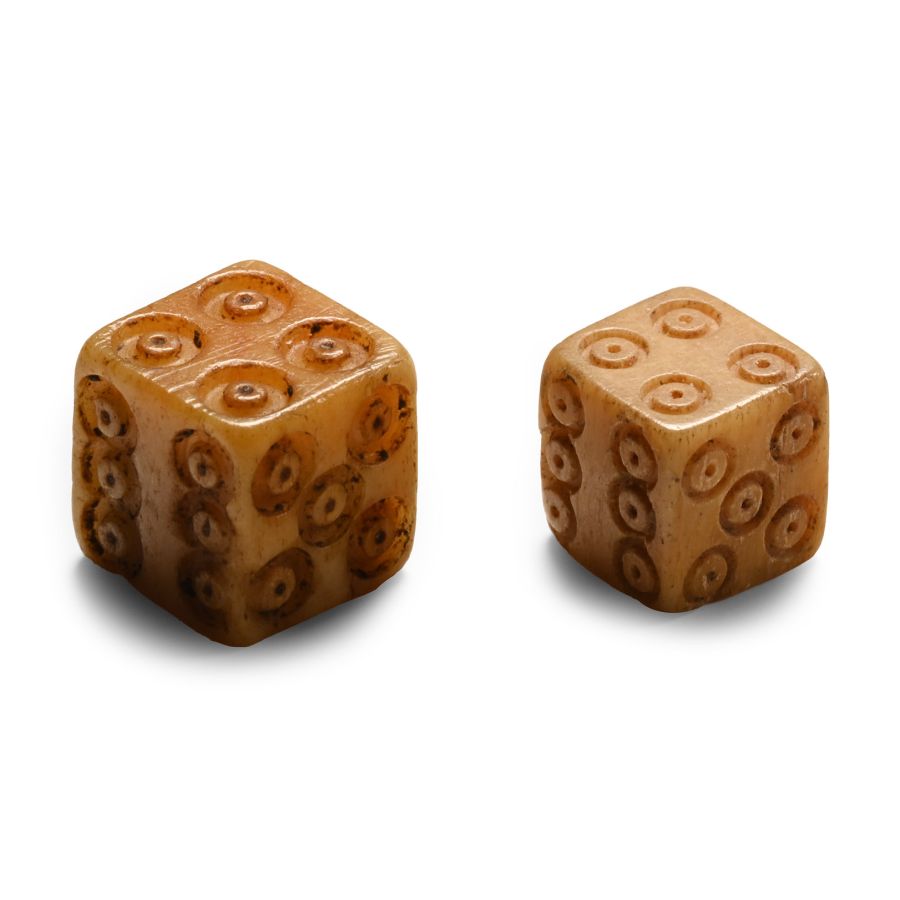
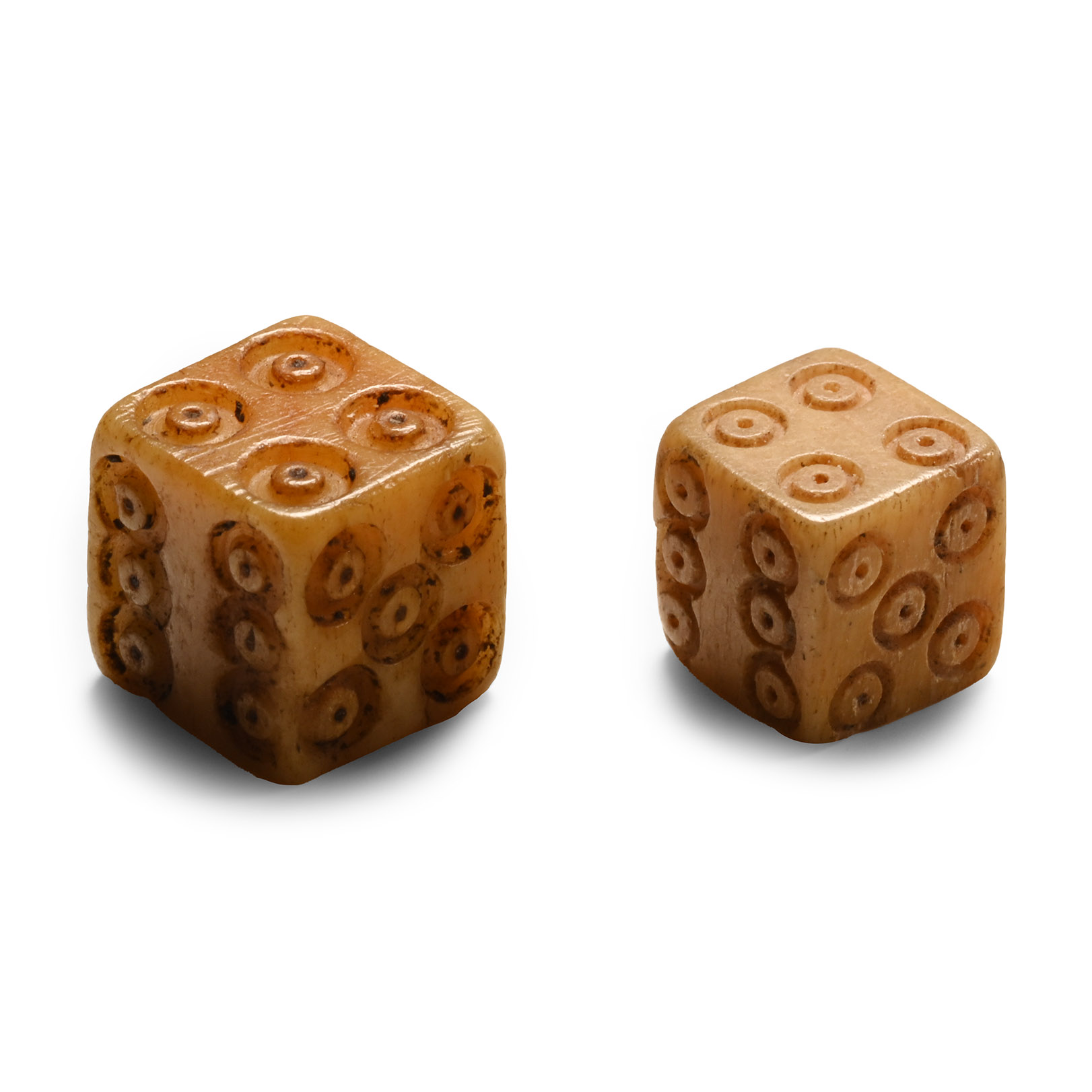
Roman Bone Gaming Dice Pair
1ST-4TH CENTURY A.D.
3/8 in. (2.28 grams total, 8-9 mm).
Cuboid with ring-and-dot making disposed 1:6, 2:5, 3:4. [2, No Reserve]
ProvenanceFrom the important private collection of dice and gaming pieces of Colin Narbeth, London, UK, collection no.46.
CONDITIONTimeLine Auctions follows a vetting process to ensure the authenticity and legality of all items, reinforcing our commitment to integrity and responsible trading. Each antiquity, antique, and coin lot undergoes thorough examination by a vetting committee of at least ten external specialists, professional trade association members, scientists, and archaeologists: Our Vetting Process
AUCTIONS:
TimeLine is a leading auction house specialising in antiquities, ancient art, collectables, natural history, coins, medals, and books. Our auctions offer museums, collectors, historians, and enthusiasts the opportunity to acquire unique and historically significant pieces.
-
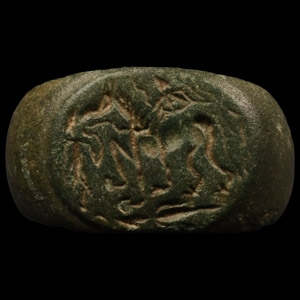
Roman Bronze Signet Ring with Horse
1st-3rd century A.D.Sold for (Inc. bp): £117
Broad plaque with incuse image of a horse with walking attendant, objects in the field. 7.30 grams, 24.71 mm overall, 19.11 mm internal diameter (approximate size British O 1/2, USA 7 1/4, Europe 15.61, Japan 15)
Ex German art market, 2000s. Acquired from an EU collector living in London. From the collection of Surrey, UK, gentleman. -
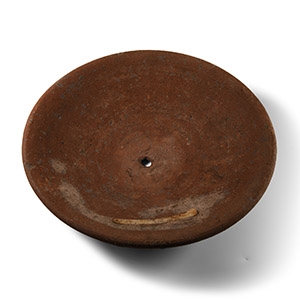
Roman 'Columbarium at Ostia' Terracotta Sepulchral Urn Lid
1st-4th century A.D.Sold for (Inc. bp): £46
Of domed profile with central vent; old handwritten label to reverse 'Lid from an urn from Columbarium at Ostia. [...] 1867' and another, typed, to the obverse 'Lid of sepulchral Urn from Columbarium at Ostia (From Rev. J. Pyke'. 492 grams, 21 cm
Found Columbarium at Ostia, Italy, in 1867. From the 19th century collection of Rev J. Pyke. From the collection of a late East Anglian teacher and antiquarian who retired to the Isle of Wight in Hampshire, UK. He amassed a large collection of objects between the 1960s-1980s. -
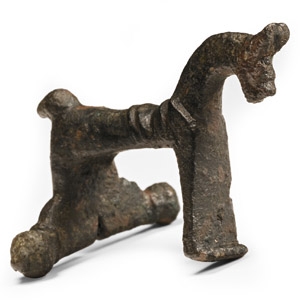
Roman Bronze Horse Bow Brooch
Circa 3rd century A.D.Sold for (Inc. bp): £39
With pricked ears, arched neck, D-shaped saddle and bobbed tail; the lower hindlegs developing into a headplate similar to a Roman crossbow brooch; the hinge-notch present on the headplate, the pin and catchplate absent. 29.8 grams, 47 mm
Acquired late 1980s-early 1990s. Ex private collection, Nottinghamshire, UK. Property of a Kent lady collector.
