
Loading, please wait...
LOT 0732
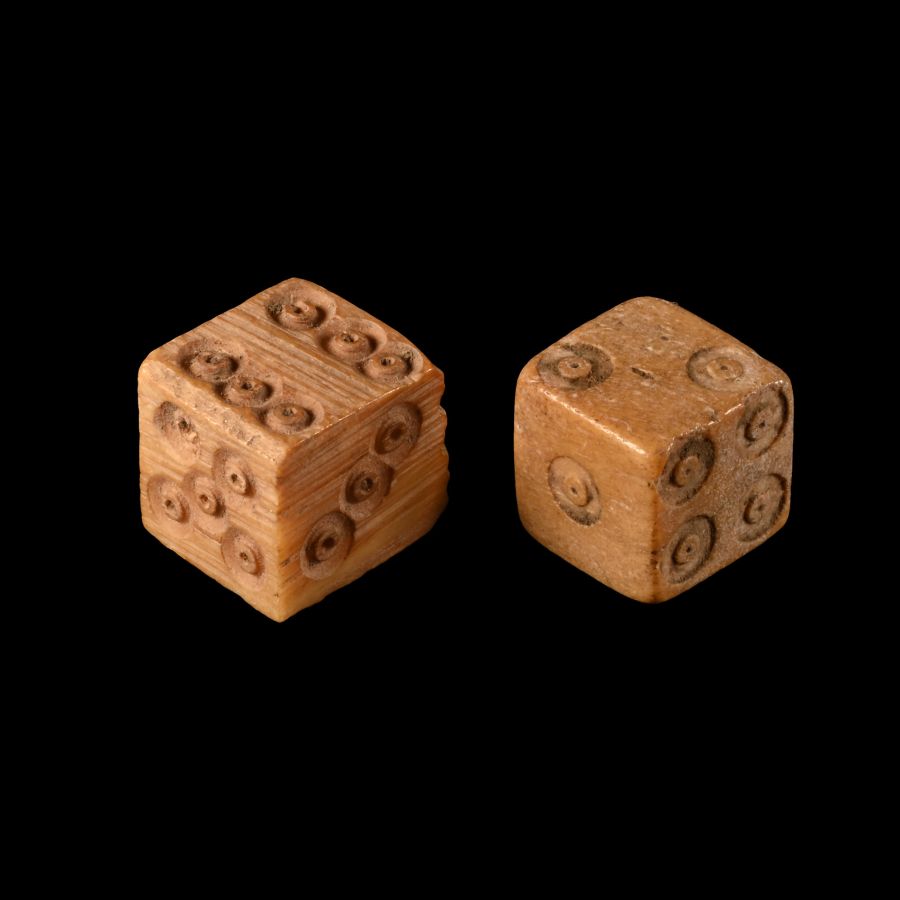
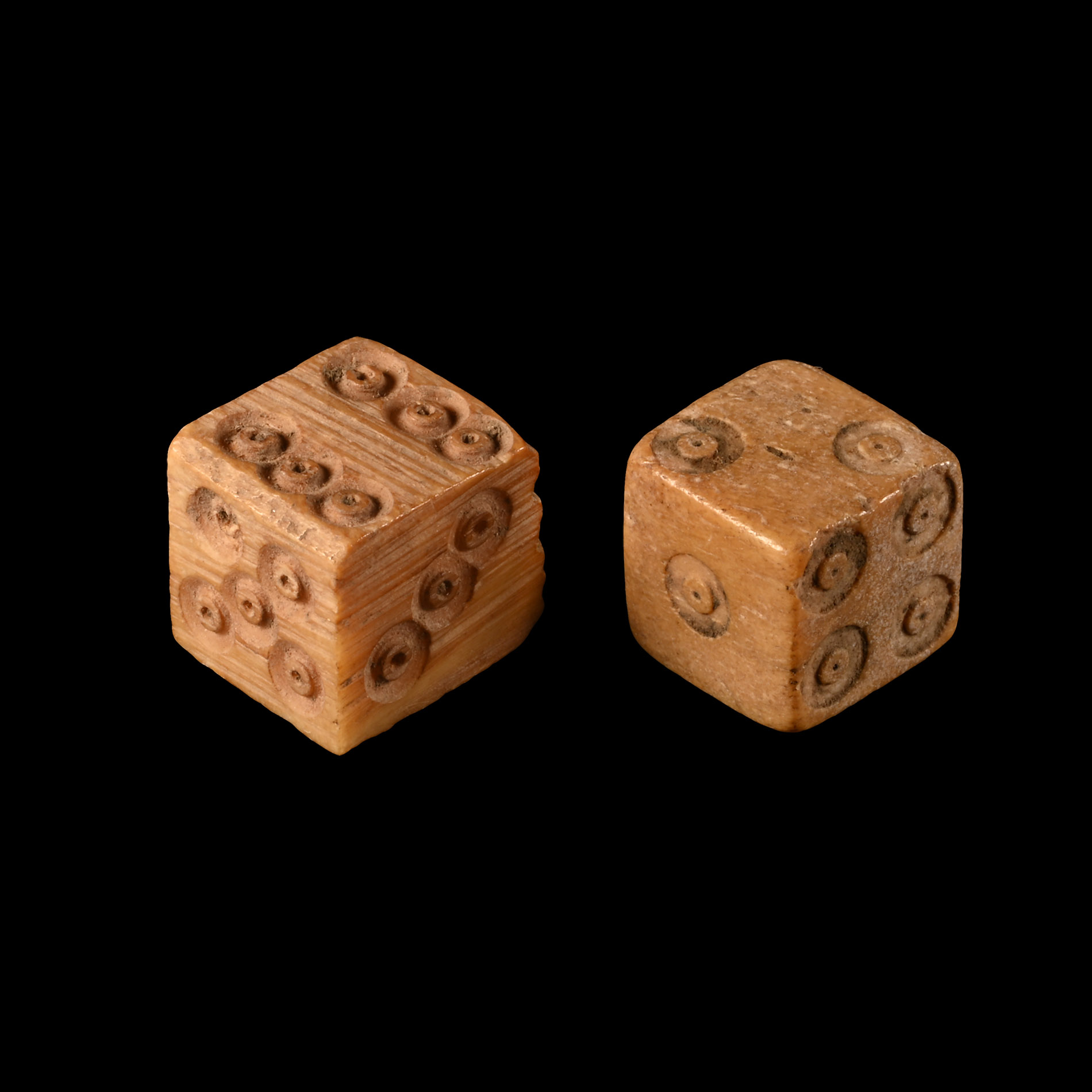
Roman Bone Gaming Dice Pair
1ST-4TH CENTURY A.D.
3/8 in. (2.9 grams total, 8.5-9.8 mm).
Each cuboid in form with ring-and-dot markings disposed: 1:6, 2:5, 3:4. [2, No Reserve]
ProvenanceFrom the important private collection of dice and gaming pieces of Colin Narbeth, London, UK, collection no.47.
CONDITIONTimeLine Auctions follows a vetting process to ensure the authenticity and legality of all items, reinforcing our commitment to integrity and responsible trading. Each antiquity, antique, and coin lot undergoes thorough examination by a vetting committee of at least ten external specialists, professional trade association members, scientists, and archaeologists: Our Vetting Process
AUCTIONS:
TimeLine is a leading auction house specialising in antiquities, ancient art, collectables, natural history, coins, medals, and books. Our auctions offer museums, collectors, historians, and enthusiasts the opportunity to acquire unique and historically significant pieces.
-
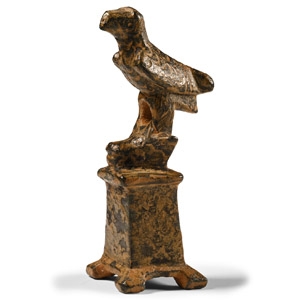
Roman Bronze Eagle on Bull's Head Statuette
2nd-3rd century A.D.Sold for (Inc. bp): £169
Comprising an altar with a severed head of a bull on the top and an eagle perching on it; hollow to the underside, four stub feet to the angles. 46.4 grams, 58 mm
From a collection acquired on the UK art market from various auction houses and collections mostly before 2000. From an important Cambridgeshire estate; thence by descent.
The image of an eagle on the severed head of a bull was probably connected with the cult of Jupiter Dolichenus. -
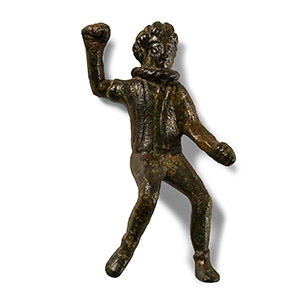
Romano-Celtic Bronze Statuette of a Warrior Wearing Torc
Circa 1st-2nd century A.D.Sold for (Inc. bp): £390
Modelled in the round, standing with right leg bent, right arm raised and left extended before the body; with thick tousled hair, exaggerated torc to the neck, jacket with incised vertical lines, tight-fitting trousers and ankle-boots. 53 grams total, 67 mm
From a collection acquired on the UK art market from various auction houses and collections mostly before 2000. From an important Cambridgeshire estate; thence by descent.
The pose of the figure suggests that he is in the action of brandishing a weapon, or possibly holding the reins of a team of horses pulling a chariot. Caesar mentions the expert use of the war-chariot by the Britons (Conquest of Gaul, IV.33). The padded garment suggests a Celtic auxiliary in the Roman army. -
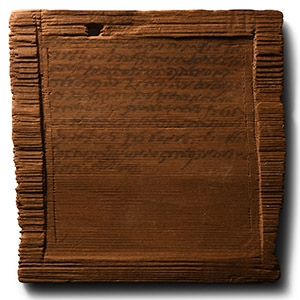
Roman Inked Wooden Tablet, a Legal Document from the Rascotiano Estate
4th century A.D.Sold for (Inc. bp): £13,000
A reused tablet with a recessed panel on one side, the last tablet of a legal document which consisted of two (diptychon) or three tablets (triptychon); ten black inked lines of New Roman cursive script, the end of a record of a transaction in a highly formulaic legal language, confirmed between heirs and elders (heredes et seniores), negotiated on an estate called Rascotiano; one edge irregular, pierced for addition of a thong or string. 23.7 grams, 12.3 x 12.5 cm
From an important London collection since 1975. Accompanied by a collection of eighteen 1970s photographs of the the tablet.
The contract follows standard Roman legal formulae.
