
Loading, please wait...
LOT 0617
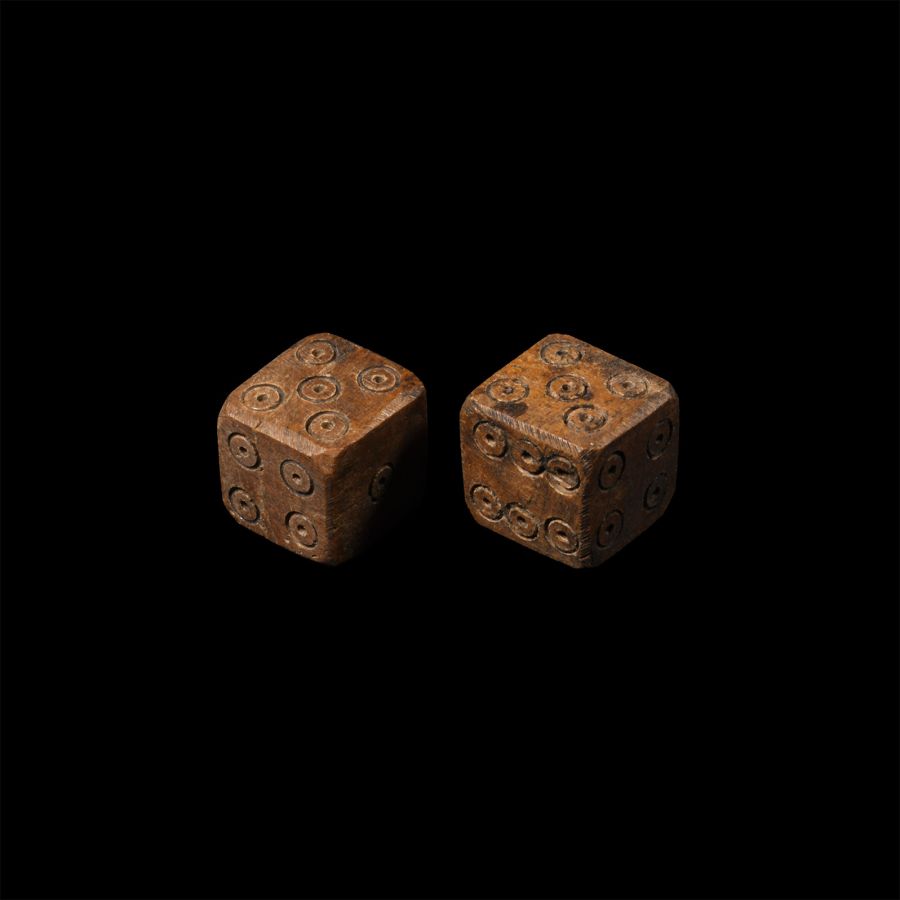
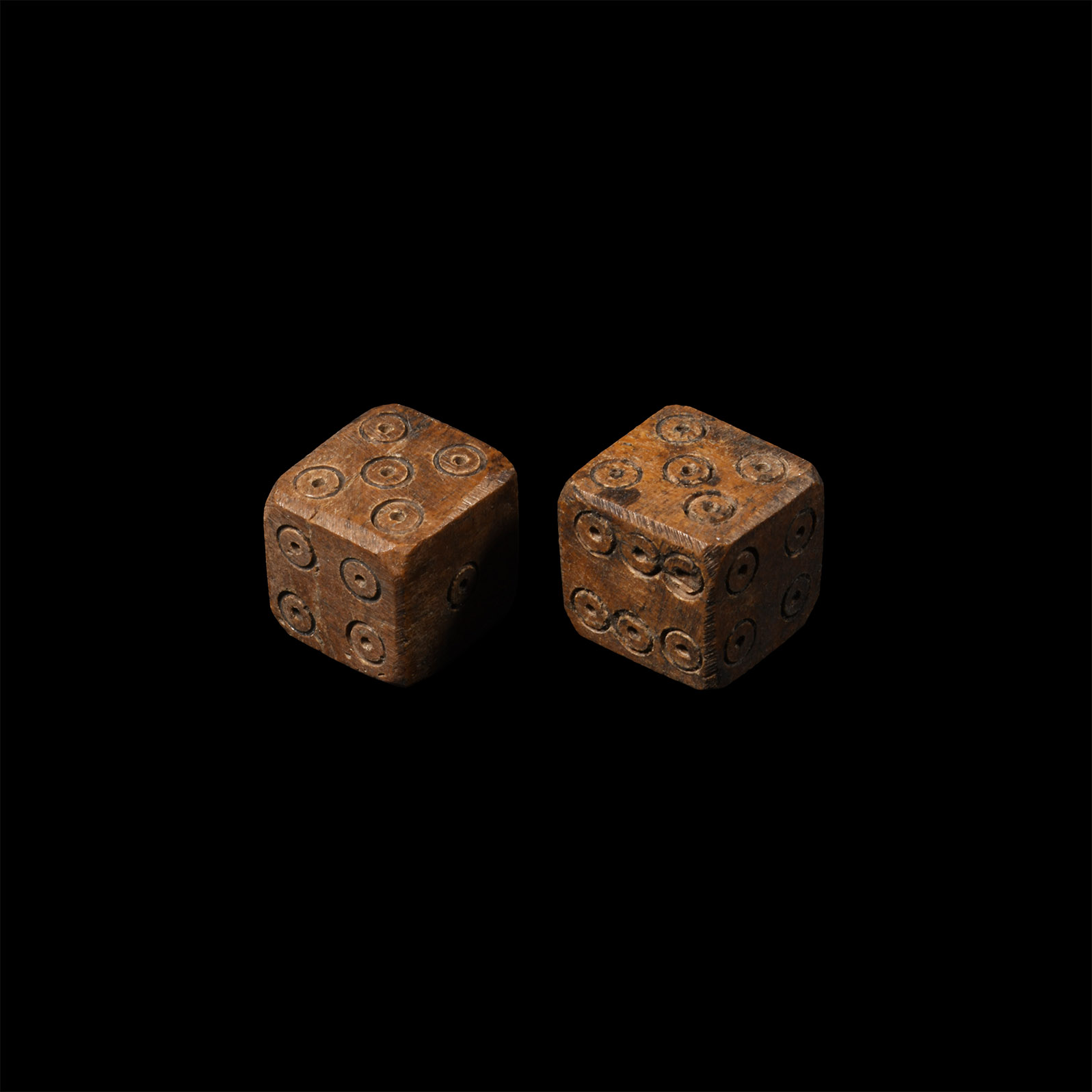
Roman Bone Dice Pair
2ND-4TH CENTURY A.D. OR LATER
1/2 in. (7.7 grams total, 12-13 mm).
With ring-and dot markings disposed 1:6, 2:5, 3:4 [2, No Reserve]
ProvenanceEx collection of a UK gentleman formed in the 1990s.
From the collection of Surrey, UK, gentleman.
Cf. Beutler, F. et al., Der Adler Roms. Carnuntum und der Armee der Cäsaren, Bad-Deutsch Altenberg, 2017, item 724, for type.
CONDITIONTimeLine Auctions follows a vetting process to ensure the authenticity and legality of all items, reinforcing our commitment to integrity and responsible trading. Each antiquity, antique, and coin lot undergoes thorough examination by a vetting committee of at least ten external specialists, professional trade association members, scientists, and archaeologists: Our Vetting Process
AUCTIONS:
TimeLine is a leading auction house specialising in antiquities, ancient art, collectables, natural history, coins, medals, and books. Our auctions offer museums, collectors, historians, and enthusiasts the opportunity to acquire unique and historically significant pieces.
-
.jpg)
Roman Period Iridescent Glass Bottle with Pimples
4th-5th century A.D.Sold for (Inc. bp): £234
The lower body decorated with raised 'pimples'; shallow kick-up; iridescent surfaces. 15.9 grams, 58 mm
Fine condition.
Ex private collection, 1980s. Acquired on the UK art market in the 1990s. -
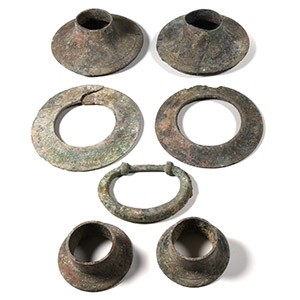
Roman Bronze Chariot Wheel Hub Group
1st-4th century A.D.Sold for (Inc. bp): £74
Comprising three pairs of fittings of different types, together with a terret ring; one split. 1.4 kg total, 6.9-12.4 cm
Acquired 1990s-early 2000s. East Anglian private collection. -
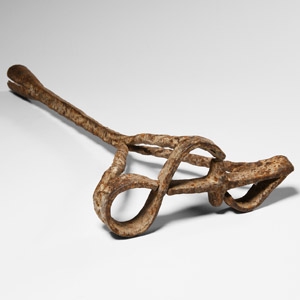
Late Roman Iron Branding Signaculum
5th-6th century A.D.Estimate: £100 - 140 (+bp*)
Opening Bid: £40
Featuring an elaborate monogram composed of Greek letters M and O, supported by decoratively twisted prongs; tapering cylindrical socket. 521 grams, 37.5 cm
Acquired 1990s-early 2000s. East Anglian private collection.
Branding stamps or signacula, in particular those with large single letters, were used for marking livestock to identify the ownership, the breed, the quality and other features of the animal. The signacula were usually made in bronze, but iron examples are also preserved.
