
Loading, please wait...
LOT 0886
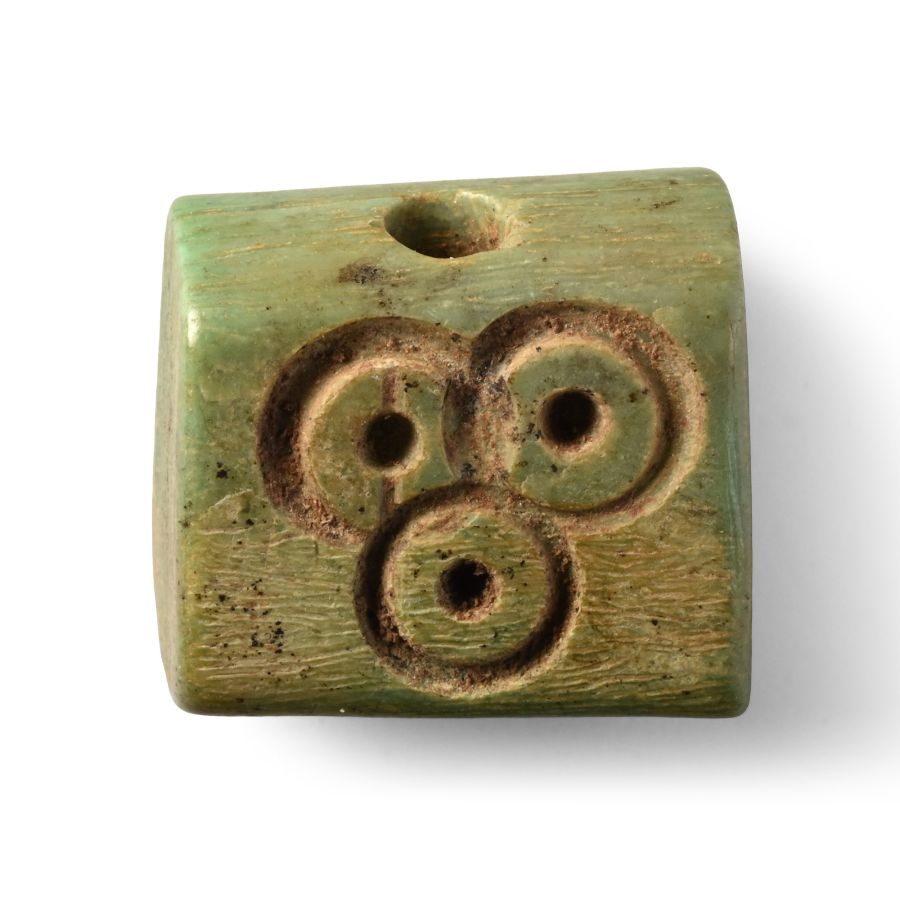
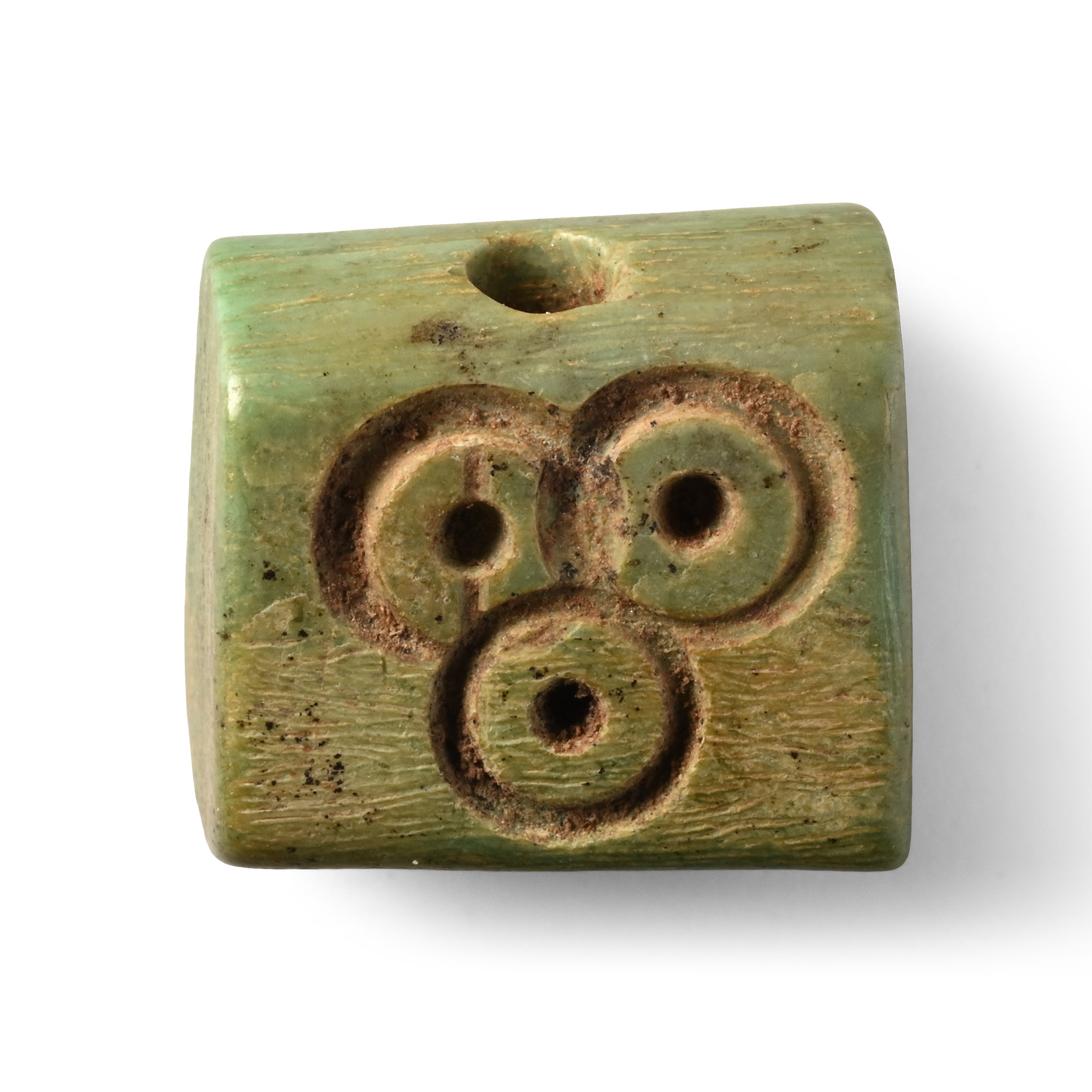
Roman Bone Bead
1ST-2ND CENTURY A.D.
1/2 in. (1.65 grams, 13 mm).
Rectangular in plan with transverse piercing, three ring-and-dot marks to each broad face. [No Reserve]
ProvenanceFrom a collection of gaming items, formed 1980-1990s.
CONDITIONTimeLine Auctions follows a vetting process to ensure the authenticity and legality of all items, reinforcing our commitment to integrity and responsible trading. Each antiquity, antique, and coin lot undergoes thorough examination by a vetting committee of at least ten external specialists, professional trade association members, scientists, and archaeologists: Our Vetting Process
AUCTIONS:
TimeLine is a leading auction house specialising in antiquities, ancient art, collectables, natural history, coins, medals, and books. Our auctions offer museums, collectors, historians, and enthusiasts the opportunity to acquire unique and historically significant pieces.
-
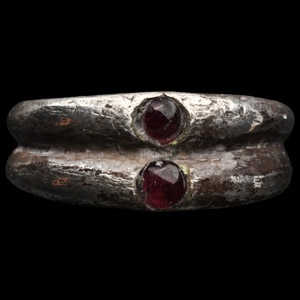
Roman Silver Double-Bezel Ring with Garnets
Circa 3rd century A.D.Sold for (Inc. bp): £182
With bifid ellipsoid bezel, each band with inset cabochon garnet. 9.30 grams, 23.90 mm overall, 18.41 mm internal diameter (approximate size British Q, USA 8, Europe 17.49, Japan 16)
Property of a North West London gallery; formerly in a 1980s collection. -
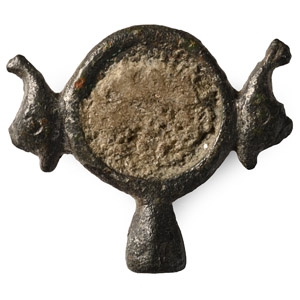
Romano-British Silver Bronze Plate Brooch with Dolphins
2nd century A.D.Sold for (Inc. bp): £39
Silvered plate brooch with dolphin either side of a central disc, triangular lobe at the top; remains of catchplate and pin-lugs on the reverse. 4.07 grams, 28 mm
Found Norfolk, UK. From a Kent collection formed in the 1990s. -
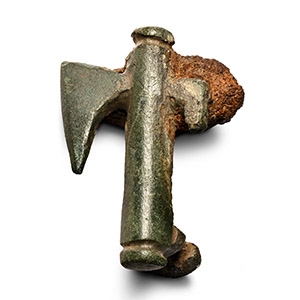
Roman Bronze Axe Fibula
1st century A.D.Sold for (Inc. bp): £59
With a vertical cutting edge to the blade, D-sectioned shaft with baluster-style terminals; remains of ferrous pin, hinge and catch-plate to reverse. 14.7 grams, 34 mm
Ex DRG Coins and Antiquities, Bishops Stortford, Essex, UK. From the private collection of a West London, UK, gentleman, formed since the early 2000s. Accompanied by a handwritten dealer's ticket.
