
Loading, please wait...
LOT 0927
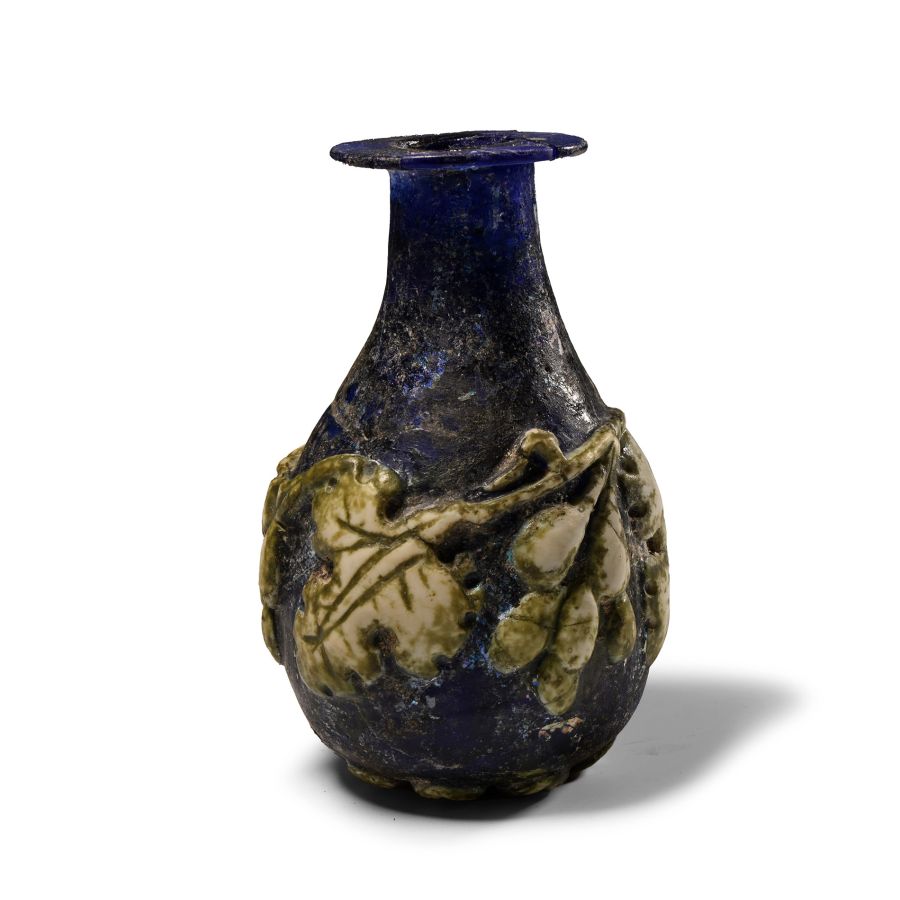
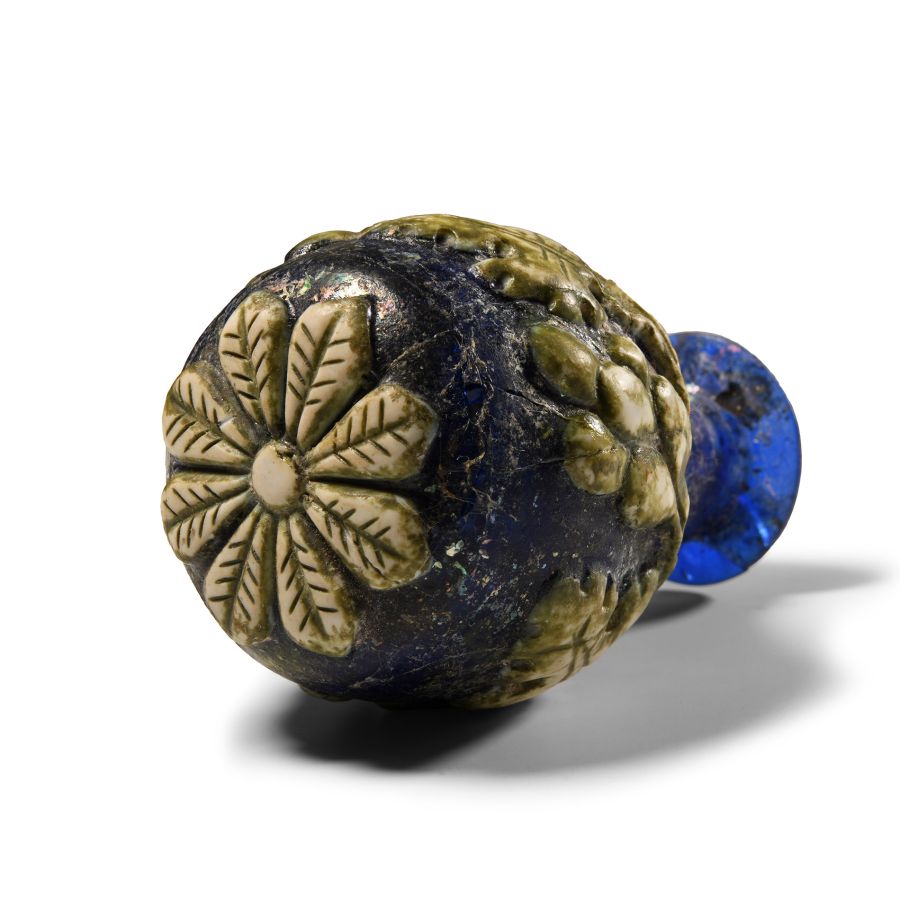
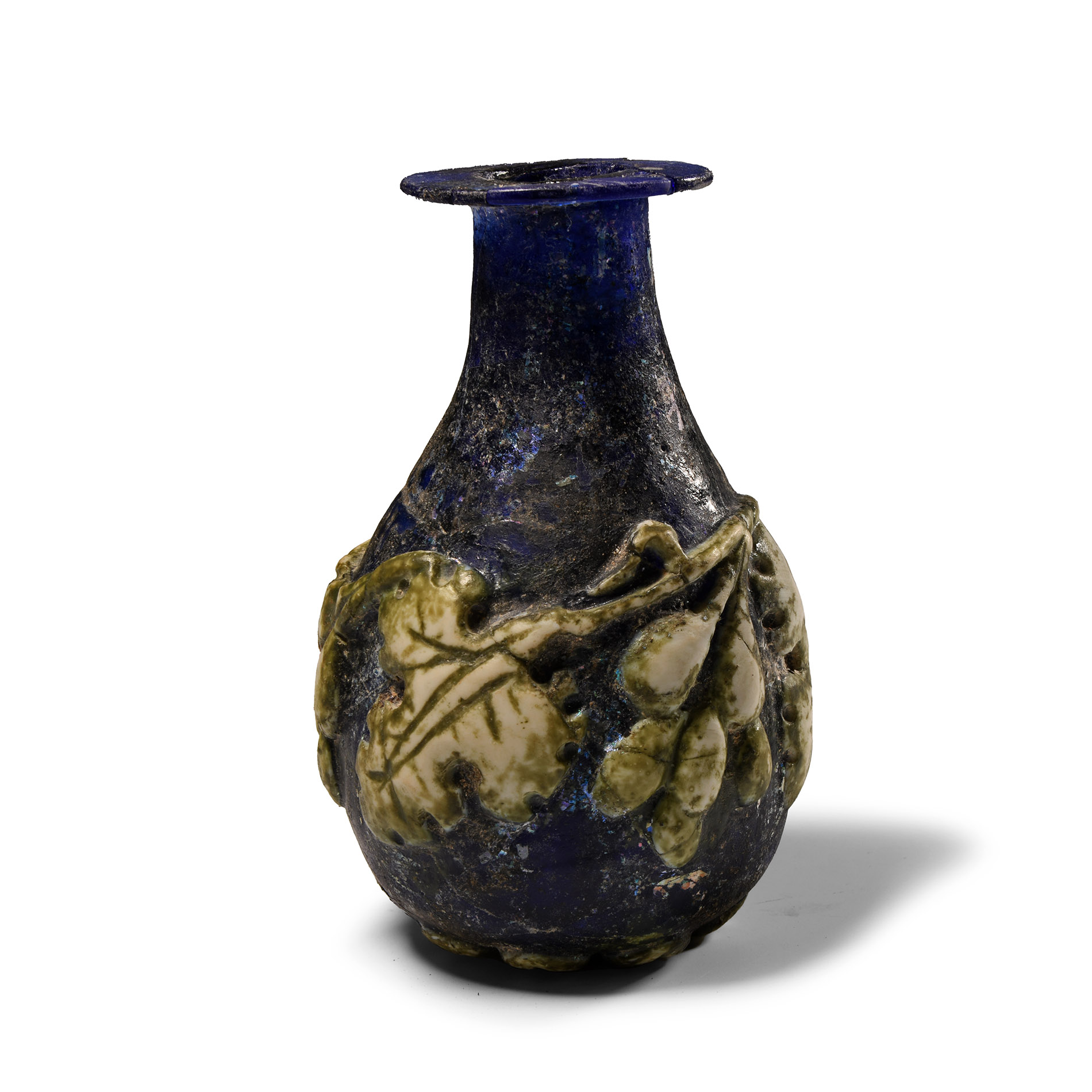
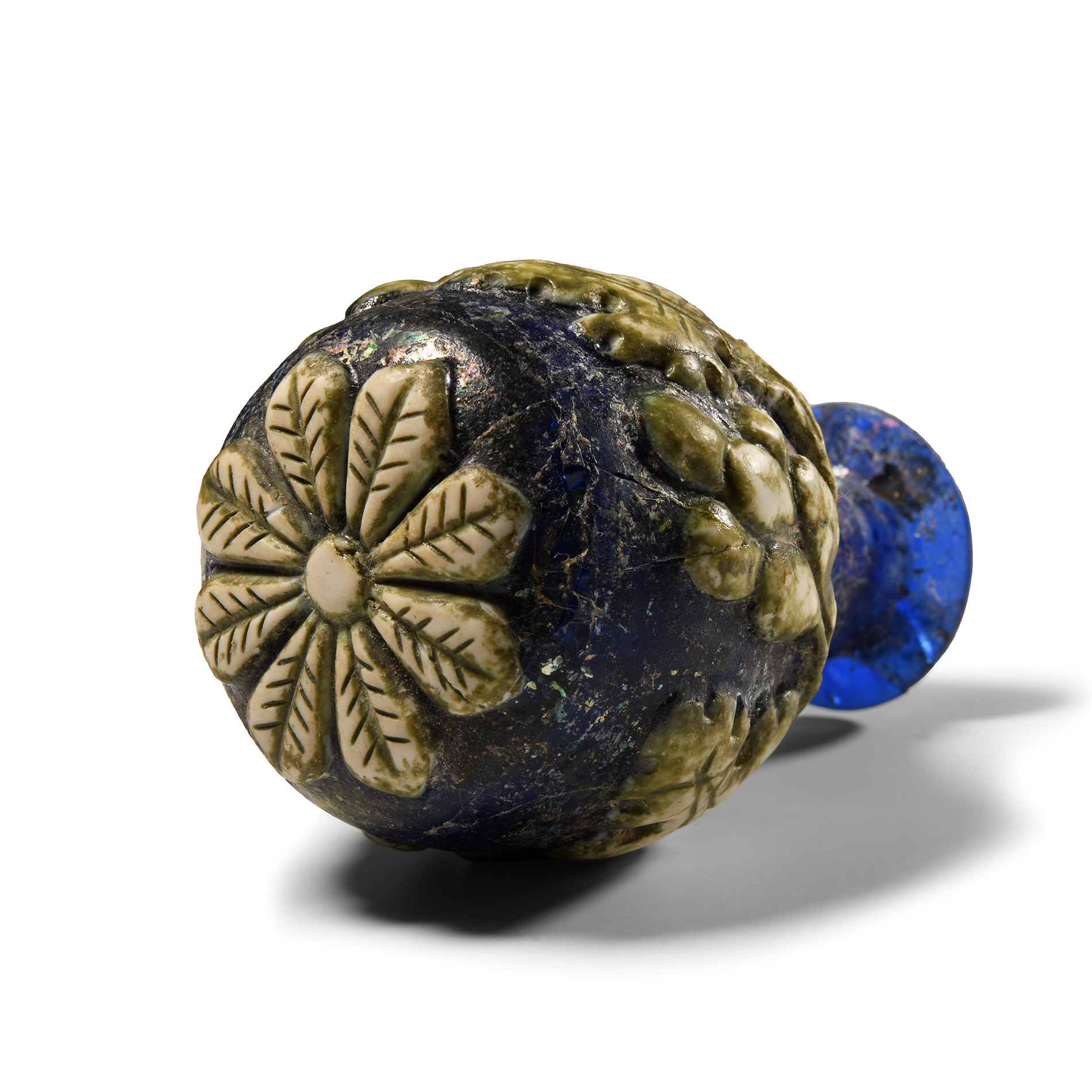
Roman Blue Glass Vessel with Vine Leaf Design
EARLY 1ST CENTURY A.D. AND LATER
4 1/2 in. (186 grams, 11.5 cm).
Of piriform shape with iridescent surfaces, decorated with later applied fruiting vines in high-relief, a stylised rosette to the vessel's base; restored; rim chipped.
ProvenanceLondon gentleman; acquired by his father in the 1970s; thence by descent.
Private collection, England.
Cf. Lightfoot, C.S., Ancient Glass in the National Museums of Scotland, Edinburgh, 2007, items 226, 270, for type; Whitehouse, D., Roman Glass in the Corning Museum of Glass, vol.2, New York, 2001, item 649, for technique.
CONDITIONTimeLine Auctions follows a vetting process to ensure the authenticity and legality of all items, reinforcing our commitment to integrity and responsible trading. Each antiquity, antique, and coin lot undergoes thorough examination by a vetting committee of at least ten external specialists, professional trade association members, scientists, and archaeologists: Our Vetting Process
AUCTIONS:
TimeLine is a leading auction house specialising in antiquities, ancient art, collectables, natural history, coins, medals, and books. Our auctions offer museums, collectors, historians, and enthusiasts the opportunity to acquire unique and historically significant pieces.
-
Roman Gilt Bronze Phalera with Theseus and the Minotaur
2nd century B.C.- 2nd century A.D.Sold for (Inc. bp): £182
Domed roundel with high-relief design of combat between a bearded hero and a monster, wreath and rosettes to the rim. 32 grams, 49 mm
Found near Sedgeford, Norfolk, UK, in the 1980s. Acquired in the late 1990s. Property of a Norfolk, UK, collector.
According to the legend, Theseus, prince of Athens, went to the island of Crete to kill a monster who was the son of queen Pasiphae and a wild bull, although officially he was the son of Minos and Pasiphae. Theseus chased him into the labyrinth, killed him and found his way out with the help of the comb of Ariadne, daughter of King Minos. The myth has its representation in the Archaic, Classical and Hellenistic period, and was widely depicted in the Graeco-Roman world. The present repoussé appliqué was probably used as a furniture or horse harness ornament. -
.jpg)
Roman Votive Terracotta Hand Group
Circa 1st century A.D.Sold for (Inc. bp): £124
Each moulded with finger detailing to one face; or from children's dolls. 23 grams total, 34-53 mm
Ex German art market, 2000s. Acquired from an EU collector living in London. From the collection of Surrey, UK, gentleman. -
Roman Inked Wooden Legal Document
Late 4th century A.D.Sold for (Inc. bp): £3,120
With a recessed panel on one side and scored frame with securing hole to one long side; seven lines of inked text in Roman cursive containing the record of a legal document in a formulaic legal language; two part-lines of cursive text to reverse; supplied with two monochrome photographs of the tablet displaying the text to advantage. 19.91 grams, 12.5 x 7.5 cm
From an important London collection since 1975. Accompanied by a collection of two 1970s photographs of the the tablet.
