
Loading, please wait...


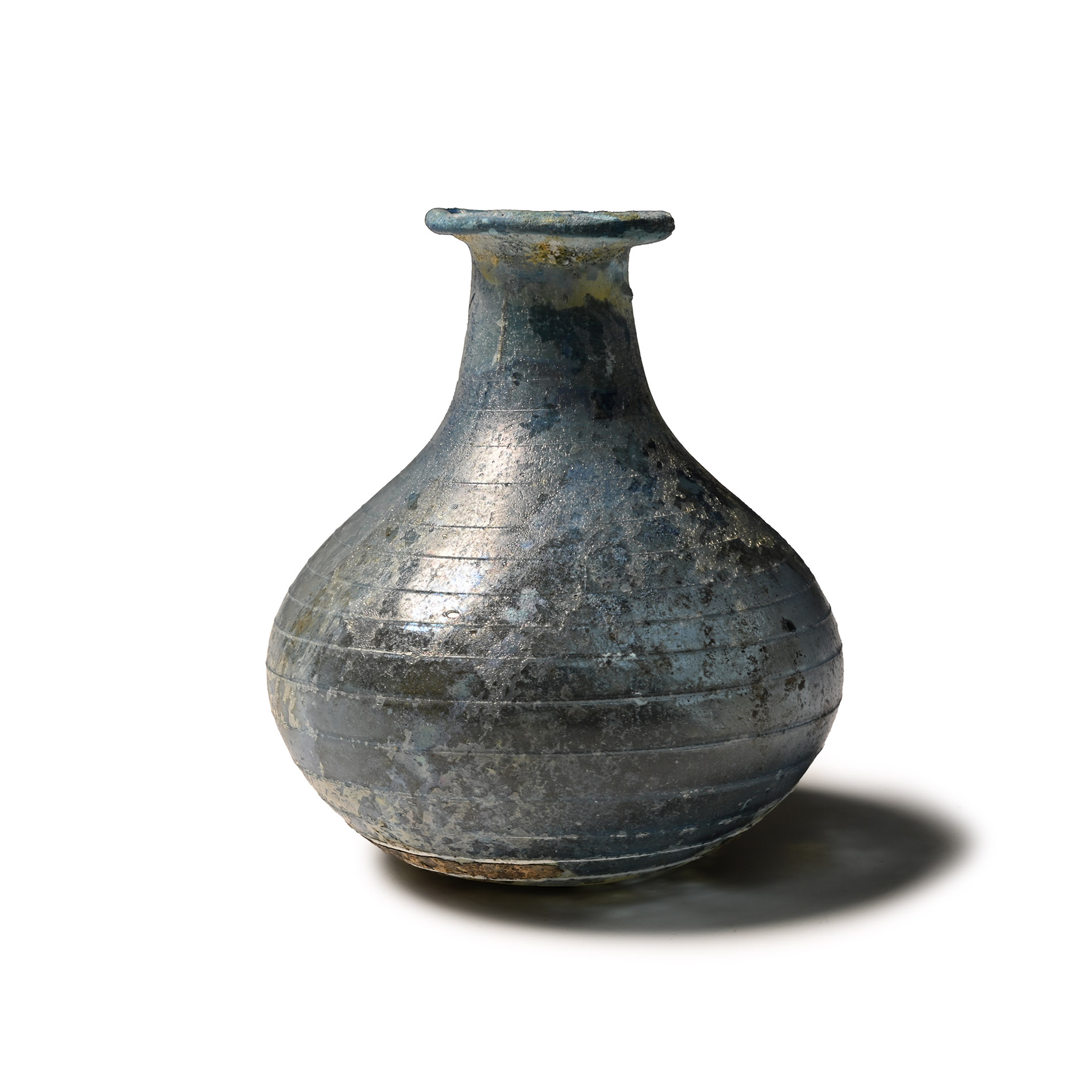
LOT 0156
Roman Blue Glass Flask with Trail
3RD-4TH CENTURY A.D.
2 3/8 in. (8 grams, 62 mm).
Piriform in profile with slight dimple to base, squat body, tubular neck with flared and rolled mouth; fine applied spiral trail from shoulder to base.
ProvenanceFrom an important London, UK, collection, 1970-1990s.
LiteratureCf. Whitehouse, D., Roman Glass in the Corning Museum of Glass, vol.2, New York, 2001, item 621, for type.
CONDITIONTimeLine Auctions follows a vetting process to ensure the authenticity and legality of all items, reinforcing our commitment to integrity and responsible trading. Each antiquity, antique, and coin lot undergoes thorough examination by a vetting committee of at least ten external specialists, professional trade association members, scientists, and archaeologists: Our Vetting Process
AUCTIONS:
TimeLine is a leading auction house specialising in antiquities, ancient art, collectables, natural history, coins, medals, and books. Our auctions offer museums, collectors, historians, and enthusiasts the opportunity to acquire unique and historically significant pieces.
LOT 0156
Roman Blue Glass Flask with Trail
Estimate £500 - 700€580 - 810 (for guidance only)$680 - 950 (for guidance only)
-
.jpg)
Roman Silver Ring with Isis Gemstone
1st century A.D.Sold for (Inc. bp): £520
Ellipsoid cell to the bezel, inset carnelian gemstone with intaglio Isis standing by the curved prow of a boat holding a sistrum in her raised hand. 5.53 grams, 23.13 mm overall, 17.36 mm internal diameter (approximate size British N 1/2, USA 6 3/4, Europe 14.35, Japan 13)
Old private collection, 1980s. European art market. -
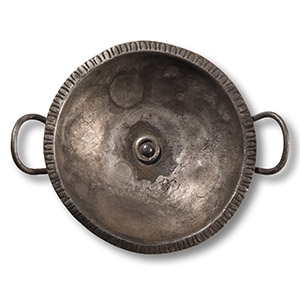
Roman Silver Decorated Dish
Circa 4th-5th century A.D.Sold for (Inc. bp): £416
Comprising a shallow bowl fitted with handles and raised foot, the rim engraved with petals. 39 grams, 95 mm wide
From a North Yorkshire, UK, private collection. Acquired from Adam Partridge Auctioneers, Macclesfield, UK. Property of Mr A.B., an American collector.
In regards of the shape, Roman silver vessels usually fall into three classes: (1) vessels for eating; (2) vessels for drinking; (3) jugs and saucepans (trullae). The first class includes flat, circular dishes (lances), often of considerable size; the situlae or buckets, and the bowls with projecting rims (our specimen) of various dimensions. The form of the present bowl (probably used for spices, like pepper [piperatoria]) occurs all over the Mediterranean basin, and is Alexandrian in origin. -
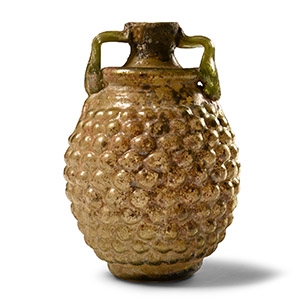
Roman Glass Grape Flask
3rd century A.D.Sold for (Inc. bp): £598
Narrow mouth with squared rim, short cylindrical neck extending to a wide shoulder with applied strap handles, the ovoid body moulded with ten rows of stylised grapes; some iridescence; old collector''s label to underside '4187 TD'. 50 grams, 97 mm
From the private collection of a French Count in the 19th century. Ex Thierry de Maigret, April 2010.
The neck has the appearance of having been reduced in height and ground off flat at the rim, while the applied handles are an unusual feature on this type of vessel. The examples in the Corning Museum have a much taller neck and flared rim to the mouth.
