
Loading, please wait...
_900x900.jpg "Roman Blue Glass Bead Necklace String")
_200x200.jpg "Roman Blue Glass Bead Necklace String")
.jpg "Roman Blue Glass Bead Necklace String")
LOT 0823
Roman Blue Glass Bead Necklace String
1ST-4TH CENTURY A.D. AND LATER
14 1/2 in. (11.3 grams, 37 cm).
Restrung designer necklace string of mainly oblate beads strung to a Y-shape. [No Reserve]
ProvenanceEx London, UK, collection, 1990s.
CONDITIONTimeLine Auctions follows a vetting process to ensure the authenticity and legality of all items, reinforcing our commitment to integrity and responsible trading. Each antiquity, antique, and coin lot undergoes thorough examination by a vetting committee of at least ten external specialists, professional trade association members, scientists, and archaeologists: Our Vetting Process
AUCTIONS:
TimeLine is a leading auction house specialising in antiquities, ancient art, collectables, natural history, coins, medals, and books. Our auctions offer museums, collectors, historians, and enthusiasts the opportunity to acquire unique and historically significant pieces.
-
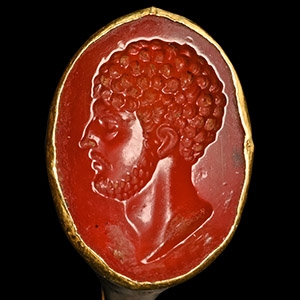
Roman Gold Ring with Later Profile Bust Gemstone
1st century B.C. and laterEstimate: £2,500 - 3,500 (+bp*)
Opening Bid: £1,250
Hollow-formed with inset later carnelian cloison, intaglio profile bust of a bearded male with curly hair and beard. 2.29 grams, 22.65 mm overall, 16.16 mm internal diameter (approximate size British K, USA 5 1/2, Europe 16, Japan 11).
Ex K collection, London, 1990s. This lot has been checked against the Interpol Database of stolen works of art and is accompanied by search certificate number no.13003-246372. -
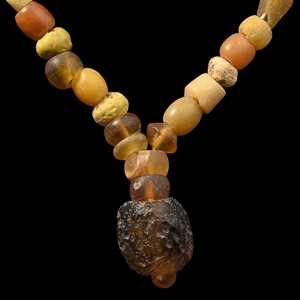
Roman Yellow Glass Bead Necklace String
1st-4th century A.D. and laterSold for (Inc. bp): £65
Restrung designer necklace string of fusiform, oblate and other types with facetted centrepiece. 25 grams, 35.8 cm
London, UK, collection, 2000s. -
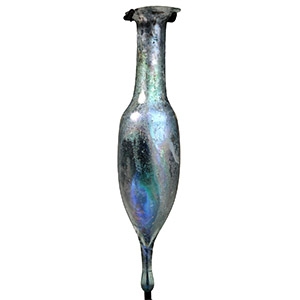
Roman Iridescent Blue Glass Flask
2nd-3rd century A.D.Sold for (Inc. bp): £845
Of fusiform type with a rolled lip and thick rounded bottom; iridescent surface. 198 grams total, 16.2 cm including stand
From an important collection of glass, London, UK, 1990s.
