
Loading, please wait...
LOT 0644
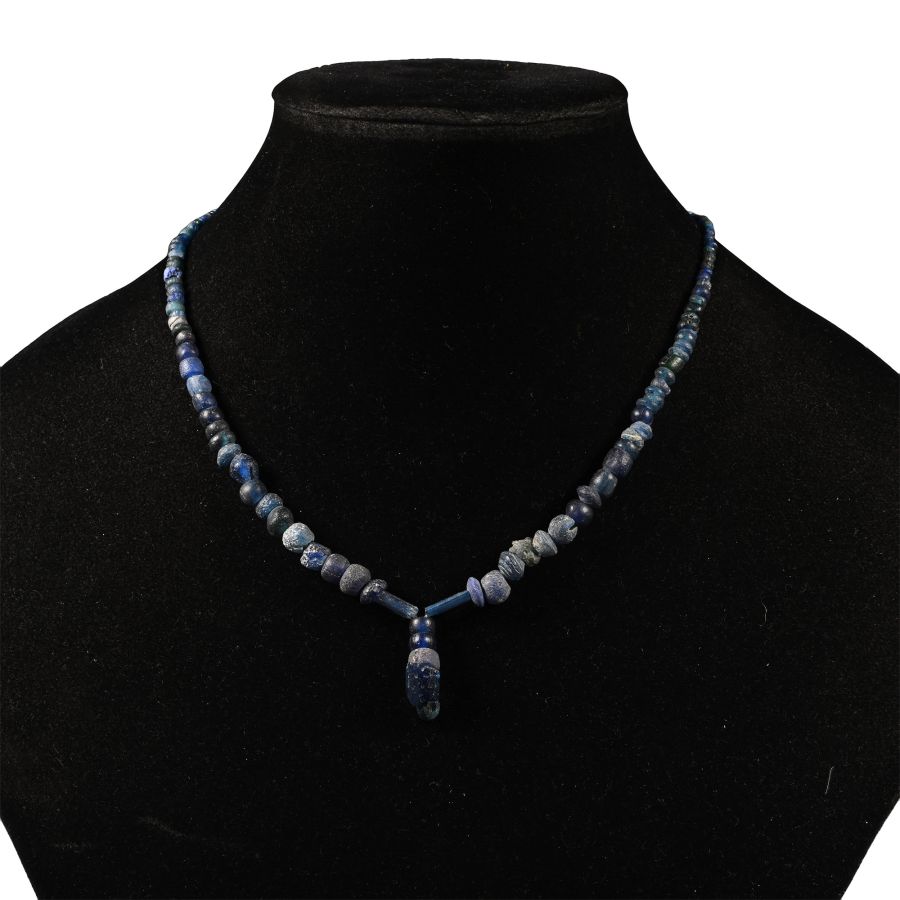
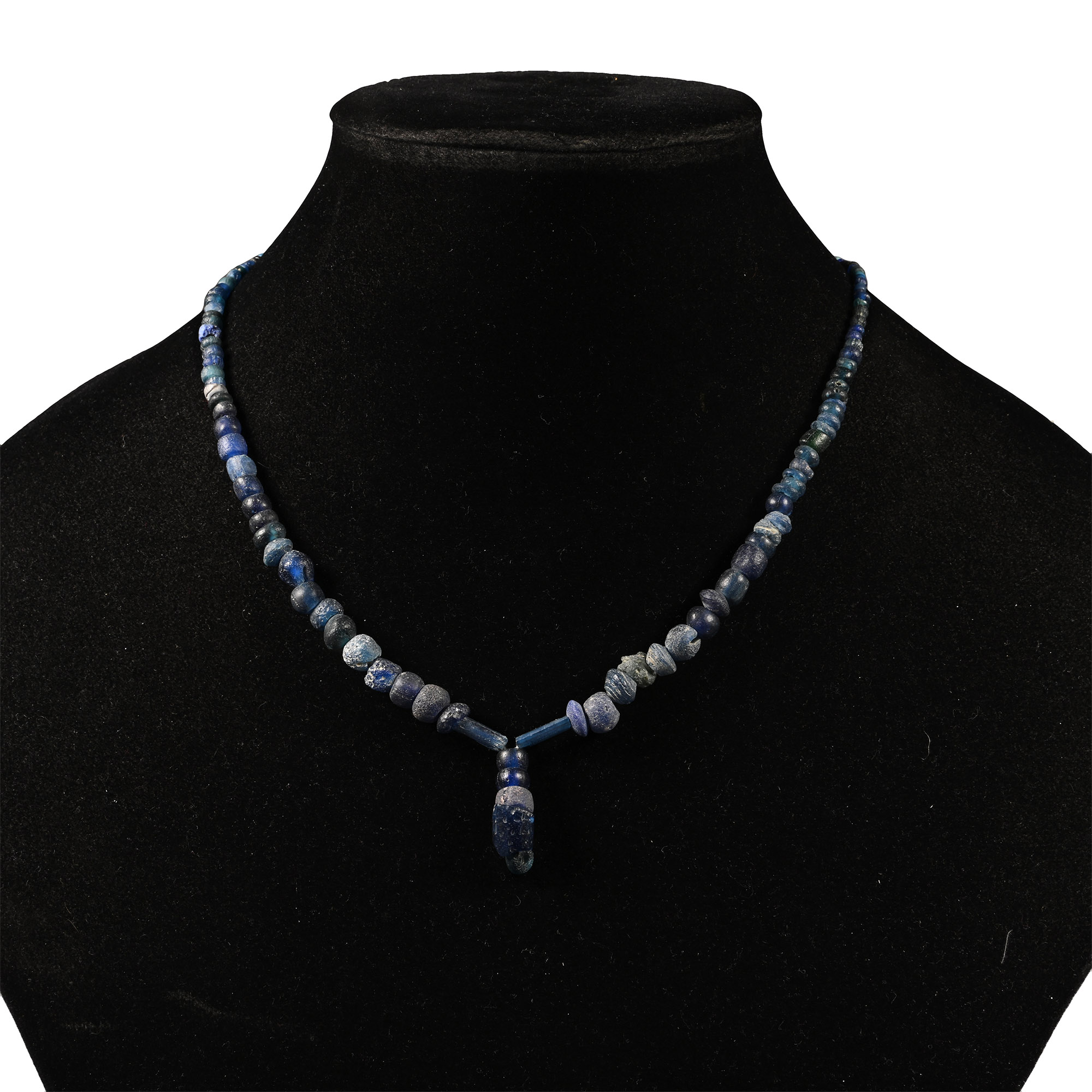
Roman Blue Glass Bead Necklace String
1ST-4TH CENTURY A.D. AND LATER
14 1/2 in. (16.66 grams, 37 cm).
Restrung to a Y-shape comprising mainly graduated oblate beads, central feature composed of oblate and annular beads with a reused bracelet fragment. [No Reserve]
ProvenanceEx London, UK, collection, 1990s.
This lot is accompanied by an illustrated lot declaration signed by the Head of the Antiquities Department, Dr Raffaele D'Amato.
TimeLine Auctions follows a vetting process to ensure the authenticity and legality of all items, reinforcing our commitment to integrity and responsible trading. Each antiquity, antique, and coin lot undergoes thorough examination by a vetting committee of at least ten external specialists, professional trade association members, scientists, and archaeologists: Our Vetting Process
AUCTIONS:
TimeLine is a leading auction house specialising in antiquities, ancient art, collectables, natural history, coins, medals, and books. Our auctions offer museums, collectors, historians, and enthusiasts the opportunity to acquire unique and historically significant pieces.
-
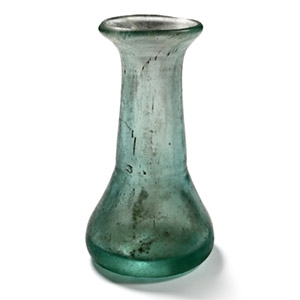
Roman Glass Bottle
2nd-3rd century AD.Sold for (Inc. bp): £117
Translucent pale green vessel with wide foot and dimpled base, tapering stem and flared rim. 130 grams, 95 mm
Ex German art market, 2000s. Acquired from an EU collector living in London. From the collection of a Surrey, UK, gentleman. This lot is accompanied by an illustrated lot declaration signed by the Head of the Antiquities Department, Dr Raffaele D'Amato. -
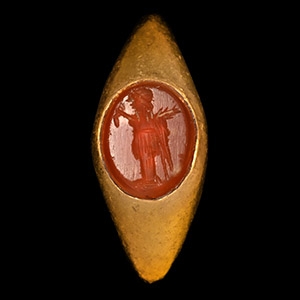
Roman Gold Ring with Victory Gemstone
2nd-3rd century A.D.Sold for (Inc. bp): £715
Slender D-section hoop with angled shoulders, bezel set with a carnelian intaglio bearing the image of winged Victory holding a wreath. 4.74 grams, 21.98 mm overall, 18.12 mm internal diameter (approximate size British O 1/2, USA 7 1/4, Europe 15.61, Japan 15)
Ex German art market, 2000s. Acquired from an EU collector living in London. From the collection of a Surrey, UK, gentleman. This lot is accompanied by an illustrated lot declaration signed by the Head of the Antiquities Department, Dr Raffaele D'Amato. -
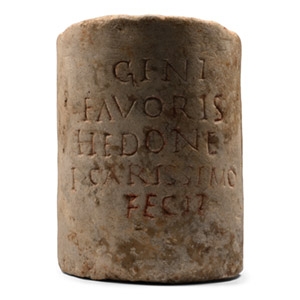
Roman Marble Column Fragment with Latin Inscription
3rd century A.D.Sold for (Inc. bp): £1,430
Provincial columnar fragment with inscription in rustic capitals: 'GENI / FAVORIS /IHEDONE / I CARISSIMO / FECIT' [With the favour of the Genius Hedone made it for the dearest]; traces of red pigment. 1.81 kg, 12 cm
Private collection, 2005. This lot is accompanied by an illustrated lot declaration signed by the Head of the Antiquities Department, Dr Raffaele D'Amato.
The dedicatory inscription seems to refer to a funerary monument erected by a certain Hedone for a loved one (probably her husband). It is a late inscription which justifies the use of the genitive and not the ablative for GENI FAVORIS (instead of GENII FAVORE). Hedone is a Greek name which, however, occurs in Italic sepulchral inscriptions.
