
Loading, please wait...
LOT 0734
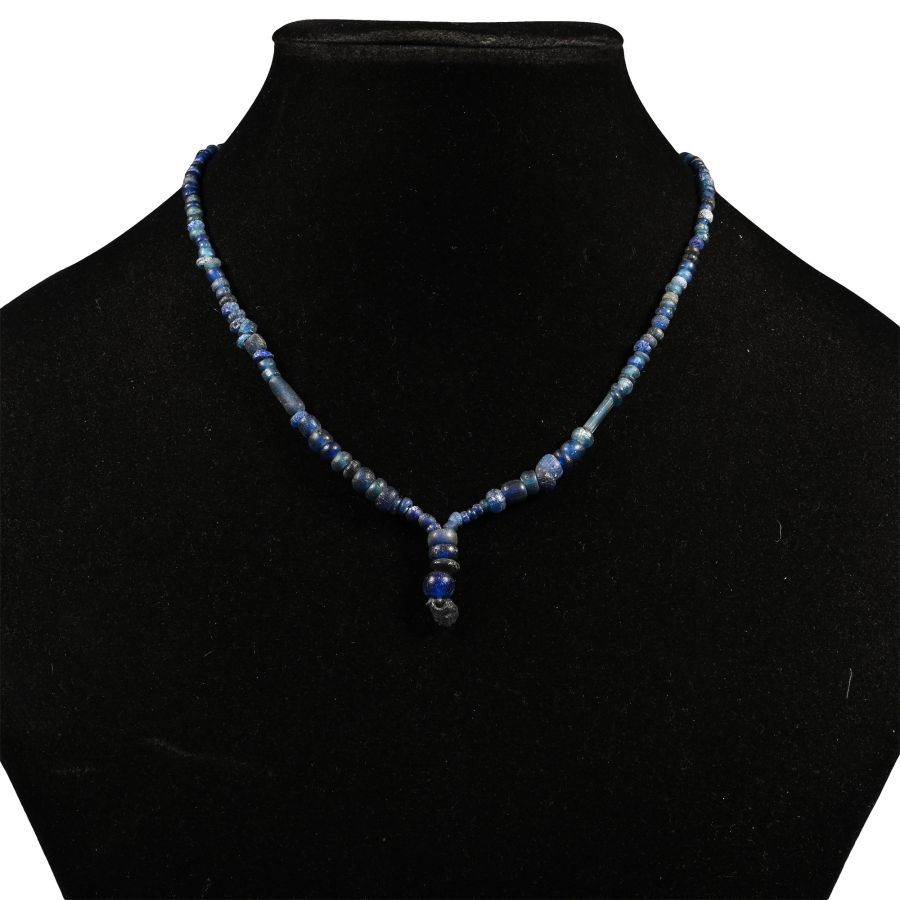
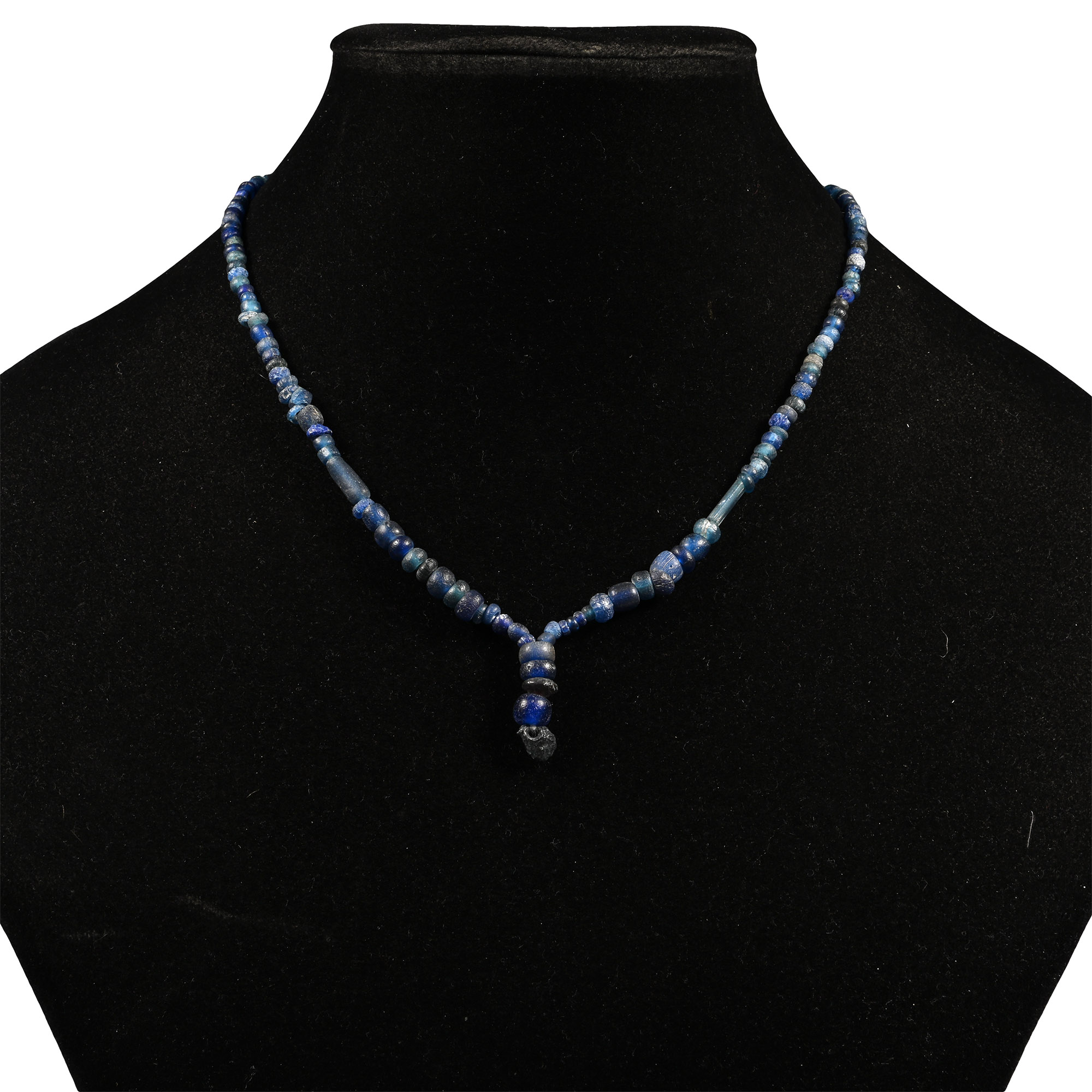
Roman Blue Glass Bead Necklace String
1ST-4TH CENTURY A.D. AND LATER
14 1/2 in. (11.3 grams, 37 cm).
A graduated group of mainly oblate beads restrung to a Y-shape. [No Reserve]
ProvenanceEx London, UK, collection, 1990s.
This lot is accompanied by an illustrated lot declaration signed by the Head of the Antiquities Department, Dr Raffaele D'Amato.
TimeLine Auctions follows a vetting process to ensure the authenticity and legality of all items, reinforcing our commitment to integrity and responsible trading. Each antiquity, antique, and coin lot undergoes thorough examination by a vetting committee of at least ten external specialists, professional trade association members, scientists, and archaeologists: Our Vetting Process
AUCTIONS:
TimeLine is a leading auction house specialising in antiquities, ancient art, collectables, natural history, coins, medals, and books. Our auctions offer museums, collectors, historians, and enthusiasts the opportunity to acquire unique and historically significant pieces.
-
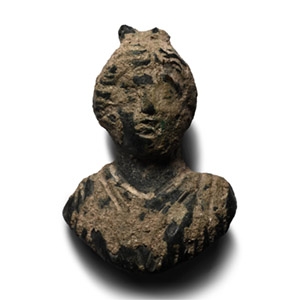
Roman Bronze Bust of a Woman
2nd-3rd century A.D.Sold for (Inc. bp): £195
Modelled in the round with stephane to the hair, crescent above, wearing a peplos dress with undertunic; mounting lug to reverse. 140 grams, 60 mm
Acquired in the mid 1980s-1990s. Private collection, Switzerland, thence by descent. Private collection, since the late 1990s. This lot is accompanied by an illustrated lot declaration signed by the Head of the Antiquities Department, Dr Raffaele D'Amato.
The small bronze sculpture could represent the 'Night' (divinity), with the crescent moon on her head. It could have been an appliqué from a ceremonial chariot, or an appliqué for furniture or triclinium bed. -
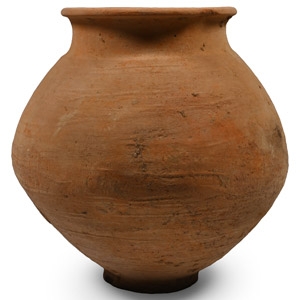
Roman Terracotta Storage Jar
1st-4th century A.D.Sold for (Inc. bp): £72
Biconical in profile for low foot and flared rim. 990 grams, 18.5 cm
Acquired in the 1990s. Ex Abelita family collection. This lot is accompanied by an illustrated lot declaration signed by the Head of the Antiquities Department, Dr Raffaele D'Amato. -
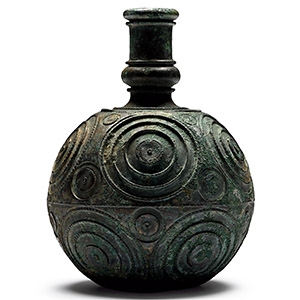
Roman Bronze Bottle with Circular Design
3rd-4th century A.D.Sold for (Inc. bp): £5,200
Spherical in profile with flat base, large raised concentric circles in two bands with smaller similar motifs between; separate balustered neck. 310 grams total, 40-66 mm
Acquired in London in 2002. European private collection. This lot has been checked against the Interpol Database of stolen works of art and is accompanied by a search certificate number no.12686-234678. This lot has been cleared against the Art Loss Register database, and is accompanied by an illustrated lot declaration signed by the Head of the Antiquities Department, Dr Raffaele D'Amato.
This is a rare type of Roman vessel, dated to the late Imperial period, between the late 3rd and 4th century A.D. The closest known parallel is a near-identical example in the Metropolitan Museum of Art, New York, which retains its original chain attachment and suspension holes at the shoulder. Such vessels were likely sealed with a perishable stopper and intended for storing or transporting perfumes or cosmetic oils.
