
Loading, please wait...
LOT 0888
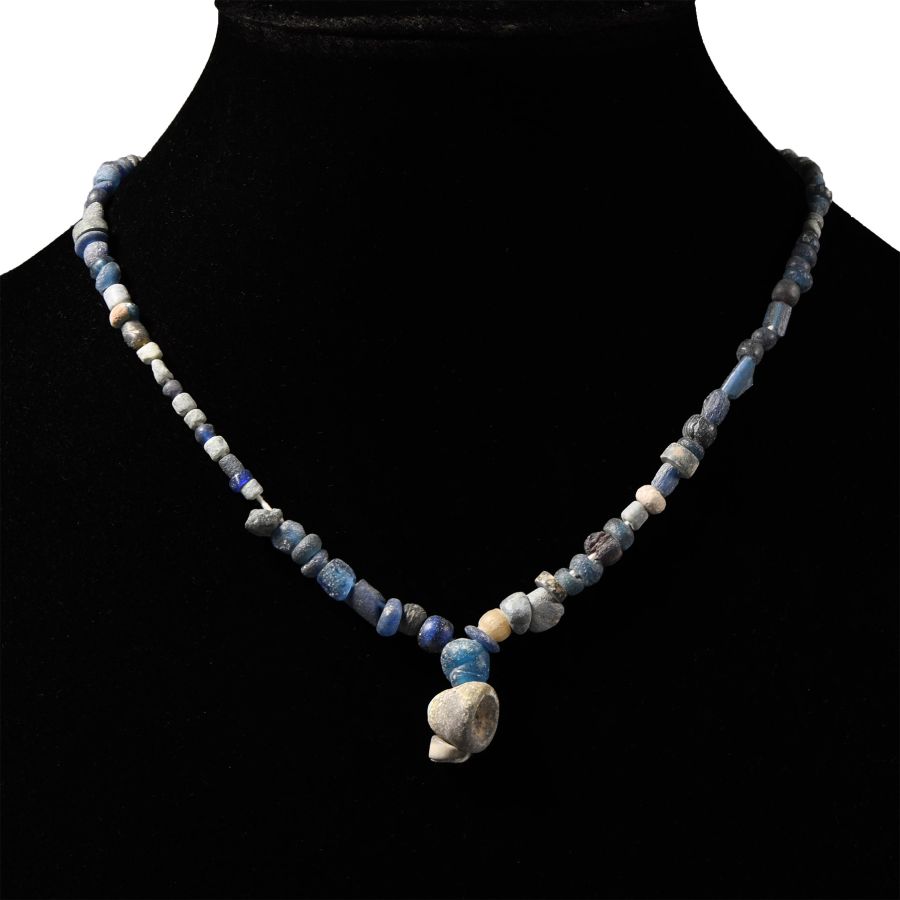
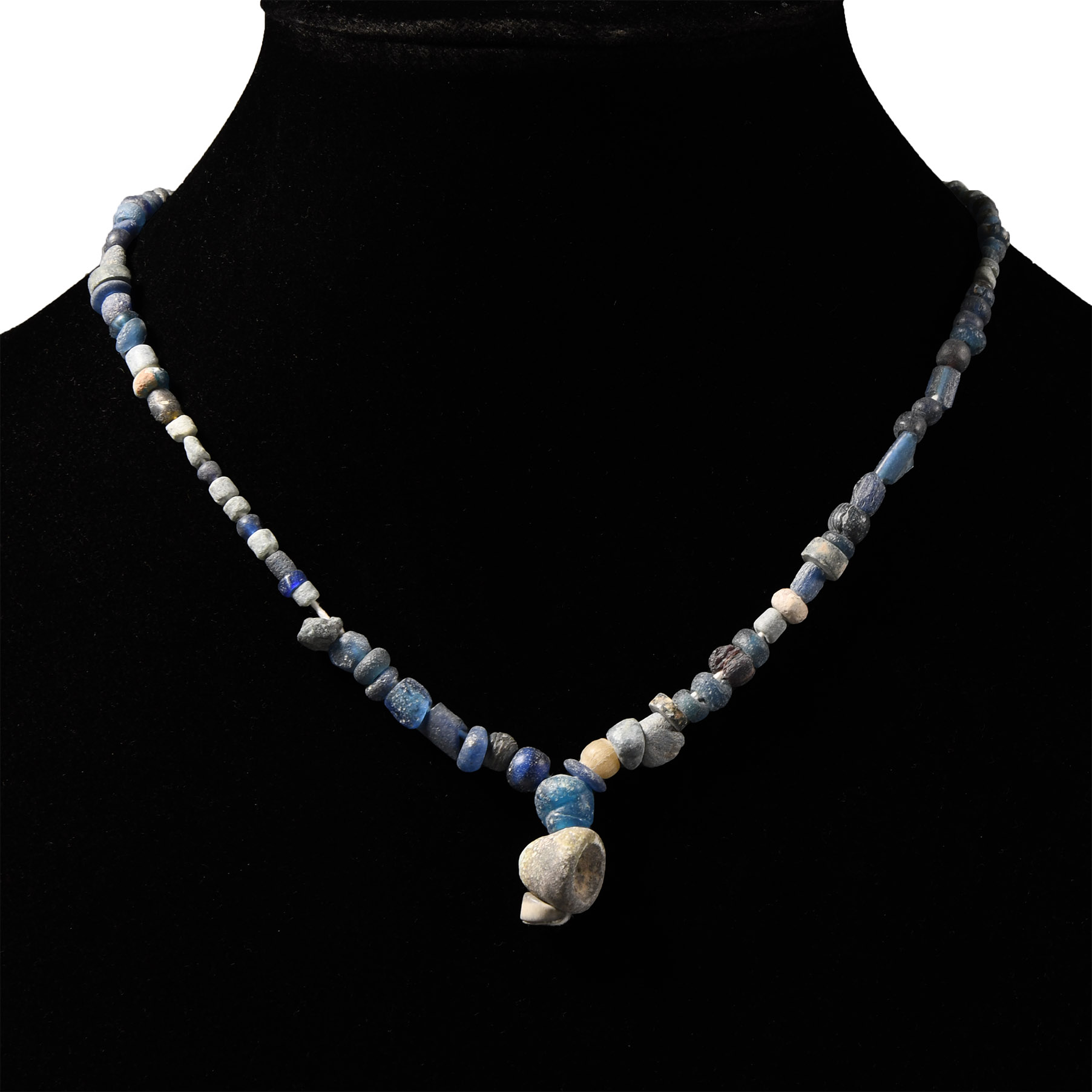
Roman Blue Glass Bead Necklace String
1ST-4TH CENTURY A.D. AND LATER
16 1/8 in. (16 grams, 41 cm).
Restrung group of graduated beads, mainly oblate and annular types. [No Reserve]
ProvenanceAcquired 1980-2015.
Ex Abelita family collection.
TimeLine Auctions follows a vetting process to ensure the authenticity and legality of all items, reinforcing our commitment to integrity and responsible trading. Each antiquity, antique, and coin lot undergoes thorough examination by a vetting committee of at least ten external specialists, professional trade association members, scientists, and archaeologists: Our Vetting Process
AUCTIONS:
TimeLine is a leading auction house specialising in antiquities, ancient art, collectables, natural history, coins, medals, and books. Our auctions offer museums, collectors, historians, and enthusiasts the opportunity to acquire unique and historically significant pieces.
-
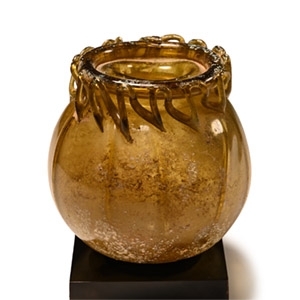
Roman Translucent Glass Jar with Gallery
3rd-4th century A.D.Sold for (Inc. bp): £546
Globular in profile with wide double-stepped rolled rim, applied wavy line trails forming a gallery from rim to body, pinched diagonal ribs to outer face and dimple to the underside; supplied with a custom-made stand. 46 grams, 74 mm wide (125 grams, 85 mm high including stand)
From the glass collection of a London gentleman, UK, 1990s. -
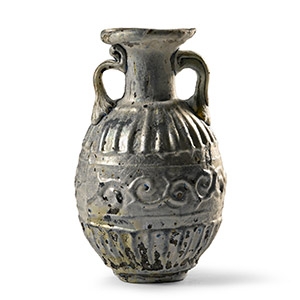
Roman Sidonian Mould-Blown Two-Handled Flask with Silver Iridescence
2nd-4th century A.D.Estimate: £2,500 - 3,500 (+bp*)
Opening Bid: £1,250
With barrel-shaped body, trumpet-shaped mouth and two applied strap handles to the shoulder; band of scrolled tendrils to the equator, vertically ribbed bands above and below. 20 grams, 75 mm
From an important London, UK, collection, 1970-1990s. This lot has been checked against the Interpol Database of stolen works of art and is accompanied by search certificate number no.12236-222279. -
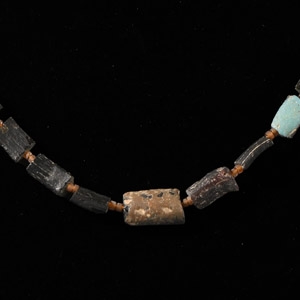
Roman Polychrome Glass Bead Necklace
1st-4th century A.D. and laterSold for (Inc. bp): £39
Comprising a necklace restrung from beads of drilled ancient glass bangle fragments. 11 grams, 72 cm
UK gallery, early 2000s.
