
Loading, please wait...
LOT 0827
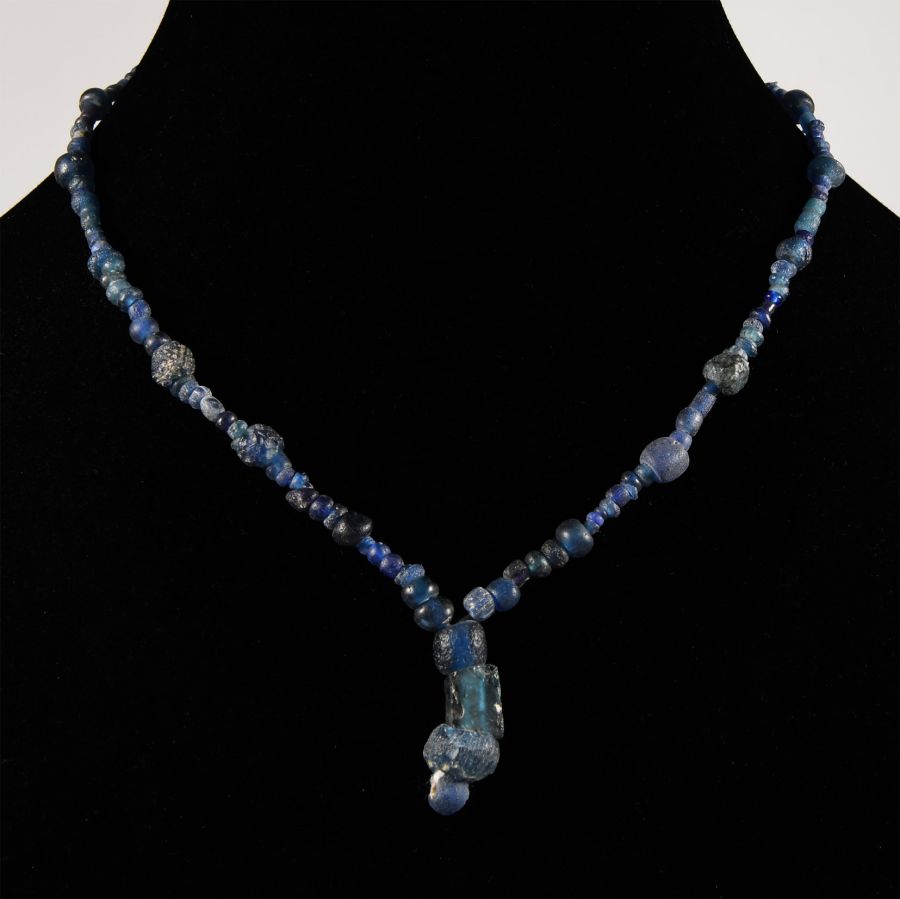
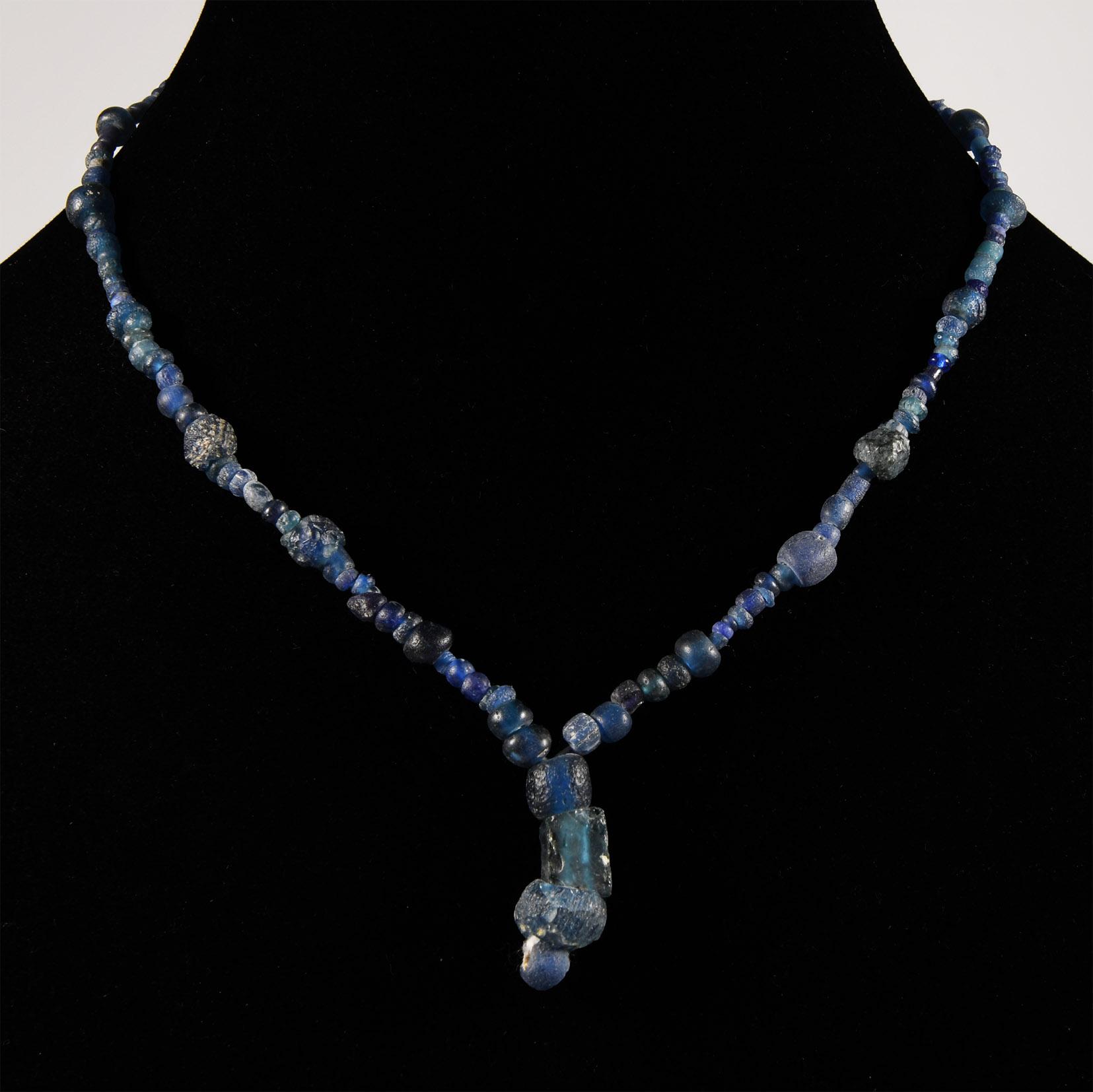
Roman Blue Glass Bead Necklace String
1ST CENTURY A.D. AND LATER
13 3/4 in. (12.9 grams, 35 cm).
Restrung group of graduated annular, oblate and other beads with cluster forming the centrepiece. [No Reserve]
ProvenanceAcquired 1980-2015.
Ex Abelita family collection.
TimeLine Auctions follows a vetting process to ensure the authenticity and legality of all items, reinforcing our commitment to integrity and responsible trading. Each antiquity, antique, and coin lot undergoes thorough examination by a vetting committee of at least ten external specialists, professional trade association members, scientists, and archaeologists: Our Vetting Process
AUCTIONS:
TimeLine is a leading auction house specialising in antiquities, ancient art, collectables, natural history, coins, medals, and books. Our auctions offer museums, collectors, historians, and enthusiasts the opportunity to acquire unique and historically significant pieces.
-
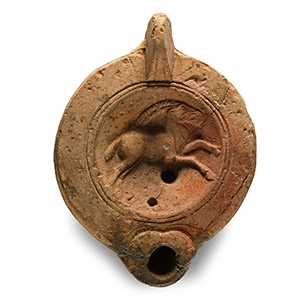
Roman Terracotta Oil Lamp with Leaping Ibex
2nd century A.D.Sold for (Inc. bp): £247
With a lug handle to the rear, discus with a leaping long-horned ibex within a concentric circle border; concentric circles to base; repaired. 110 grams, 10.5 cm
Acquired on the European art market, 1980s. English private collection.
This lamp belongs to the group of provincial African lamps with a plain shoulder and a heart-shaped nozzle. The shoulder form of the lamps (irrespective of African, Italic, or eastern place of manufacture or origin) varies widely. Some of them had undecorated shoulders, like our example. Discus decors include mythology, amphitheatre, daily life, animals (our example), geometric patterns and plain discus. -
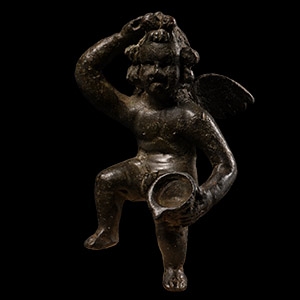
Roman Bronze Statuette of Eros
1st-2nd century A.D.Sold for (Inc. bp): £468
Modelled with the right hand in a fist placed on the brow, left hand supporting a cup on the knee, wings spread to the reverse; mounted on a custom-made stand. 160 grams total, 73 mm high including stand
From a collection acquired on the UK art market from various auction houses and collections mostly before 2000. From an important Cambridgeshire estate; thence by descent. -
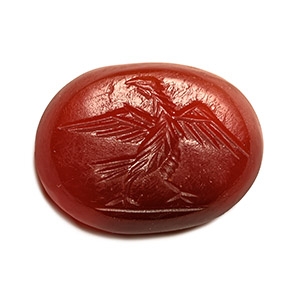
Roman Carnelian Gemstone with Eagle
Circa 2nd-3rd century A.D.Sold for (Inc. bp): £260
Ellipsoid cloison with intaglio eagle with wings spread in the act of taking off; supplied with a museum-quality impression. 0.96 grams, 14 cm
Acquired on the London art market in the late 1980s-1990s. From the family collection of an East London, UK, gentleman.
