
Loading, please wait...
LOT 0771
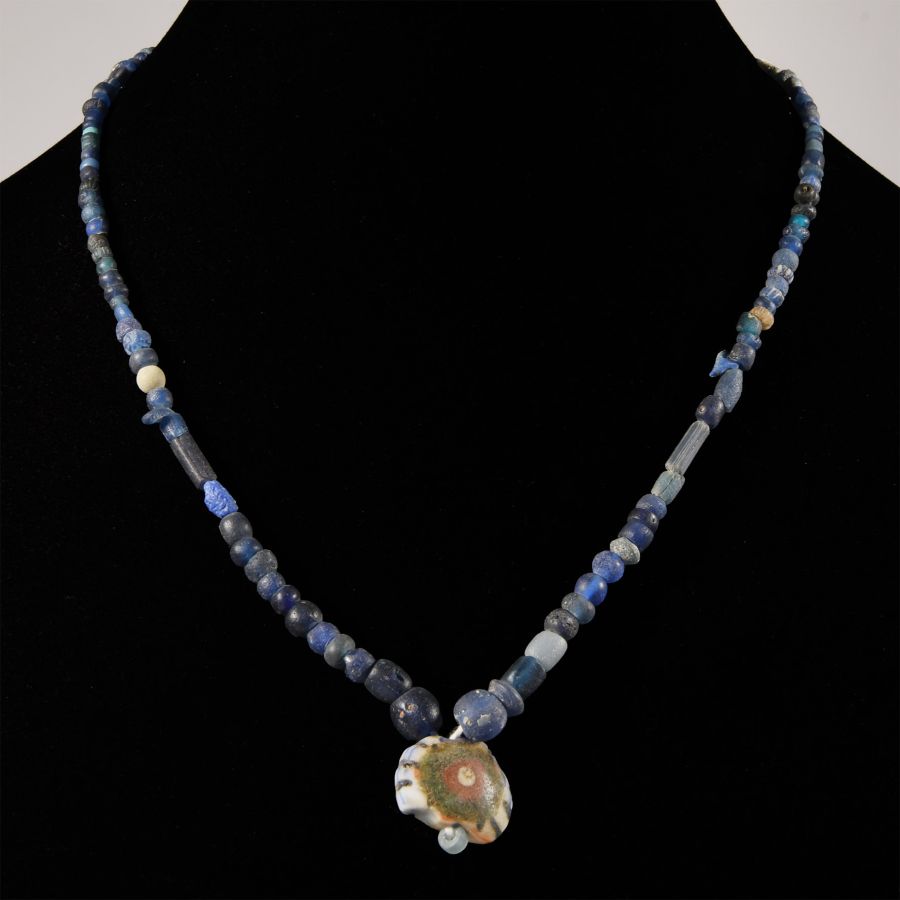
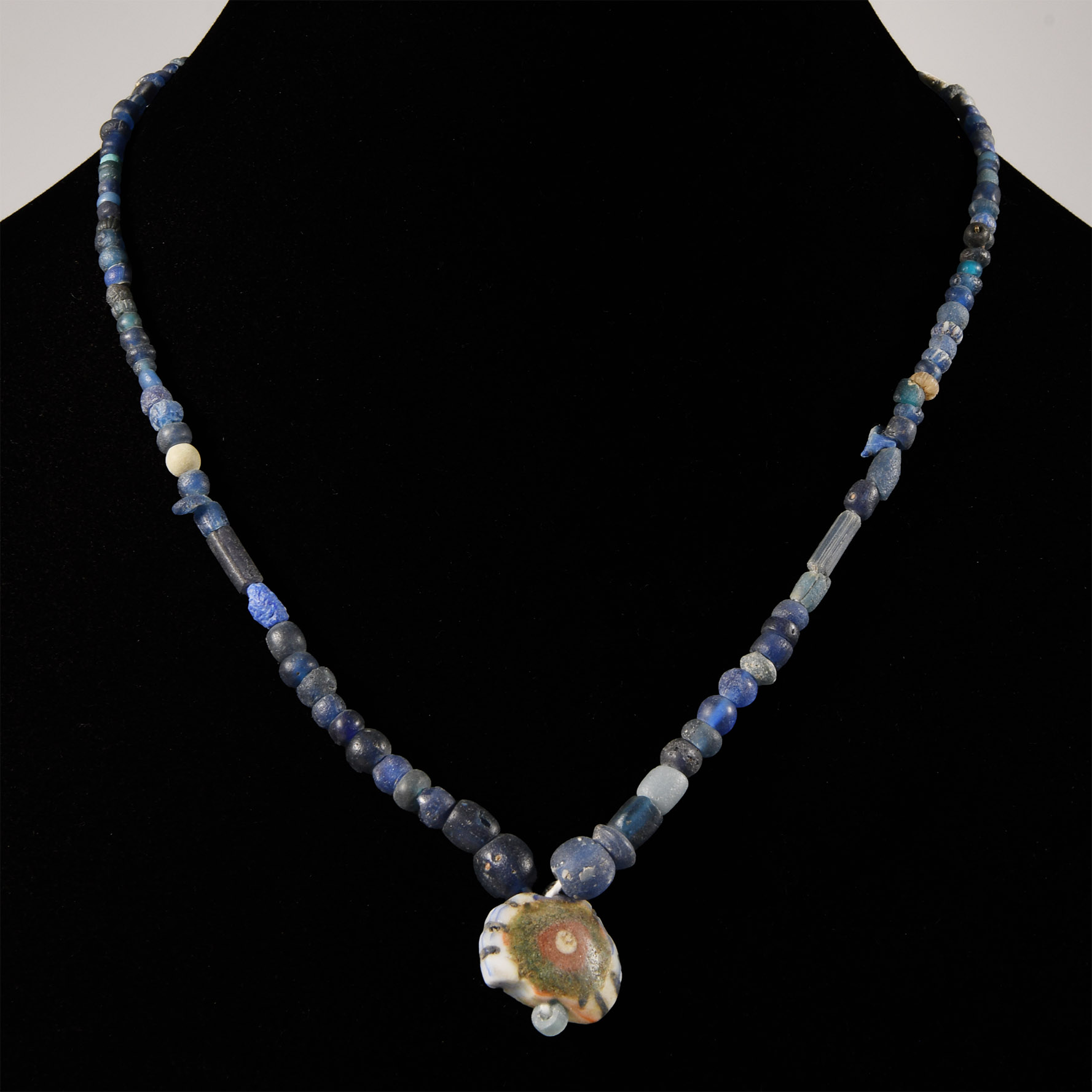
Roman Blue Glass Bead Necklace String
1ST CENTURY A.D. AND LATER
28 in. (18.3 grams, 71 cm long).
Including tubular, annular, oblate and other types with millefiori pattern slice as centrepiece. [No Reserve]
ProvenanceAcquired 1980-2015.
Ex Abelita family collection.
TimeLine Auctions follows a vetting process to ensure the authenticity and legality of all items, reinforcing our commitment to integrity and responsible trading. Each antiquity, antique, and coin lot undergoes thorough examination by a vetting committee of at least ten external specialists, professional trade association members, scientists, and archaeologists: Our Vetting Process
AUCTIONS:
TimeLine is a leading auction house specialising in antiquities, ancient art, collectables, natural history, coins, medals, and books. Our auctions offer museums, collectors, historians, and enthusiasts the opportunity to acquire unique and historically significant pieces.
-
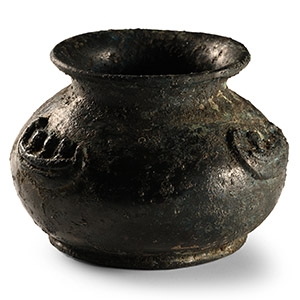
Roman Bronze Vessel with Boats
2nd-3rd century A.D.Estimate: £300 - 400 (+bp*)
Opening Bid: £150
Squat jar with concentric rings to the base, flared rim to the mouth three high-relief galley images to the shoulder. 166 grams, 43 mm high
Ex German art market, 2000s. Acquired from an EU collector living in London. From the collection of Surrey, UK, gentleman.
The vase evokes a scene of maritime or river trade, usually linked to navigation on the Rhine or on the great rivers of Roman Gaul. In particular, the shape of the ship and the three people only half visible on its deck closely resemble the famous relief of the wine merchants of Neumagen-Dhron. The small jar was probably for domestic toilette use. -
.jpg)
Roman Enamelled Bronze Brooch
1st-3rd century A.D.Sold for (Inc. bp): £1,170
With raised central boss and peripheral discs with red enamel alternating with openwork loops; the body with a double band of blue, white and red enamelling, separated by ropework bands; remains of pin hinge and catchplate to the reverse; accompanied by a custom-made display stand. 61 grams total, 56 mm including stand
From a private New Jersey collection, 1960-1985. with Artemis Gallery, Colorado, USA, 8 March 2016, no.45. Private American collection, New York, USA.
A similar brooch is preserved in the Colchester Museum, and similarly decorated brooch discs are visible in the British Museum and have been found in Chesterholm, Vindolanda and Chepstow. It is a Roman provincial type used by military personnel and their families. -
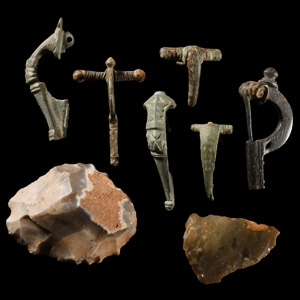
Roman Bronze Brooch and Other Item Group
3rd century A.D. and earlierSold for (Inc. bp): £85
Mixed group including P-shaped bow brooches, Langton Down type brooch, flint scraper with old label 'Clactonian/Bainfield/Swanscombe/1916' and other items. 143 grams total, 29-60 mm
Property of a Gloucestershire, UK, collector. Property of an East Sussex, UK, gentleman.
