
Loading, please wait...
LOT 0684
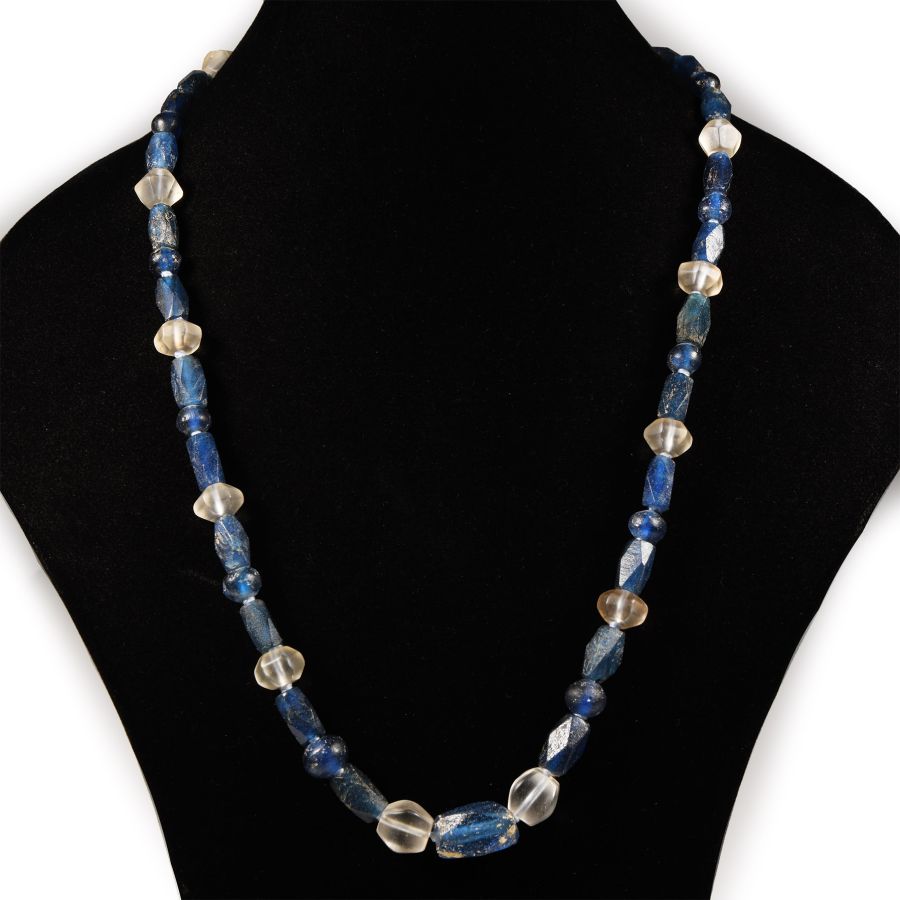
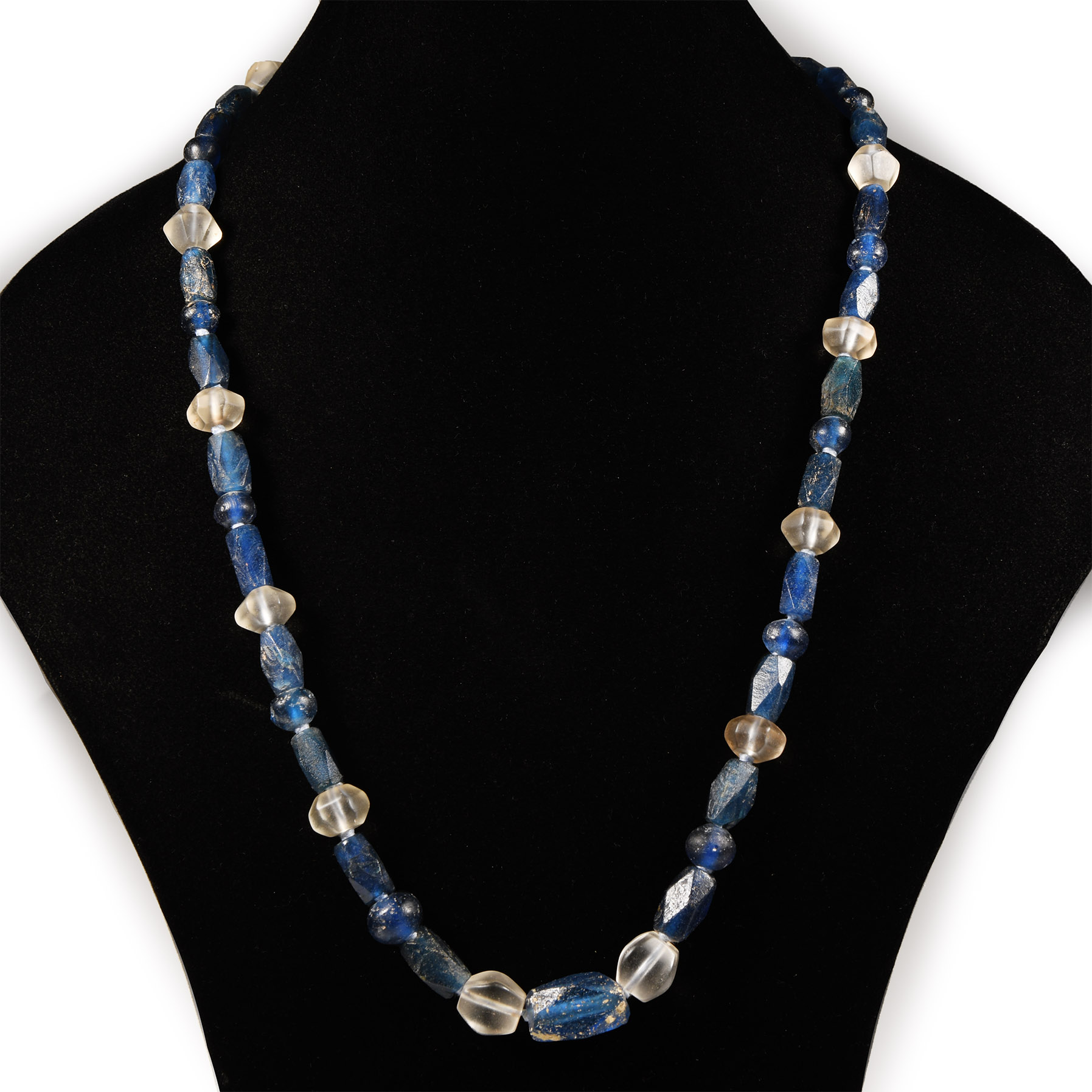
Roman Blue Cut Glass Bead Necklace
1ST CENTURY A.D.AND LATER
28 3/4 in. (89 grams, 73 cm long).
Mainly polyhedral and biconical beads with oblate spacers, with later clear glass beads.
Provenancewith a London, UK gallery 1971.
CONDITIONTimeLine Auctions follows a vetting process to ensure the authenticity and legality of all items, reinforcing our commitment to integrity and responsible trading. Each antiquity, antique, and coin lot undergoes thorough examination by a vetting committee of at least ten external specialists, professional trade association members, scientists, and archaeologists: Our Vetting Process
AUCTIONS:
TimeLine is a leading auction house specialising in antiquities, ancient art, collectables, natural history, coins, medals, and books. Our auctions offer museums, collectors, historians, and enthusiasts the opportunity to acquire unique and historically significant pieces.
LOT 0684
Roman Blue Cut Glass Bead Necklace
Estimate £400 - 600€460 - 700 (for guidance only)$540 - 810 (for guidance only)
-
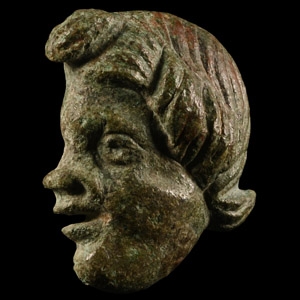
Roman Bronze Face Mount
1st-3rd century A.D.Sold for (Inc. bp): £52
Profile bust of a putto with swept-back hair and fleshy features; studs to the reverse. 8.21 grams, 23 mm
Property of a Gloucestershire, UK, collector. Property of an East Sussex, UK, gentleman. -
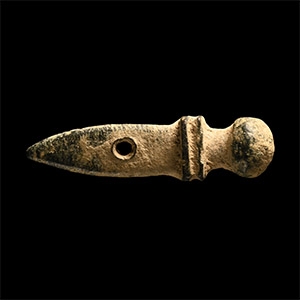
Roman Bronze Dagger Amulet
1st-4th century A.D.Sold for (Inc. bp): £72
Pugio modelled in the round with piercing for attachment. 3.9 grams, 28 mm
From the collection of C. Sullivan, 1990s. -
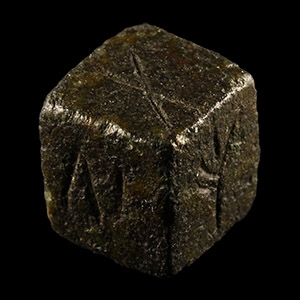
Romano-British Bronze Military 'Caister Fort' Gaming Dice with Mystical Symbols
Circa 1st century A.D.Sold for (Inc. bp): £546
Cuboid die with five sides bearing incised symbols: ring-and-dot (or theta Θ), 'IV' (for 'four'), saltire (or 'X' for 'ten'), frond with four spurs to each side, similar with one spur to each side. 4.5 grams, 8.7 mm
Found by the Roman fort at Caister, east of Norwich, Norfolk, UK, prior to 1998. Acquired from Richard Gladdle, 9th June 1998. From the important private collection of dice and gaming pieces of Colin Narbeth, London, UK, collection no.42. Accompanied by a Colin Narbeth catalogue identification card. Accompanied by a copy of the relevant Celtic & Roman Artefacts book pages where this object is published.
The conventional Roman dice were made in bone or lead, with dots representing numbers from 1 to 6. Roman dice from the Romano-British settlements are often poorly made and often had opposite sides that do not add up to 7. This dice is unique in the panorama of the Romano-British dice, because the symbols probably represent an alternative to the simple numerical dimples which appear on most dices.
