
Loading, please wait...
LOT 0692
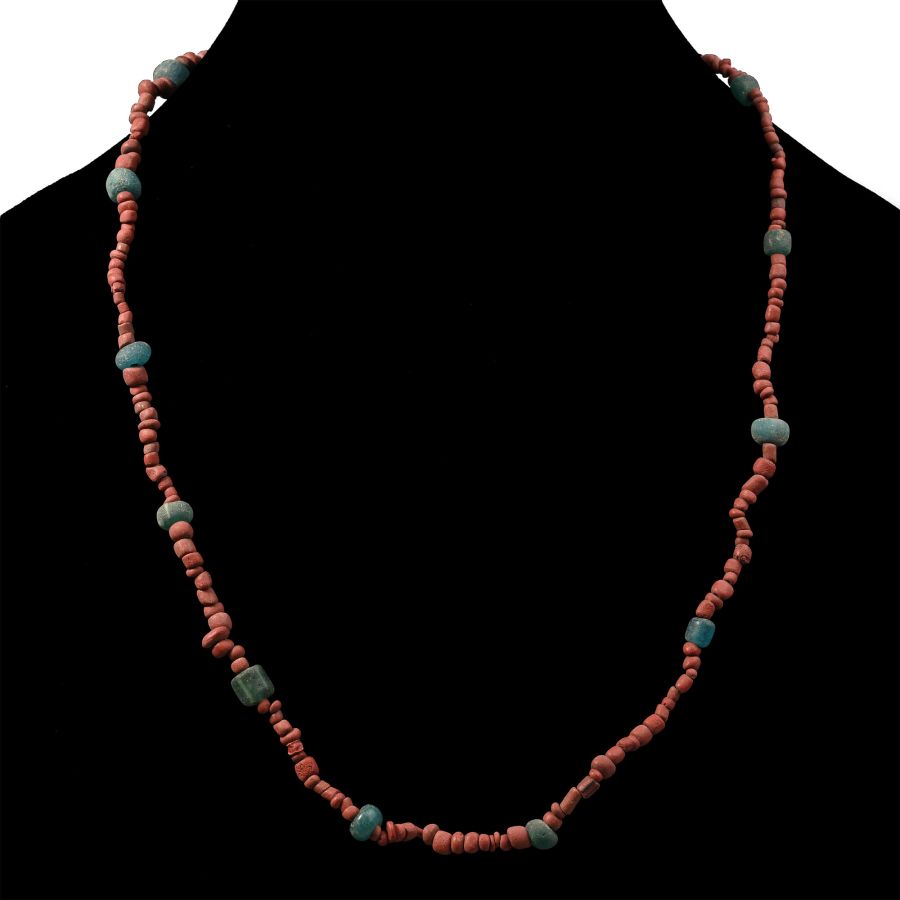
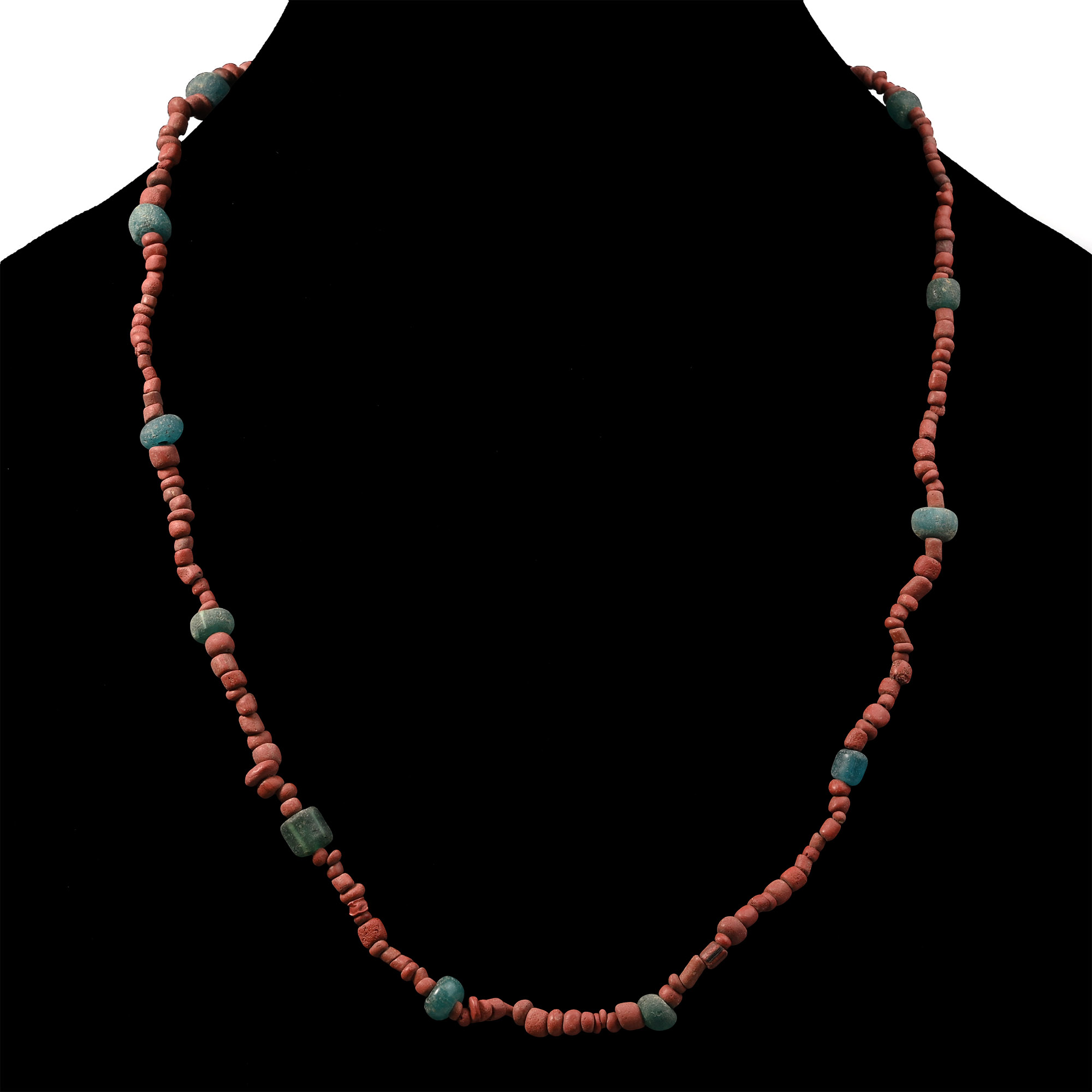
Roman Blue and Crimson Glass Bead Necklace String
1ST-4TH CENTURY A.D. AND LATER
24 3/8 in. (20.6 grams, 62 cm).
Restrung group of tubular and other types with interstitial melon and other beads; the small, irregular opaque red glass beads 'Indo-pacific'. [No Reserve]
ProvenanceLondon, UK, collection, 2000s.
CONDITIONTimeLine Auctions follows a vetting process to ensure the authenticity and legality of all items, reinforcing our commitment to integrity and responsible trading. Each antiquity, antique, and coin lot undergoes thorough examination by a vetting committee of at least ten external specialists, professional trade association members, scientists, and archaeologists: Our Vetting Process
AUCTIONS:
TimeLine is a leading auction house specialising in antiquities, ancient art, collectables, natural history, coins, medals, and books. Our auctions offer museums, collectors, historians, and enthusiasts the opportunity to acquire unique and historically significant pieces.
-
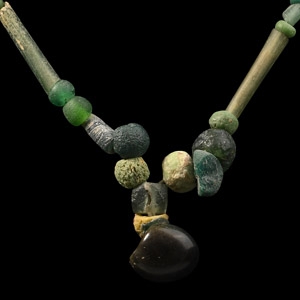
Roman Green Glass Bead Necklace String
1st-4th century A.D. and laterSold for (Inc. bp): £39
Restrung designer necklace string of tubular, fusiform, oblate and other types with pendant centrepiece. 18.9 grams, 37.5 cm
London, UK, collection, 2000s. -
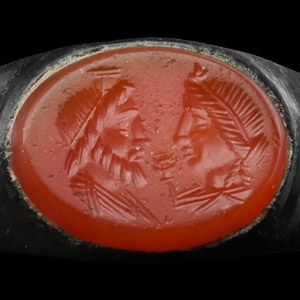
Roman Bronze Ring with Isis and Serapis Gemstone
2nd-3rd century A.D. and laterSold for (Inc. bp): £650
With shank widening to the fluted shoulders; flat bezel set with a later oval carnelian intaglio engraved with the bust of Isis with corkscrew locks falling to shoulders, sun-disc in horns headdress and carrying a lotus flower sceptre; Serapis facing with beard and kalathos headdress. 14.46 grams, 30.01 mm overall, 21.80 x 18.99 mm internal diameter (approximate size British U, USA 10, Europe 22.52, Japan 21)
From the collection of a European gentleman living in South London; acquired 1970-1980. -
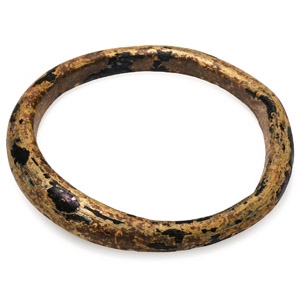
Roman Glass Bangle with Golden Iridescence
1st-4th century A.D.Sold for (Inc. bp): £72
Round-section with iridescent surface. 9.1 grams, 52 mm
From the private collection of the late Mr S.M., 1969-1999.
