
Loading, please wait...
LOT 1024
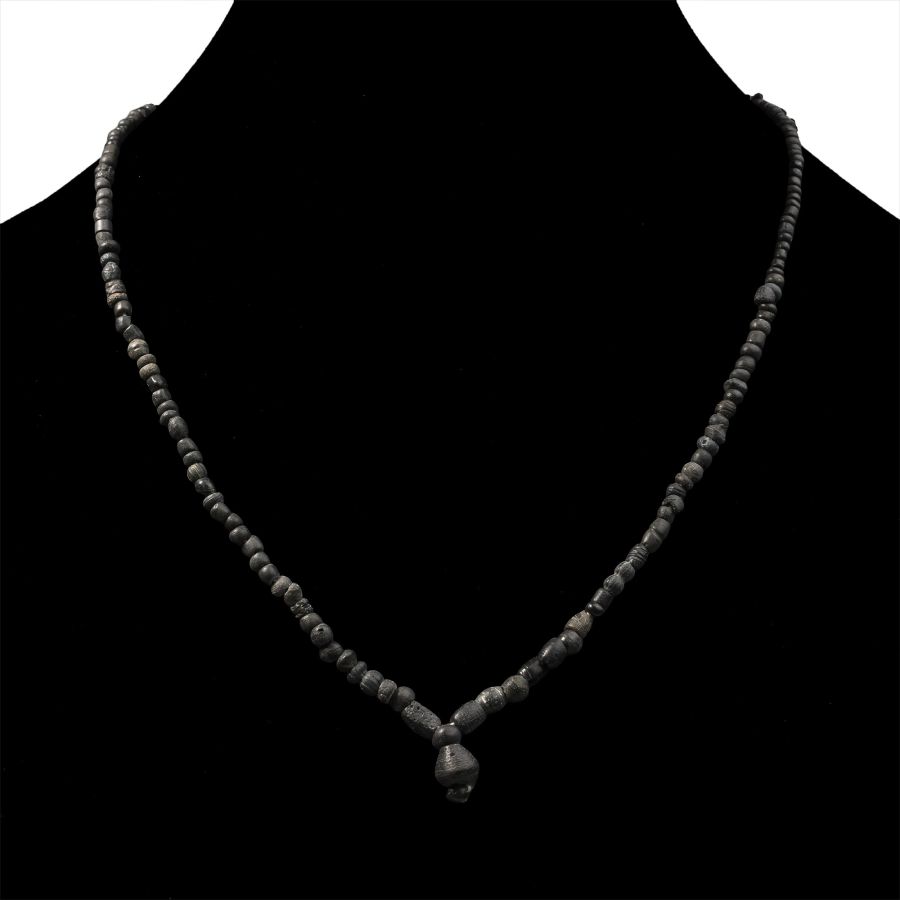
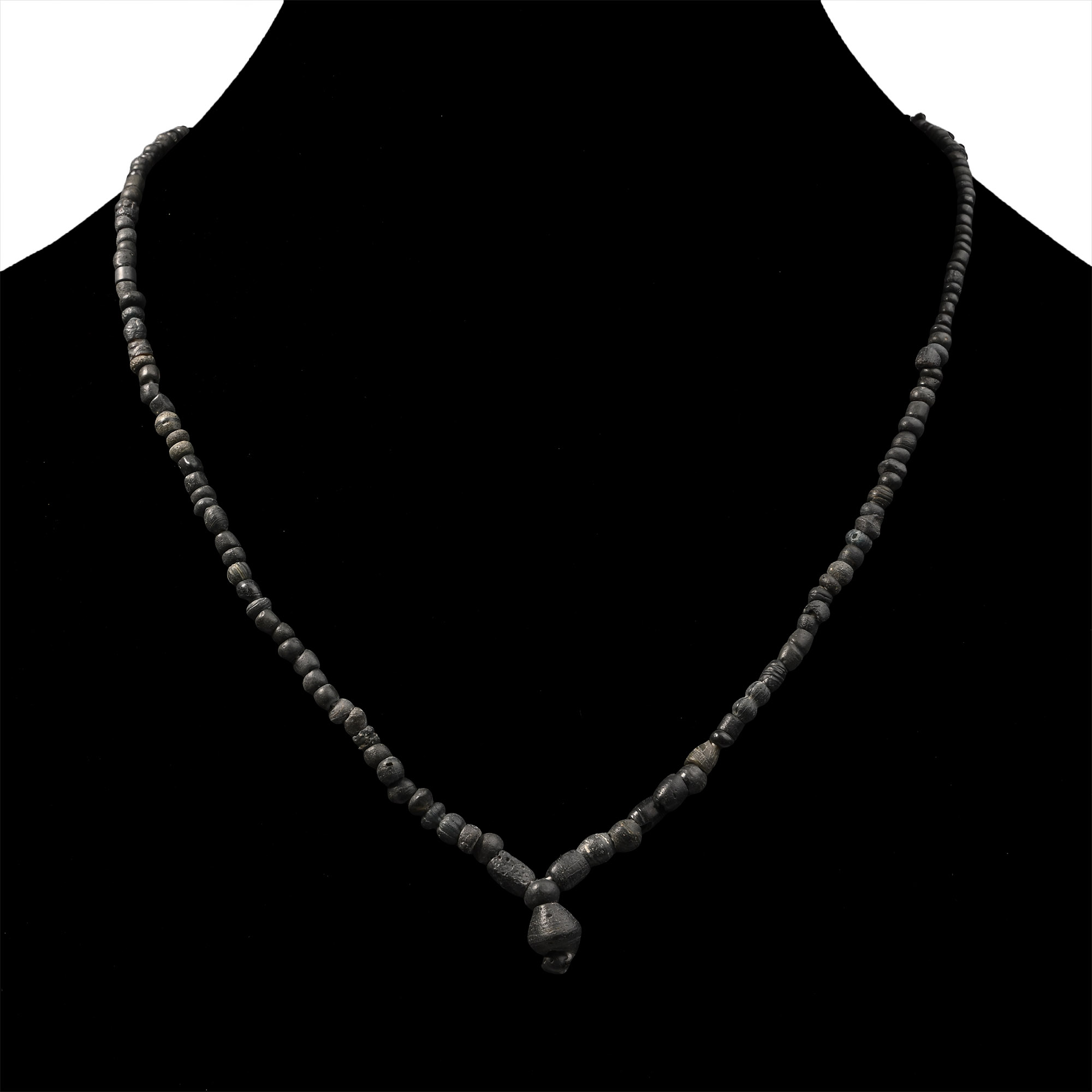
Roman Black Glass Bead Necklace String
1ST-4TH CENTURY A.D. AND LATER
17 3/4 in. (11.3 grams, 45 cm).
Restrung designer necklace string of tubular, oblate and other types. [No Reserve]
ProvenanceLondon, UK, collection, 2000s.
CONDITIONTimeLine Auctions follows a vetting process to ensure the authenticity and legality of all items, reinforcing our commitment to integrity and responsible trading. Each antiquity, antique, and coin lot undergoes thorough examination by a vetting committee of at least ten external specialists, professional trade association members, scientists, and archaeologists: Our Vetting Process
AUCTIONS:
TimeLine is a leading auction house specialising in antiquities, ancient art, collectables, natural history, coins, medals, and books. Our auctions offer museums, collectors, historians, and enthusiasts the opportunity to acquire unique and historically significant pieces.
-
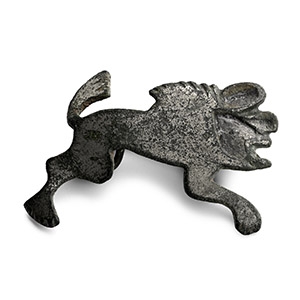
Published Romano-British Tinned Bronze Lion Brooch
Circa 2nd century A.D.Sold for (Inc. bp): £286
Plate brooch formed as a leaping lion, with raised tail and detailed face, notched edge to mane and tail; spring, pin and catch to reverse. 7.87 grams, 42 mm
Acquired on the UK art market in the 1980s. From an East Anglian private collection.
The lion brooch of flat metal in low relief shows remarkable uniformity of artistry, technique, workmanship and construction with Eagle and Hare brooches. Both categories can be dated to the 2nd century A.D. and both have typically Celtic craftsmanship within minimal simple lines. They were probably a product of Romano-British workmanship -
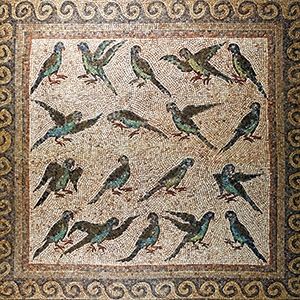
Large Late Roman Mosaic with Inlaid Glass Birds
6th century A.D.Sold for (Inc. bp): £149,500
Rectangular panel of decorative mosaic tesserae comprising: wave pattern border in cream and graduated blue-grey tesserae with darker outer edge; inner border of graduated maroon and dark blue-grey tesserae; central field with two inner rows of four and two outer rows of five parakeets in various standing and perching poses, each formed from blue and green glass tesserae with white, crimson and other detailing to the eye, beak and chest; embedded in a sturdy steel-framed matrix of traditional mid 20th century type. 2.12 x 2.05 m
with Leon Simard, 1960s, Montreal, Canada. Archaeologia Gallery, 1980s. This lot has been checked against the Interpol Database of stolen works of art and is accompanied by search certificate number no.12966-244460.
The design of repeated birds against a neutral field is similar to patterns found on Late Roman and Sassanian textiles of roughly the same date, especially silk and wool textiles woven on more mechanised looms. Birds of all varieties appear frequently in floor mosaics and other arts of the Roman period; however, beribboned birds are rare. -
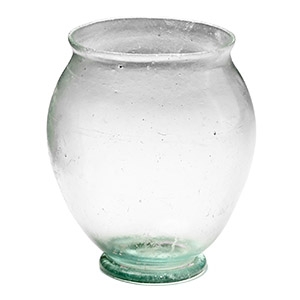
Roman Pale Green Glass Jar
2nd-3rd century A.D.Sold for (Inc. bp): £546
With applied disc base, flared neck and rounded rim. 62.53 grams, 98 mm
Acquired Christie's, London, Antiquities, Works of Art and Important Renaissance Bronzes, Plaquettes and Limoges Enamels, 8 July 1981, no.12 (part). From a private Wiltshire, UK, collection. Accompanied by a copy of the relevant Christie's catalogue pages.
