
Loading, please wait...
LOT 0941
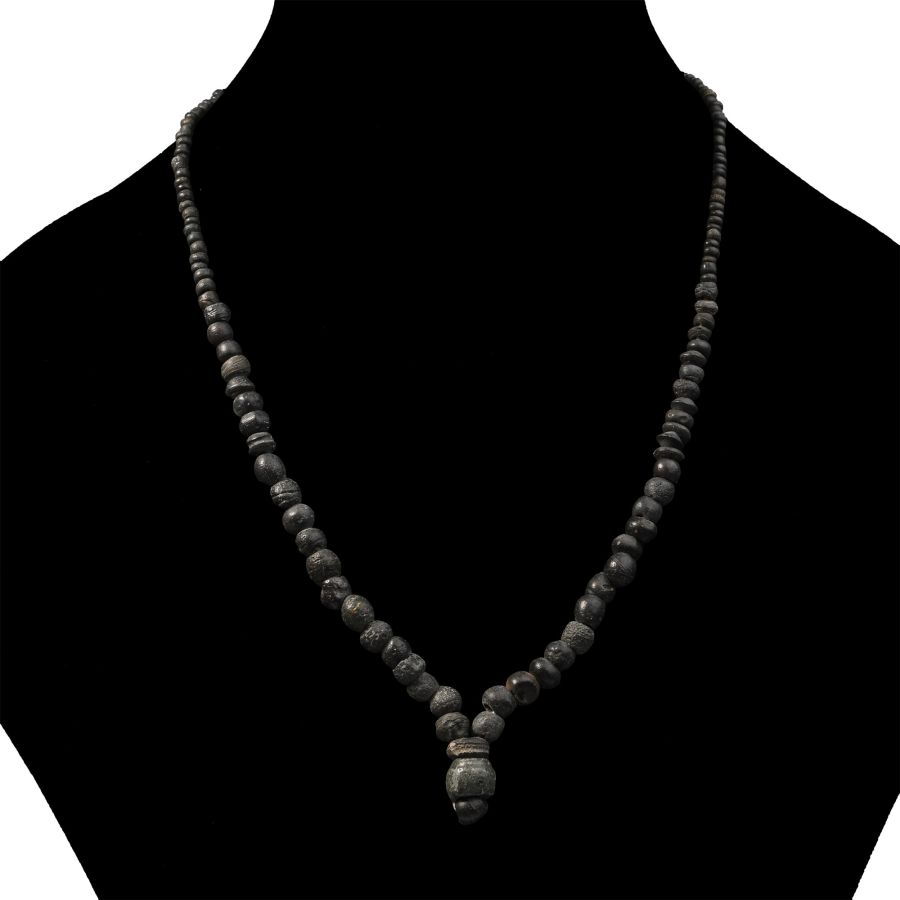
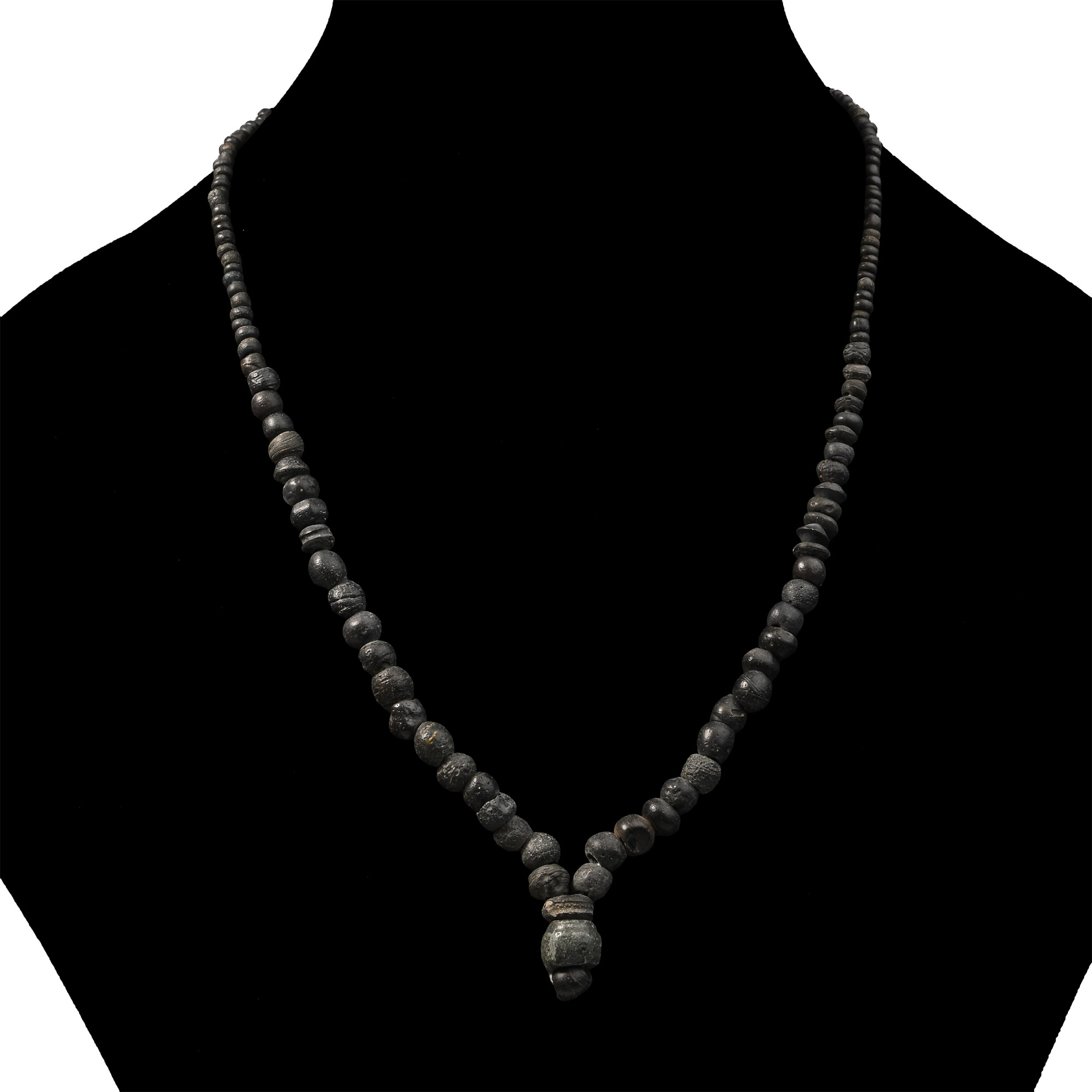
Roman Black Glass Bead Necklace String
1ST-4TH CENTURY A.D. AND LATER
17 1/2 in. (24.3 grams, 44.5 cm).
Restrung designer necklace string of annular, oblate and other types with pendant centrepiece. [No Reserve]
ProvenanceLondon, UK, collection, 2000s.
CONDITIONTimeLine Auctions follows a vetting process to ensure the authenticity and legality of all items, reinforcing our commitment to integrity and responsible trading. Each antiquity, antique, and coin lot undergoes thorough examination by a vetting committee of at least ten external specialists, professional trade association members, scientists, and archaeologists: Our Vetting Process
AUCTIONS:
TimeLine is a leading auction house specialising in antiquities, ancient art, collectables, natural history, coins, medals, and books. Our auctions offer museums, collectors, historians, and enthusiasts the opportunity to acquire unique and historically significant pieces.
-
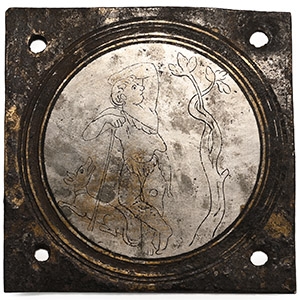
Roman Silver Military Belt Plaque
Circa 4th century A.D.Sold for (Inc. bp): £520
Square plaque from a baldric or military belt, with an engraved circle in the centre depicting a shepherd resting under a tree with two crossed branches, leaning on his staff with a greyhound beside him. 48.7 grams, 66 mm
From a UK collection since before 1990.
The plaque is related to a series of late Antique bronze plates destined to decorate the military baldrics or belts. Some of them were found in a late Roman tomb in Totanés (Toledo), ornamented with busts, and a plaque from Merida (Badajoz) was decorated with the personification of Rome. The plaque is related to similar ones from Italian and Syrian-Palestinian workshops, whose ornamentation seems sometimes to be connected to imperial authority. Parallels are linked to similar pieces of different iconographic types, but which were equally popular in the late Roman Empire, such as hunting or bucolic motifs. -
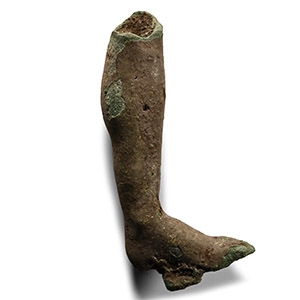
Roman Bronze Votive Statue Leg
2nd-3rd century A.D.Estimate: £120 - 170 (‡+bp*)
Opening Bid: £60
Modelled as the lower left leg with anatomical detailing, sprue to the foot. 435 grams, 12.9 cm
Acquired in the mid 1980s-1990s. Private collection, Switzerland, thence by descent. Private collection, since the late 1990s. -
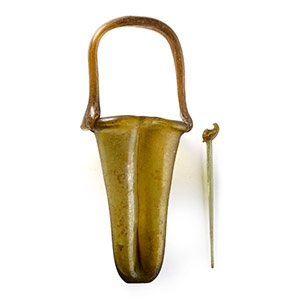
Roman Amber Glass Double Unguentarium with Dolphin-Headed Pin
Circa 4th century A.D.Sold for (Inc. bp): £169
With rolled rim and a large loop handle above; accompanied by a tapering glass pin with applied dolphin finial. 75 grams, 16.5 cm
Previously from a German private collection. Acquired Sotheby's, London, 13 & 14 July 1981, no.425 (illus). From a private Wiltshire, UK, collection. Accompanied by a copy of the relevant Sotheby's catalogue pages.
