
Loading, please wait...
LOT 0890
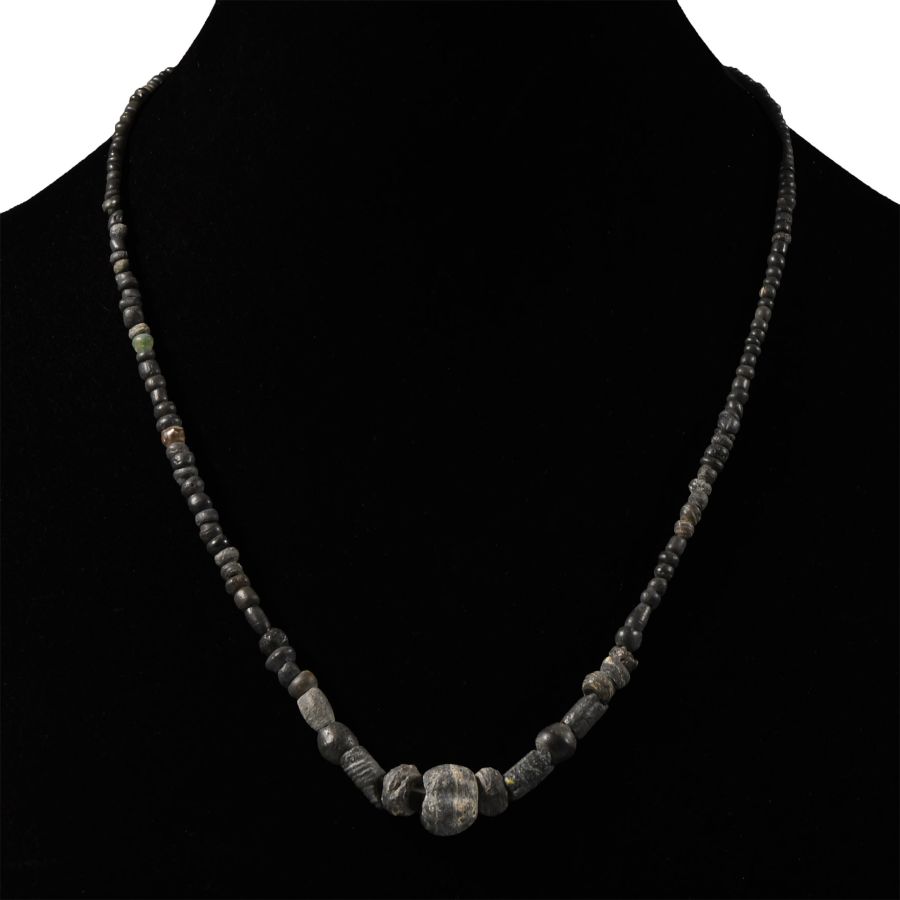
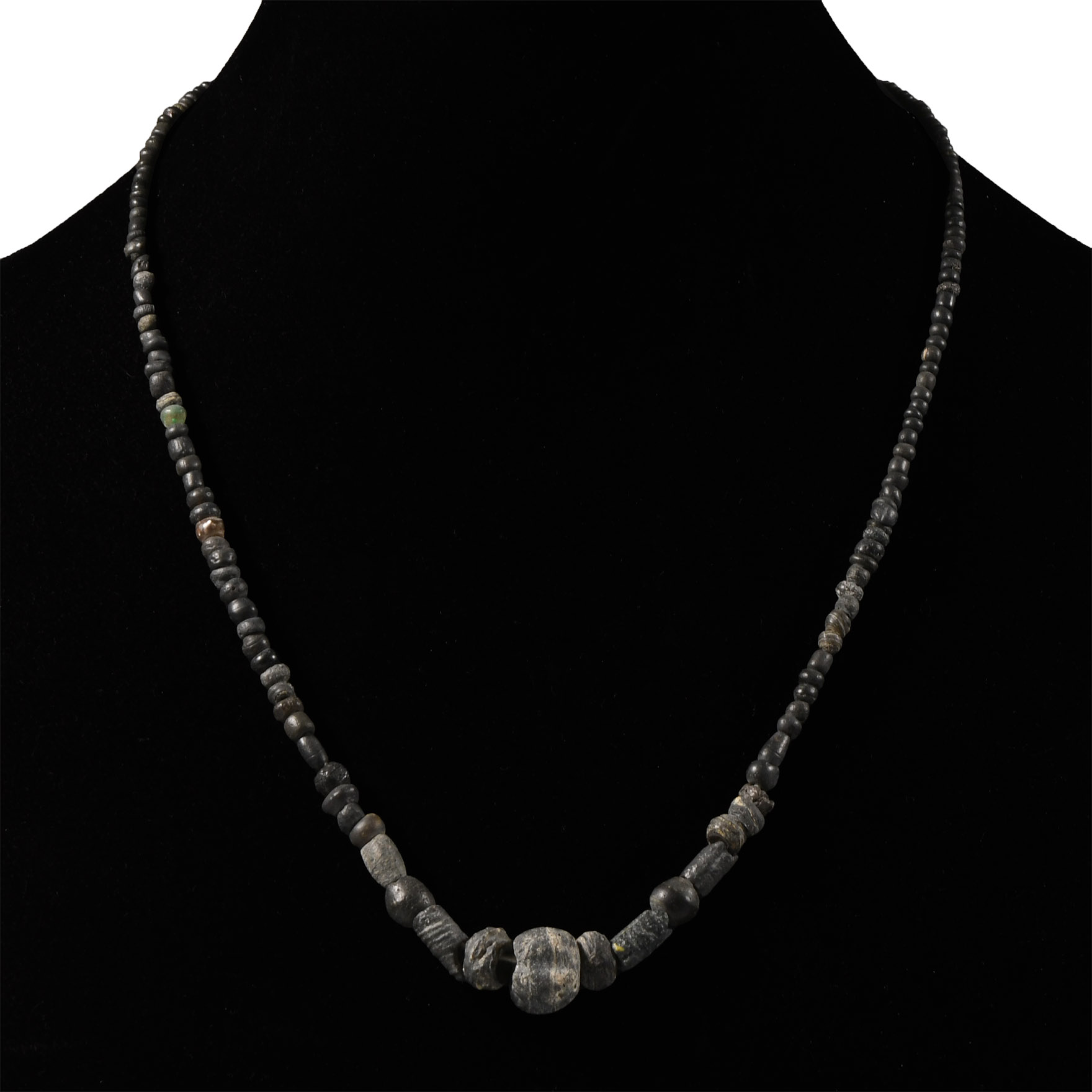
Roman Black Glass Bead Necklace String
1ST-4TH CENTURY A.D. AND LATER
19 1/4 in. (17.09 grams, 49 cm).
Restrung graduated group of mainly spherical and annular beads with annular centrepiece. [No Reserve]
ProvenanceAcquired 1980-2015.
Ex Abelita family collection.
TimeLine Auctions follows a vetting process to ensure the authenticity and legality of all items, reinforcing our commitment to integrity and responsible trading. Each antiquity, antique, and coin lot undergoes thorough examination by a vetting committee of at least ten external specialists, professional trade association members, scientists, and archaeologists: Our Vetting Process
AUCTIONS:
TimeLine is a leading auction house specialising in antiquities, ancient art, collectables, natural history, coins, medals, and books. Our auctions offer museums, collectors, historians, and enthusiasts the opportunity to acquire unique and historically significant pieces.
-
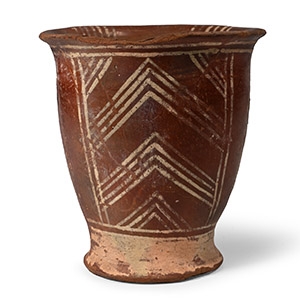
Roman Terracotta Beaker
5th century A.D.Sold for (Inc. bp): £1,040
With gently curved sidewall, flared base and everted rim; groups of vertical lines to the inner rim, circumferential bands below the rim and above the foot, vertical interrupted herringbone panels to the body. 346 grams, 11 cm
Collection of Stanley J. Seeger (1930-2011), England, Tennant of Yorkshire. with Attic Sale, 16 May 2015, no.265. Acquired by the present owner at the above sale. -
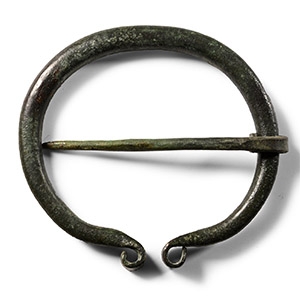
Roman Bronze Penannular Brooch
2nd-4th century A.D.Sold for (Inc. bp): £416
With round-section body and curved terminals, free-running pin. 29.8 grams, 57 mm
Ex German art market, 2000s. Acquired from an EU collector living in London. From the collection of Surrey, UK, gentleman. -
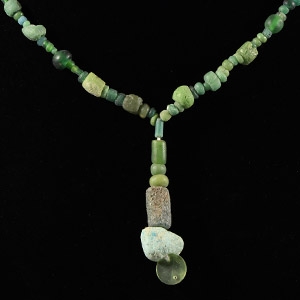
Roman Green Glass Bead Necklace String
1st-4th century A.D. and laterSold for (Inc. bp): £59
Restrung group of mainly annular and seed beads with tabular dangle centrepiece. 13.75 grams, 32.5 cm
Acquired 1980-2015. Ex Abelita family collection.
