
Loading, please wait...
LOT 0692
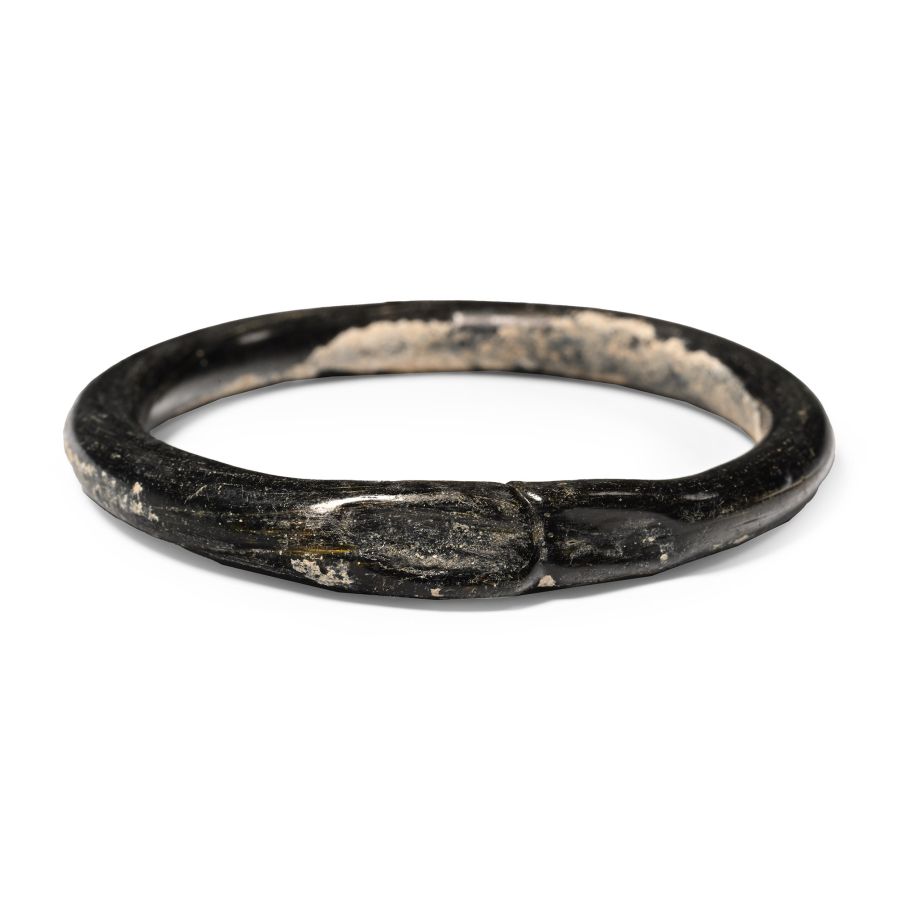
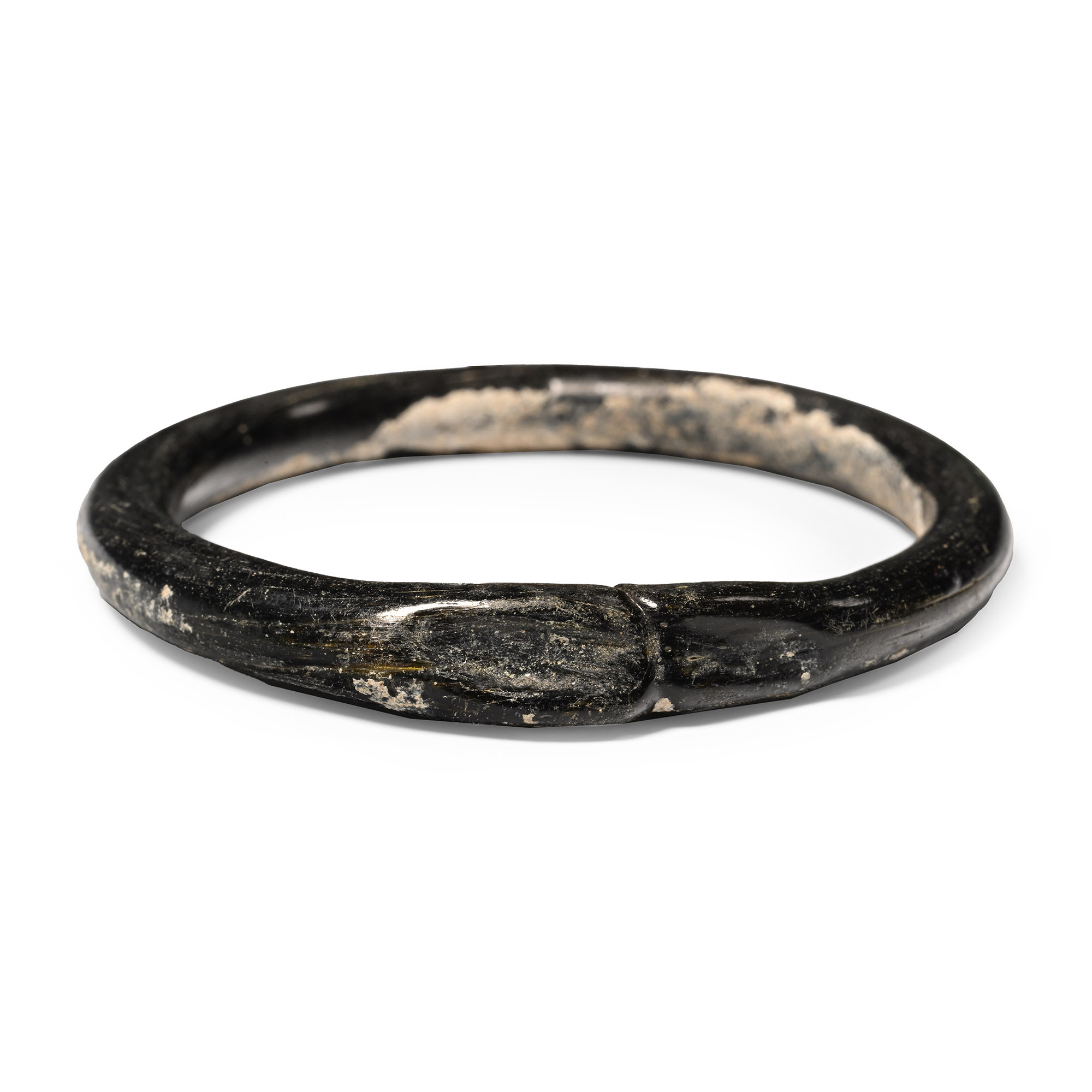
Roman Black Glass Bangle
1ST-4TH CENTURY A.D.
2 1/4 in. (11.04 grams, 57 mm).
Round in section with iridescent surface. [No Reserve]
ProvenanceAcquired before 1983.
Ex London gallery, 1990s.
This lot is accompanied by an illustrated lot declaration signed by the Head of the Antiquities Department, Dr Raffaele D'Amato.
Cf. Kunstmuseum Luzern, 3000 Jahre Glaskunst, Luzern, 1981, p.103, B, for similar.
CONDITIONTimeLine Auctions follows a vetting process to ensure the authenticity and legality of all items, reinforcing our commitment to integrity and responsible trading. Each antiquity, antique, and coin lot undergoes thorough examination by a vetting committee of at least ten external specialists, professional trade association members, scientists, and archaeologists: Our Vetting Process
AUCTIONS:
TimeLine is a leading auction house specialising in antiquities, ancient art, collectables, natural history, coins, medals, and books. Our auctions offer museums, collectors, historians, and enthusiasts the opportunity to acquire unique and historically significant pieces.
-
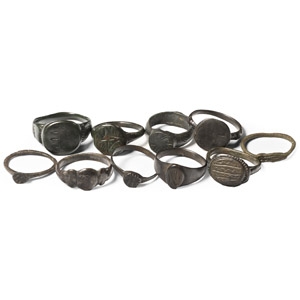
Roman to Medieval Bronze Ring Collection
1st-16th century A.D.Sold for (Inc. bp): £117
Comprising ten rings with bezels, including one with a dagger-shaped bezel. 41.93 grams total, 21-26 mm
Ex German art market, 2000s. Acquired from an EU collector living in London. From the collection of a Surrey, UK, gentleman. This lot is accompanied by an illustrated lot declaration signed by the Head of the Antiquities Department, Dr Raffaele D'Amato. -
.jpg)
Roman Terracotta Female Figure on Pedestal Base
2nd century B.C.Sold for (Inc. bp): £845
Dressed in voluminous robes with pleating to the undergarment, the figure depicted in contrapposto position with her weight on the left leg and right leg bent at the knee, a square pillar flanking the right leg; both arms raised with the open palms facing upwards; standing on a square pedestal; hollow form. 266 grams, 22 cm
Ex London gallery, UK, 1980s. Ex private UK collection. This lot is accompanied by an illustrated lot declaration signed by the Head of the Antiquities Department, Dr Raffaele D'Amato.
The figure represents a woman caught in the act of offering; originally, she probably had a patera and a gift in the other hand. The statuette has a plain back as it probably was intended to be placed in a shrine inside a votive deposit. In the now empty space there could have been a name and a painted dedication. -
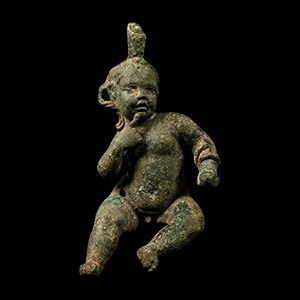
Roman Bronze Figure of Seated Harpocrates
1st century A.D.Estimate: £3,000 - 4,000 (‡+bp*)
Opening Bid: £1,350
Modelled in the round sitting with miniature double-crown, serpent arm-ring on left wrist, sidelock; fixing socket to right thigh. 145 grams, 72 mm
Private collection, Me. A., Florida, USA, early 1990s. European private collection, acquired in Germany, September 2000. This lot has been checked against the Interpol Database of stolen works of art and is accompanied by a search certificate number no.12683-234609. This lot has been cleared against the Art Loss Register database, and is accompanied by an illustrated lot declaration signed by the Head of the Antiquities Department, Dr Raffaele D'Amato.
