
Loading, please wait...
LOT 0084
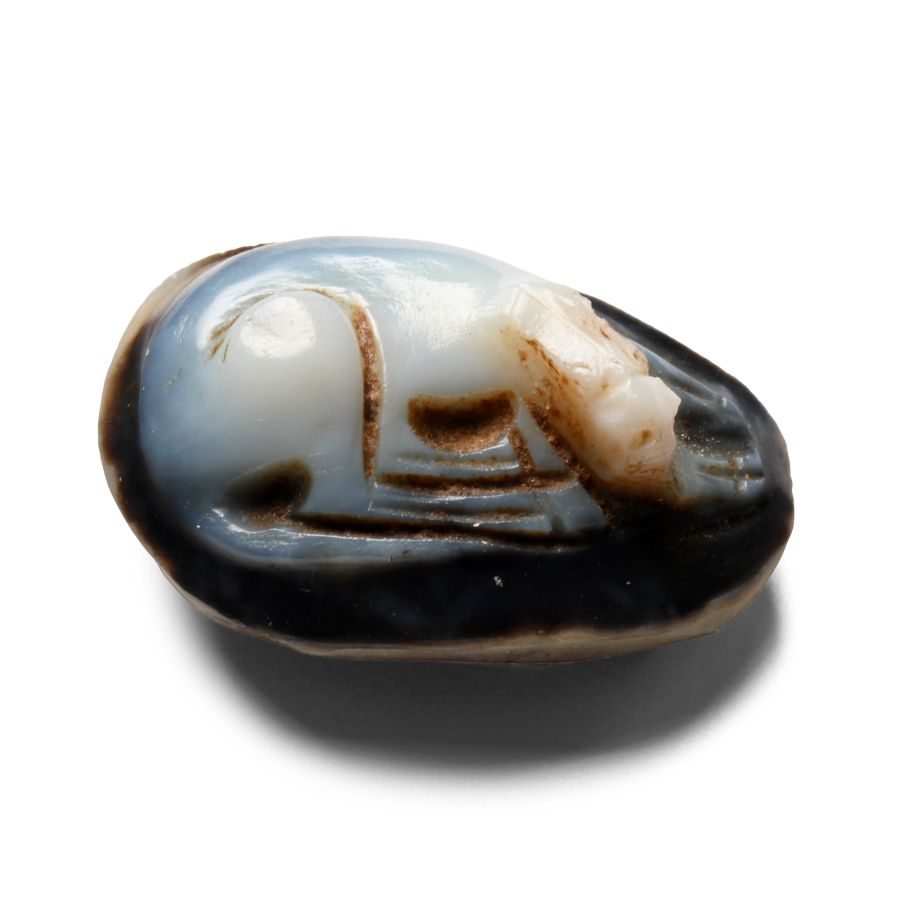
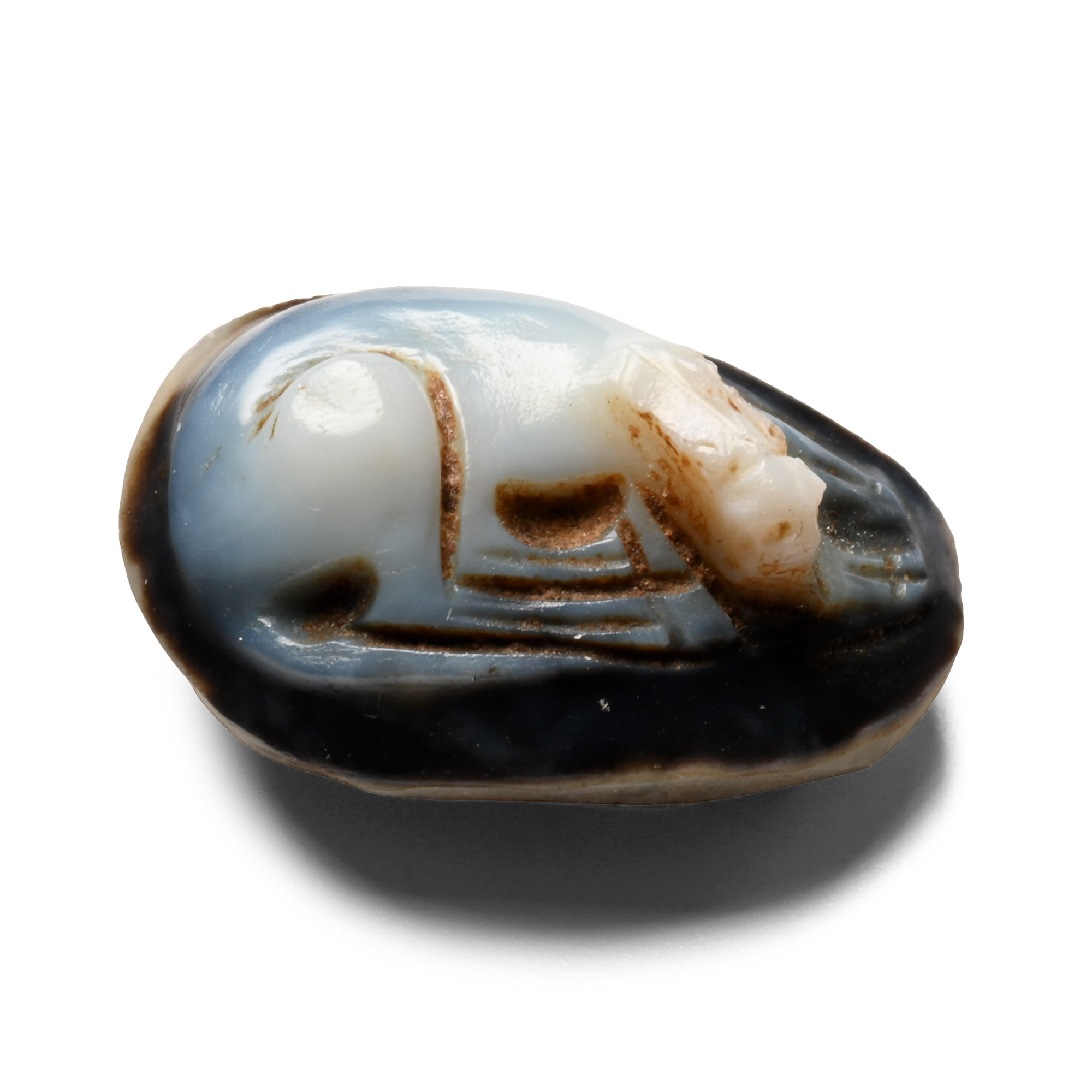
Roman Banded Agate Cameo of a Sleeping Dog
3RD CENTURY A.D.
1/2 in. (0.72 grams, 12.7 mm).
With a cameo image of a lying dog curled to the right; supplied with a museum-quality impression.
ProvenancePrivate English collection, formed between the late 1970s and early 1990s.
Private collection, London, UK.
Cf. Henig, M., The Content Cameos, p.26, no.47, p.27, n.48.
CONDITIONTimeLine Auctions follows a vetting process to ensure the authenticity and legality of all items, reinforcing our commitment to integrity and responsible trading. Each antiquity, antique, and coin lot undergoes thorough examination by a vetting committee of at least ten external specialists, professional trade association members, scientists, and archaeologists: Our Vetting Process
AUCTIONS:
TimeLine is a leading auction house specialising in antiquities, ancient art, collectables, natural history, coins, medals, and books. Our auctions offer museums, collectors, historians, and enthusiasts the opportunity to acquire unique and historically significant pieces.
-
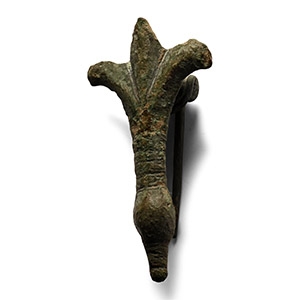
Roman Bronze Serpent Plate Brooch
2nd century A.D.Sold for (Inc. bp): £39
Comprising a bulb and palmette, serpent-head finial; spring, pin and catch to the reverse. 7.89 grams, 47 mm
Ex DRG Coins and Antiquities, Bishops Stortford, Essex, UK. From the private collection of a West London, UK, gentleman, formed since the early 2000s. Accompanied by a handwritten dealer's ticket. -
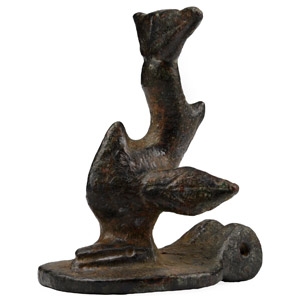
Roman Bronze Oil Lamp Lid with Dolphin
2nd-4th century A.D.Sold for (Inc. bp): £140
Discoid lid with hinge plates on the rear edge, stylised dolphin balancing on its elongated snout, large pectoral fins. 49 grams, 43 mm
Ex German art market, 2000s. Acquired from an EU collector living in London. From the collection of a Surrey, UK, gentleman. This lot is accompanied by an illustrated lot declaration signed by the Head of the Antiquities Department, Dr Raffaele D'Amato. -
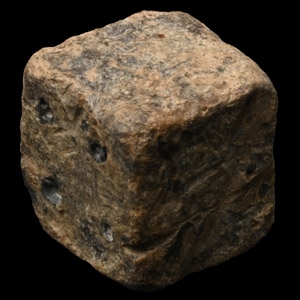
Romano-British Lead Gaming Dice
1st-4th century A.D.Sold for (Inc. bp): £156
Cuboid with pellet markings on most faces. 16.6 grams, 12 mm
Found Wiltshire, UK. From the private collection of Colin Narbeth, UK, 1990s, with collection reference no.52. Accompanied by a typed collection ticket.
