
Loading, please wait...
LOT 0637
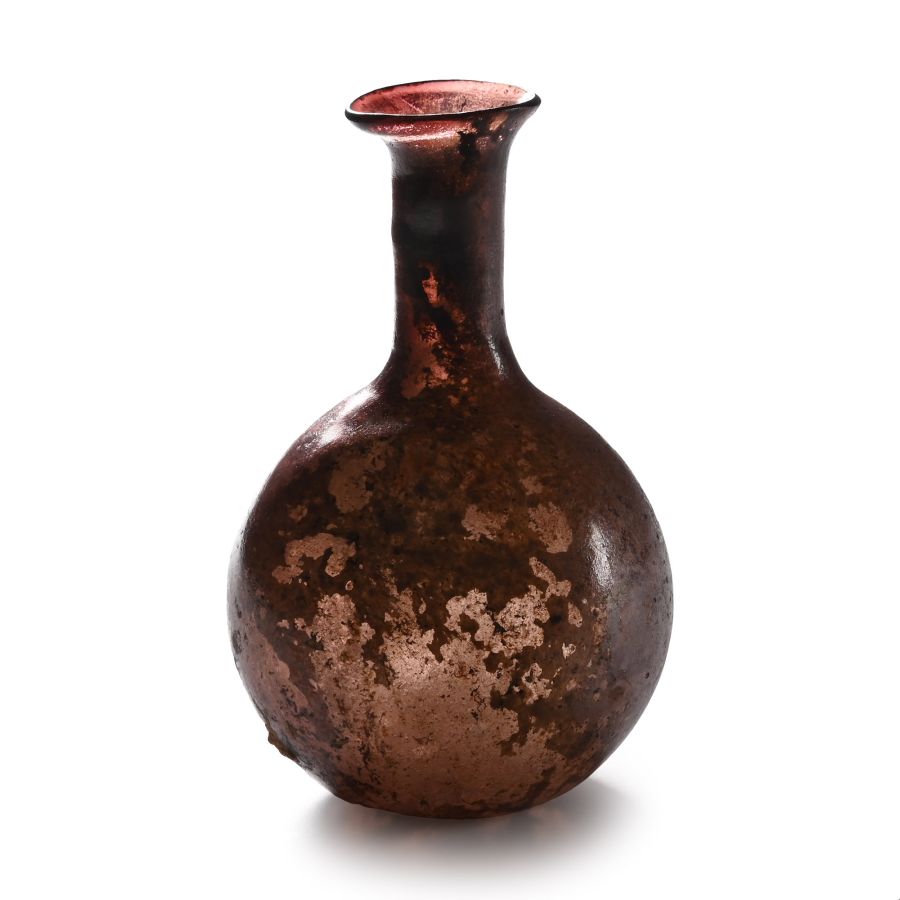
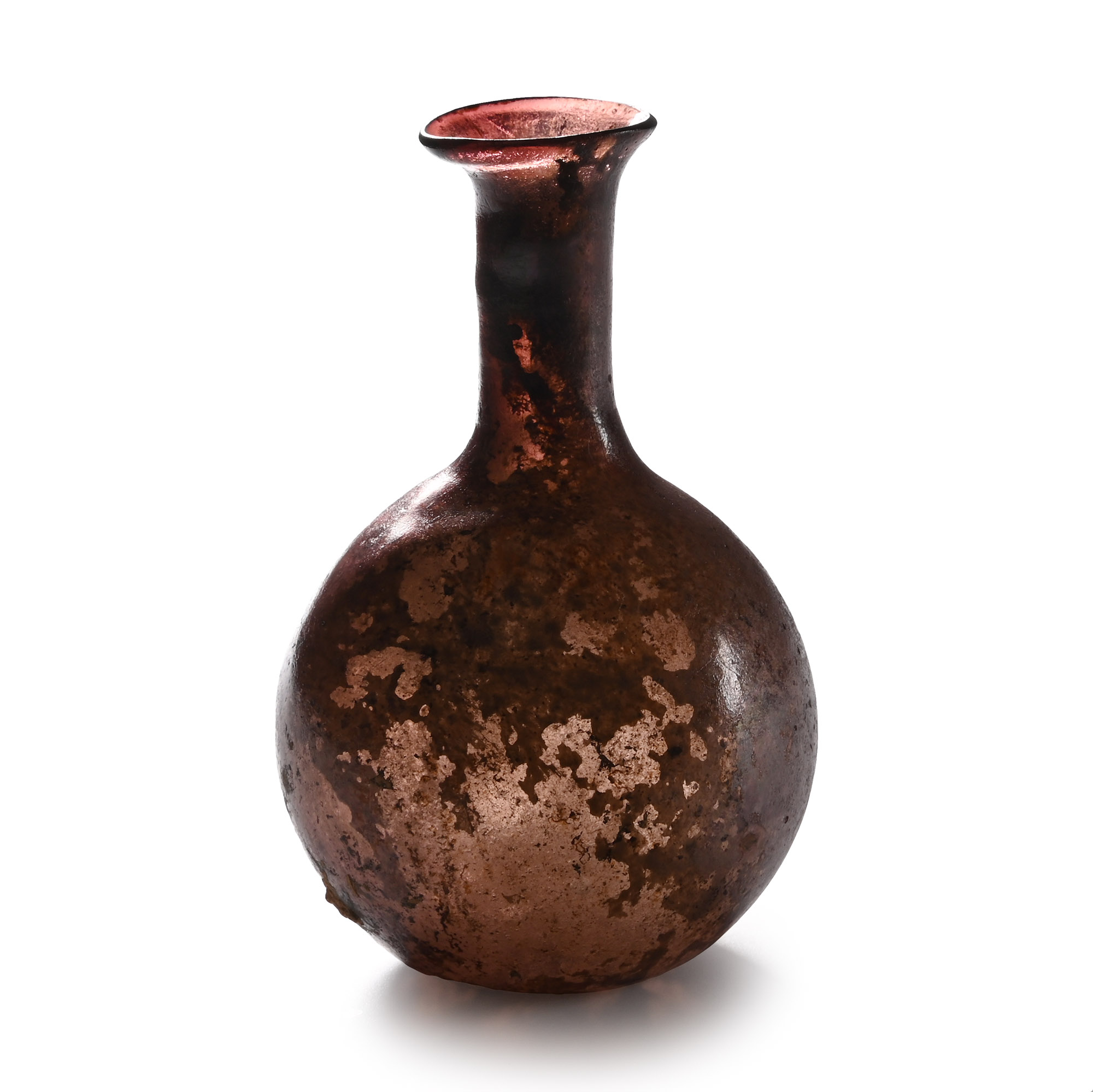
Roman Aubergine Glass Bottle
2ND-4TH CENTURY A.D.
2 3/4 in. (10.6 grams, 70 mm).
With bulbous body, tubular neck, broad everted rim; extensive iridescence.
ProvenanceFrom an important London collection of glass, 1990s.
This lot is accompanied by an illustrated lot declaration signed by the Head of the Antiquities Department, Dr Raffaele D'Amato.
TimeLine Auctions follows a vetting process to ensure the authenticity and legality of all items, reinforcing our commitment to integrity and responsible trading. Each antiquity, antique, and coin lot undergoes thorough examination by a vetting committee of at least ten external specialists, professional trade association members, scientists, and archaeologists: Our Vetting Process
AUCTIONS:
TimeLine is a leading auction house specialising in antiquities, ancient art, collectables, natural history, coins, medals, and books. Our auctions offer museums, collectors, historians, and enthusiasts the opportunity to acquire unique and historically significant pieces.
LOT 0637
Roman Aubergine Glass Bottle
Estimate £350 - 450€410 - 520 (for guidance only)$470 - 610 (for guidance only)
-
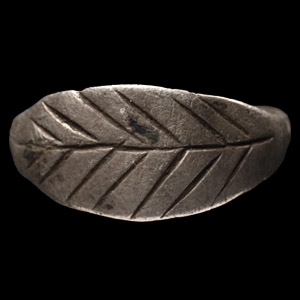
Roman Ring with Palm Branch
3rd-4th century A.D.Sold for (Inc. bp): £104
Rectangular hoop with a lentoid bezel bearing an incised palm branch motif. 2.47 grams, 19.30 mm overall, 16.66 x 14.81 mm internal diameter (approximate size British H 1/2, USA 4, Europe 6.81, Japan 6)
Ex German art market, 2000s. Acquired from an EU collector living in London. From the collection of a Surrey, UK, gentleman. This lot is accompanied by an illustrated lot declaration signed by the Head of the Antiquities Department, Dr Raffaele D'Amato. -
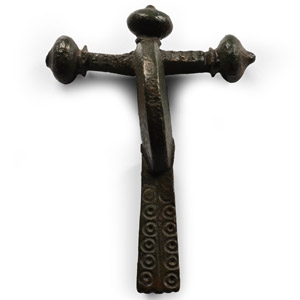
Roman Bronze Crossbow Brooch
4th century A.D.Sold for (Inc. bp): £117
With onion knop finials, deep bow, stepped junction with foot, trapezoidal foot with ring-and-dot motifs and integral catch; hinged pin to reverse. 90 grams, 86 mm
Ex German collection, 1990s. This lot is accompanied by an illustrated lot declaration signed by the Head of the Antiquities Department, Dr Raffaele D’Amato. This lot is accompanied by an illustrated lot declaration signed by the Head of the Antiquities Department, Dr Raffaele D'Amato. -
.jpg)
Roman Terracotta Lamp with Minerva
1st-2nd century A.D.Sold for (Inc. bp): £715
Comprising a pierced lug handle and short nozzle; shoulder with band of radiating feathers, discus with Minerva standing facing wearing a cuirass and holding spear and shield; concentric rings and scrolls to underside. 85 grams, 10.3 cm
with Münzen und Medaillen AG, Basel, Switzerland, 1974. Swiss private collection. Mr F. collection, Los Angeles, acquired in 2005. This lot is accompanied by an illustrated lot declaration signed by the Head of the Antiquities Department, Dr Raffaele D'Amato.
