
Loading, please wait...
LOT 0893
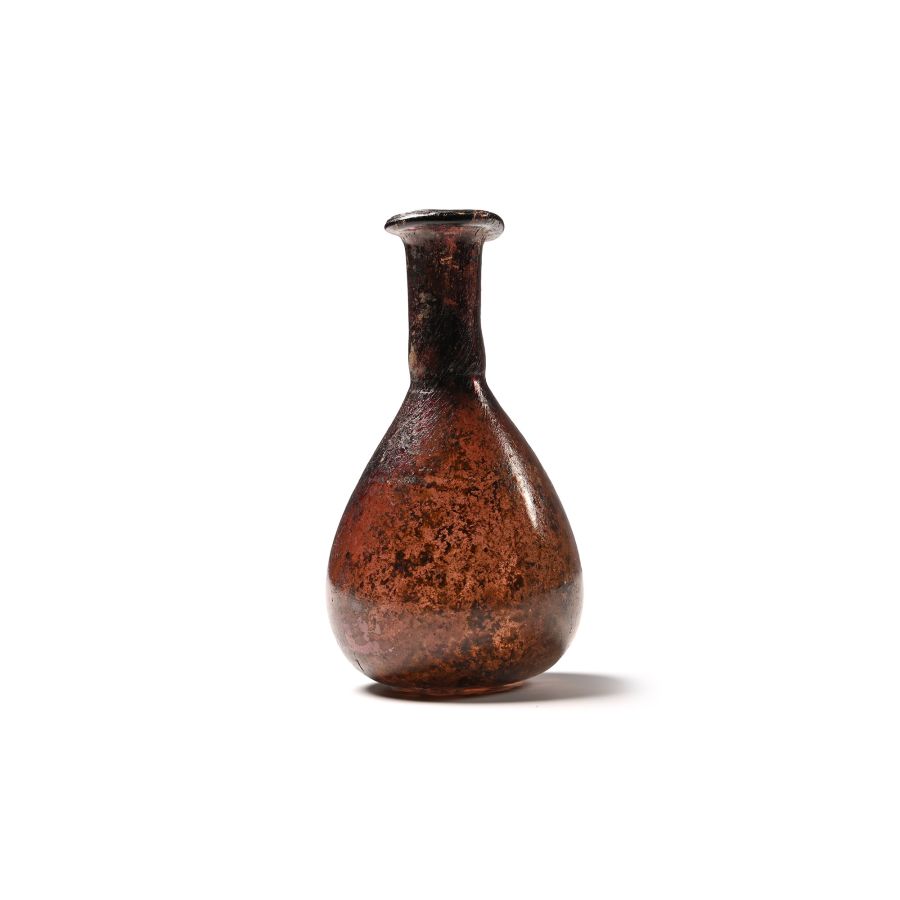
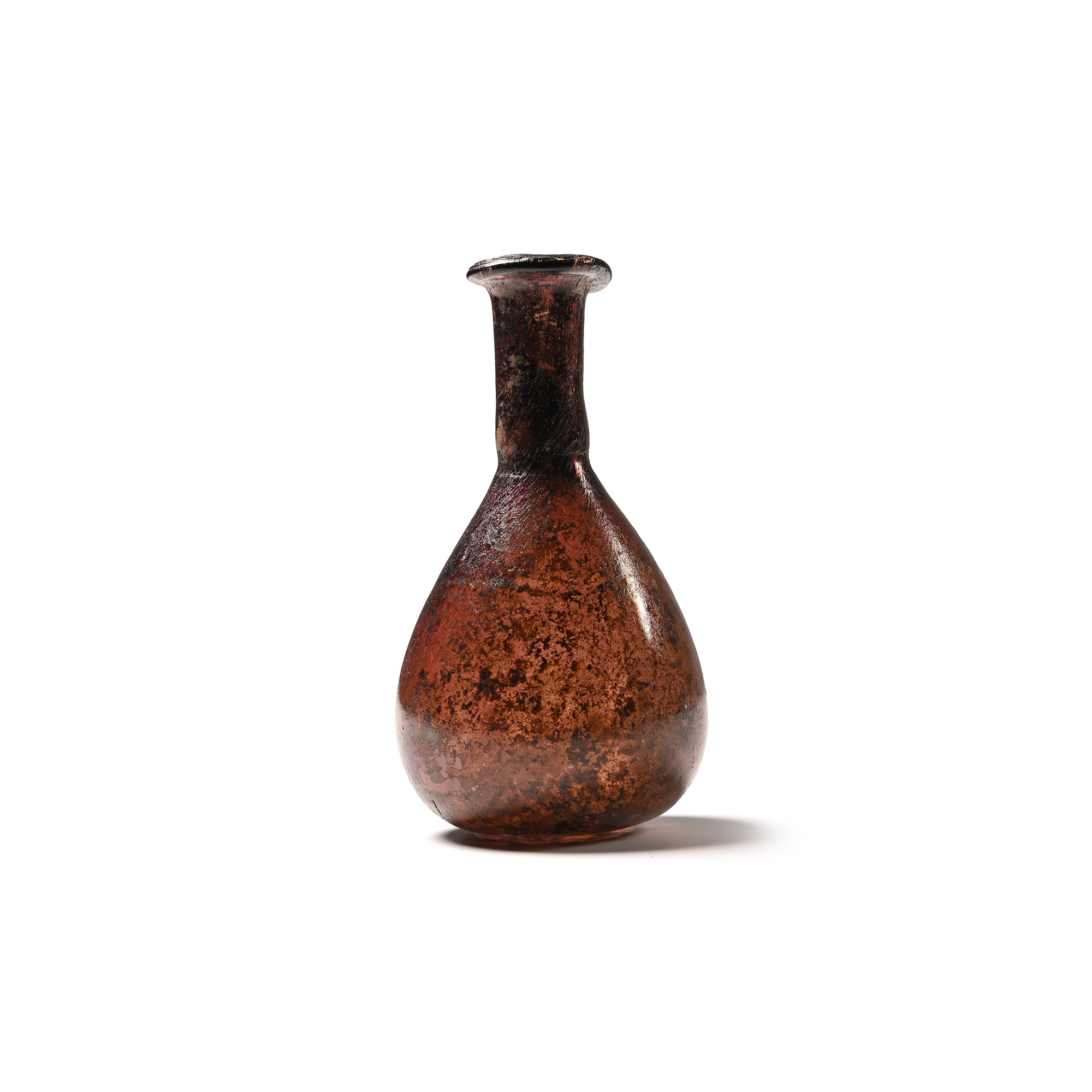
Roman Aubergine Glass Bottle with Iridescence
2ND-4TH CENTURY A.D.
2 5/8 in. (10.9 grams, 68 mm).
With pear-shaped body and flat base, cylindrical neck, the rim folded out.
ProvenanceAcquired in the mid 1980s-1990s.
Private collection, Switzerland, thence by descent.
Private collection, since the late 1990s.
This lot is accompanied by an illustrated lot declaration signed by the Head of the Antiquities Department, Dr Raffaele D'Amato.
Cf. The Corning Museum of Glass, accession number 74.1.19, for similar; cf. The Metropolitan Museum, accession number 17.194.590, for similar.
CONDITIONTimeLine Auctions follows a vetting process to ensure the authenticity and legality of all items, reinforcing our commitment to integrity and responsible trading. Each antiquity, antique, and coin lot undergoes thorough examination by a vetting committee of at least ten external specialists, professional trade association members, scientists, and archaeologists: Our Vetting Process
AUCTIONS:
TimeLine is a leading auction house specialising in antiquities, ancient art, collectables, natural history, coins, medals, and books. Our auctions offer museums, collectors, historians, and enthusiasts the opportunity to acquire unique and historically significant pieces.
-
.jpg)
Roman Terracotta Vessel with Processions of Musicians
1st century B.C.-1st century A.D.Sold for (Inc. bp): £338
With moulded relief decoration depicting scenes of dance and music, probably a Bacchic procession, one side with a woman playing an epigonion or psaltery, flanked by two nude dancing men; the other side with a nude woman holding a palm branch and surrounded by two men playing a double flute and a cithara. 90 grams, 82 mm
Acquired prior to 1971. Ex Fridolin (1903-1969) and Halina (1907-1989) Schwitter-Lagutt collection, Basel, Switzerland. with Christie's, London, UK, sale 21014, no.115 (part). Accompanied by a copy of the Christie's listing and invoice. Accompanied by an academic report by Dr Raffaele D’Amato. This lot is accompanied by an illustrated lot declaration signed by the Head of the Antiquities Department, Dr Raffaele D'Amato. -
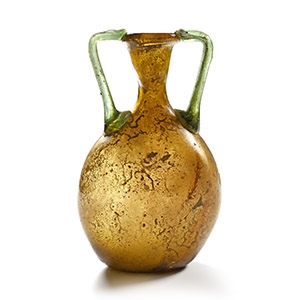
Roman Honey and Green Double-Handled Glass Pilgrim's Flask
1st-4th century A.D.Sold for (Inc. bp): £1,170
Amphoriskos with flat disc-shaped body, tubular neck with flared rim, two lateral knee-shaped handles to the shoulder. 105 grams, 13.9 cm
From an important London collection of glass, 1990s. This lot is accompanied by an illustrated lot declaration signed by the Head of the Antiquities Department, Dr Raffaele D'Amato. -
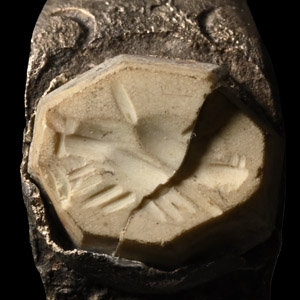
Roman Silver Ring with Clasped Hands Gemstone
3rd-4th century A.D.Sold for (Inc. bp): £72
Flat-section hoop with scrolls to the shoulders, cell with inset white stone cloison with clasped-hands motif. 2.24 grams, 20.50 mm overall, 17.94 mm internal diameter (approximate size British J, USA 4 3/4, Europe 8.69, Japan 8)
Ex German art market, 2000s. Acquired from an EU collector living in London. From the collection of a Surrey, UK, gentleman. This lot is accompanied by an illustrated lot declaration signed by the Head of the Antiquities Department, Dr Raffaele D'Amato.
