
Loading, please wait...
_900x900.jpg "Roman Arretine Red Slip Terra Sigillata Cup with Rabbits and SEX.M.D. Maker's Mark")
_200x200.jpg "Roman Arretine Red Slip Terra Sigillata Cup with Rabbits and SEX.M.D. Maker's Mark")
.jpg "Roman Arretine Red Slip Terra Sigillata Cup with Rabbits and SEX.M.D. Maker's Mark")
LOT 0156
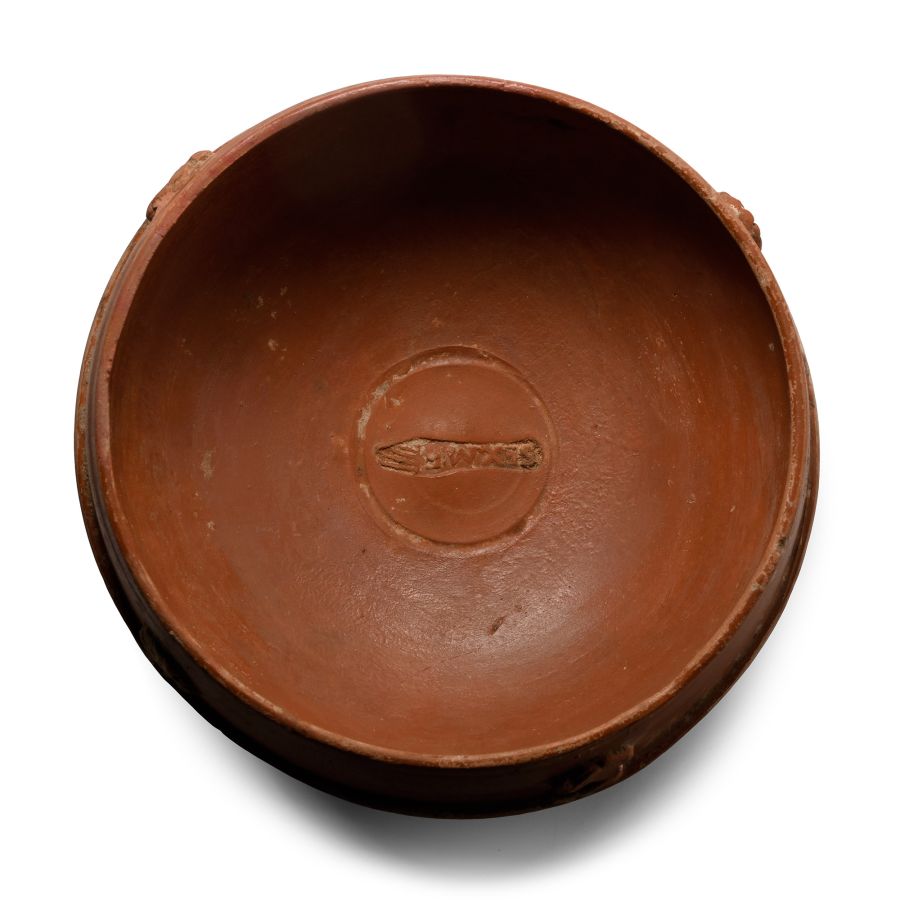
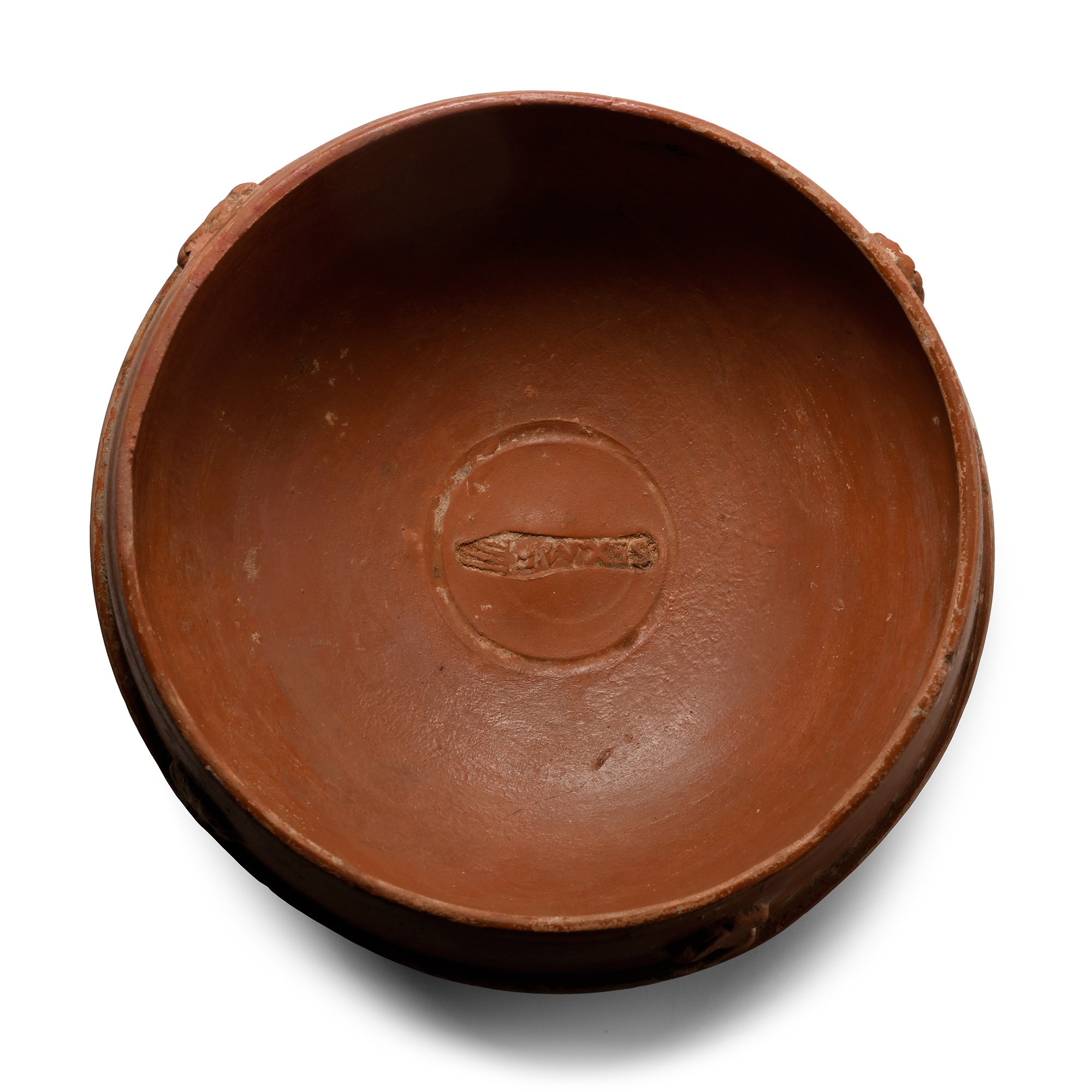
Roman Arretine Red Slip Terra Sigillata Cup with Rabbits and SEX.M.D. Maker's Mark
AUGUSTAN, EARLY 1ST CENTURY A.D.
4 3/8 in. (132 grams, 11.3 cm wide).
Squat bowl with carinated profile and low foot; to the rim, applied rosettes and hares; stamped to the centre, a sandaled foot with legend 'SEX.M.D' legend.
ProvenanceAcquired from Casemate Gallery, Bath, UK, 1990.
From a late private Dorset, UK, collector.
Property of a West London, UK, gentleman.
Accompanied by an old identification card and original invoice dated 10 November 1990.
TimeLine Auctions follows a vetting process to ensure the authenticity and legality of all items, reinforcing our commitment to integrity and responsible trading. Each antiquity, antique, and coin lot undergoes thorough examination by a vetting committee of at least ten external specialists, professional trade association members, scientists, and archaeologists: Our Vetting Process
AUCTIONS:
TimeLine is a leading auction house specialising in antiquities, ancient art, collectables, natural history, coins, medals, and books. Our auctions offer museums, collectors, historians, and enthusiasts the opportunity to acquire unique and historically significant pieces.
LOT 0156
Roman Arretine Red Slip Terra Sigillata Cup with Rabbits and SEX.M.D. Maker's Mark
Sold for (Inc. bp): £546
-
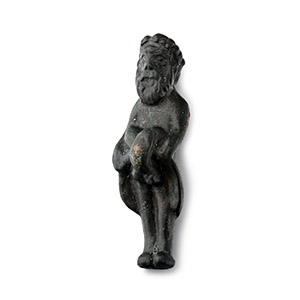
Romano-British Bronze Priapus Statuette
2nd-3rd century A.D.Sold for (Inc. bp): £117
Modelled in the round, standing, wearing a paenula, his hands holding up the hem to support a pile of fruits on his erect penis. 14.1 grams, 40 mm
Found Lincolnshire, UK.
This is one of the most characteristic representations of Priapus: standing, with long, smooth hair. With his hands, he raises his tunic, revealing his phallus, a symbol of fertility and good luck, and carries the first fruits of the earth on the hem of his tunic. -
.jpg)
Roman Gemstone Collection
2nd-3rd century A.D.Sold for (Inc. bp): £585
Mixed group including profile bust, seated female, perching bird and others; each supplied with a museum-quality impression. 2.86 grams total, 10-14 mm
From the collection of a gentleman, acquired on the London art market in the 1990s. -
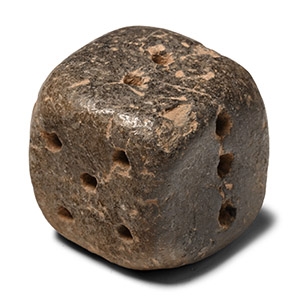
Large Roman Bone Gaming Dice
1st-2nd century A.D.Sold for (Inc. bp): £72
Cuboid with drilled holes disposed 1:2, 3:6, 4:5. 11 grams, 19 mm
From a collection of gaming items, formed 1980-1990s.
