
Loading, please wait...
LOT 0717
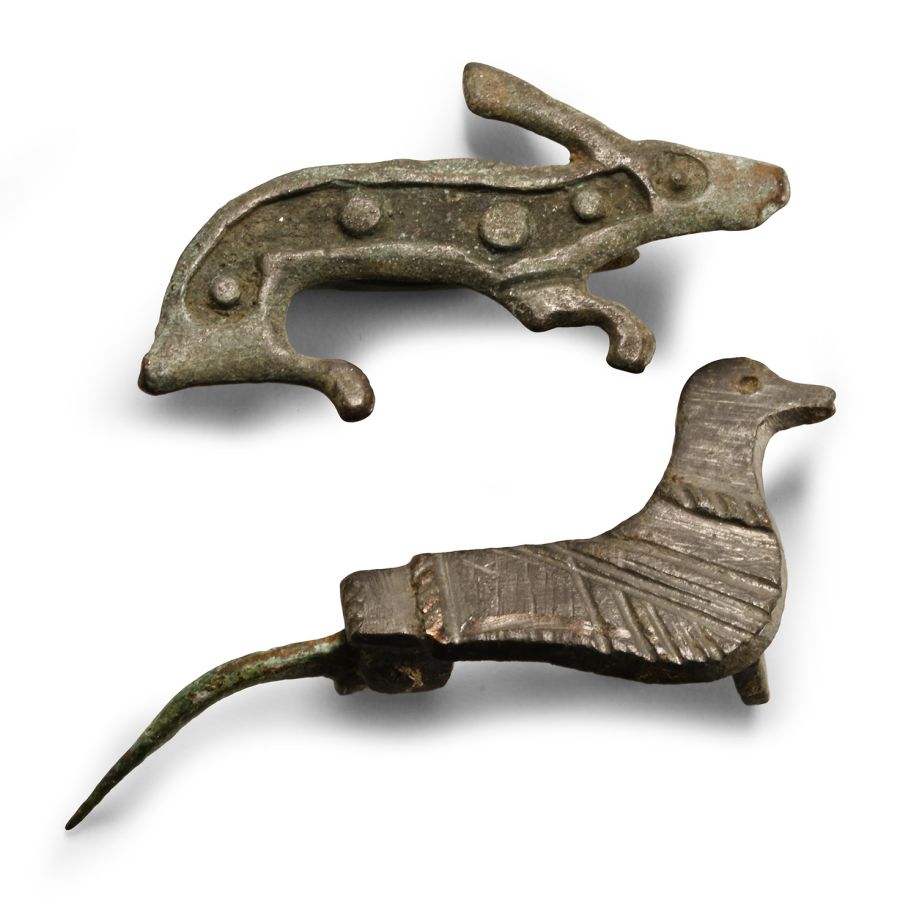
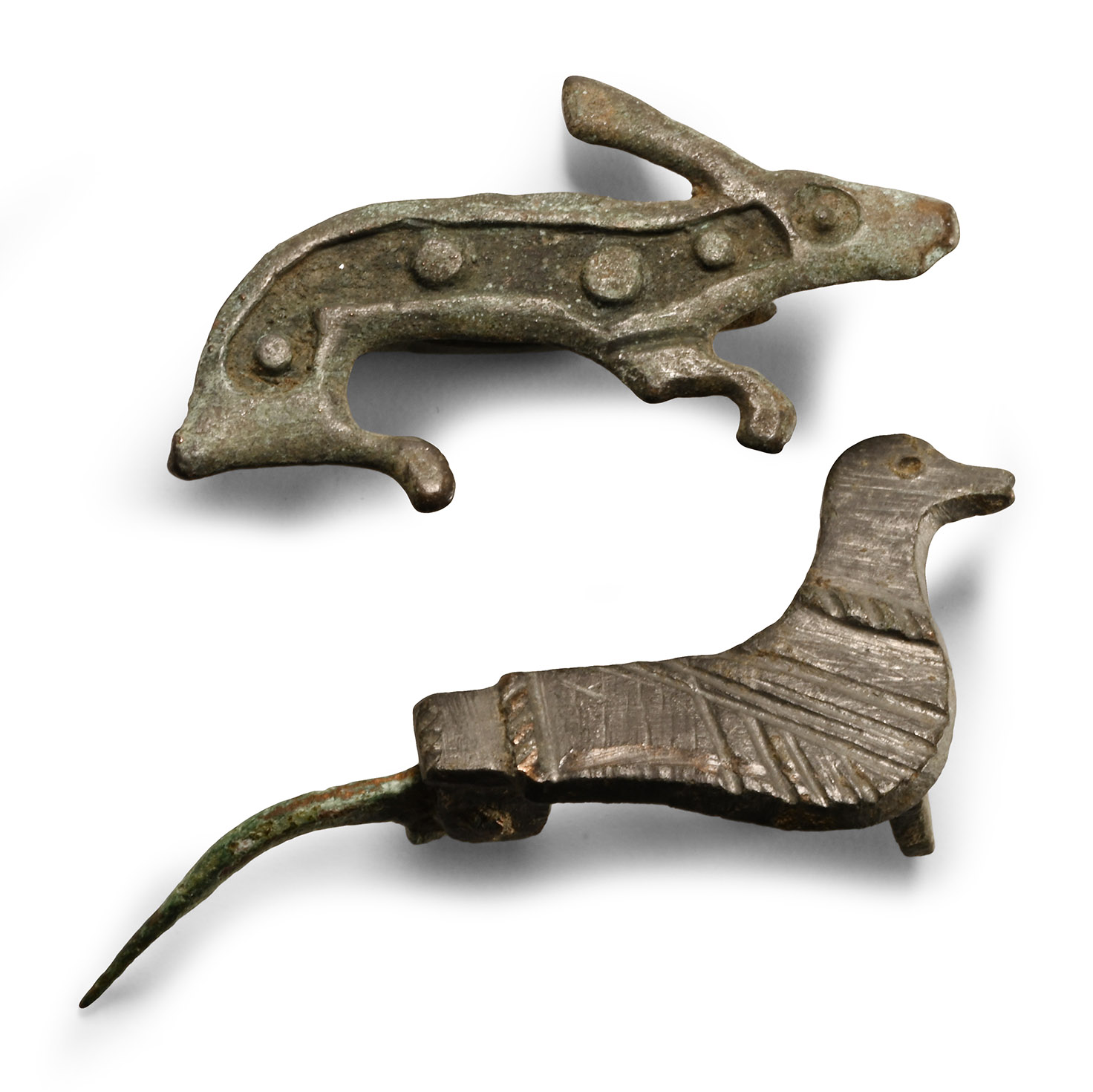
Roman Animal Brooch Collection
2ND CENTURY A.D.
1 3/4 - 2 1/4 in. (18.8 grams, 46-58 mm).
Comprising: bird plate brooch with hinged pin and catch to the reverse; running hare plate brooch with recessed body to accept enamel fill, pin and catch to the reverse. [2, No Reserve]
ProvenanceEx UK art market.
Property of a Scottish collector, acquired in 2013.
TimeLine Auctions follows a vetting process to ensure the authenticity and legality of all items, reinforcing our commitment to integrity and responsible trading. Each antiquity, antique, and coin lot undergoes thorough examination by a vetting committee of at least ten external specialists, professional trade association members, scientists, and archaeologists: Our Vetting Process
AUCTIONS:
TimeLine is a leading auction house specialising in antiquities, ancient art, collectables, natural history, coins, medals, and books. Our auctions offer museums, collectors, historians, and enthusiasts the opportunity to acquire unique and historically significant pieces.
-
Roman Fresco Painted Wall Plaster Collection
1st century A.D.Sold for (Inc. bp): £130
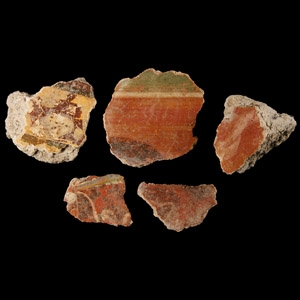
Comprising five pieces in cream, orange, blue and red with painted architectural lines; one with floral decoration and several with border elements. 194 grams total, 51-79 mm
Acquired in the 19th century. Ex Jeger collection, Switzerland. -
.jpg)
Roman Marble Figure of a Dancing Pan
Circa 2nd century A.D.Sold for (Inc. bp): £5,460
Modelled in the round, comprising the lower torso and the goat-legs in vigorous motion, the left raised and bent, right leg straight with the genitals leaning against the length of the thigh, stub of the tail to the reverse; mounted on a custom-made stand. 1.4 kg total, 16.5 cm high (24 cm high including stand)
From the collection of Jan Onderdijk, Belgium, before 1980. Acquired by Mr J.R. an antiquarian in the late 1980s. Accompanied by an academic report by Dr Raffaele D’Amato. This lot has been checked against the Interpol Database of stolen works of art and is accompanied by search certificate number no.12022-213655.
Statues of satyrs, relaxing, dancing, and pursuing nymphs proliferated during the third century B.C., as the cult of Dionysus, god of wine and the pleasures it bestows, grew in importance. The Romans appreciated portrayals of Satyrs and Silens, and borrowed them from Greek art, the god Pan being one of the favourite subjects. This statuette is probably a Roman copy from a Hellenistic original, similar to the specimen from the Garimberti collection, where the god, with the left leg firmly planted on the ground and the other leg raised, is carrying a basket of flowers and fruit on his back. -
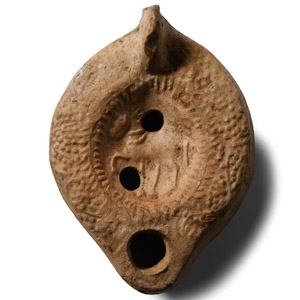
Roman Buffware Oil Lamp with Horse and Rider
Circa 2nd century A.D.Sold for (Inc. bp): £130
Comprising a ring handle, filling-hole and air hole in lower discus; the discus with a horse advancing left mounted by a cavalryman with a flying cloak. 44 grams, 73 mm
From a collection acquired on the UK art market from various auction houses and collections mostly before 2000. From an important Cambridgeshire estate; thence by descent.
The main charateristic of the type (Bussiere form D I 3) is the form of the nozzle, which is tangent to the lamp rim (nozzle form Bussiere 3).
